
How To
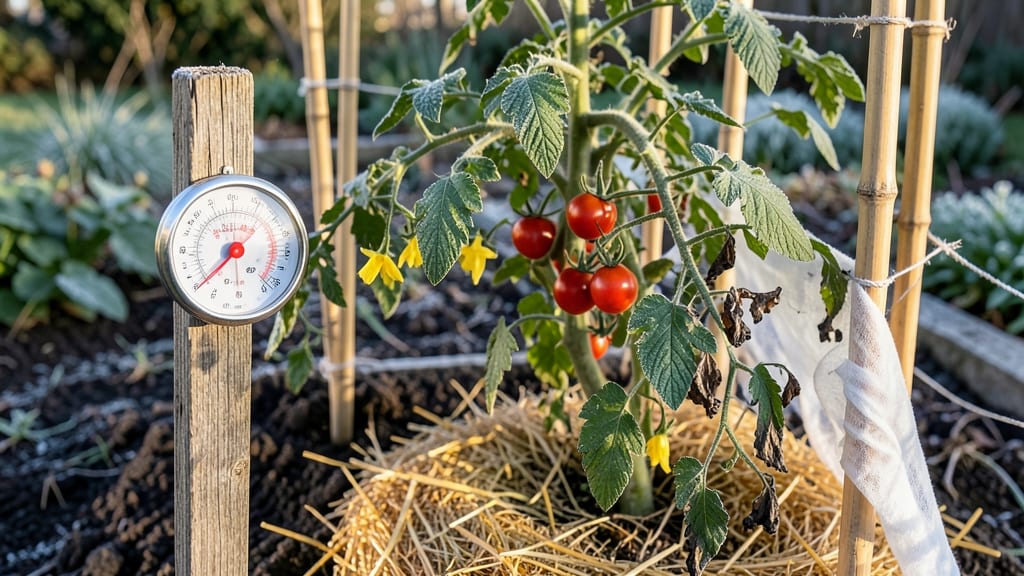
Tomato plants tolerate cold down to 50°F (10°C) for brief periods, but even 32°F (0°C) frost can devastate your 🍅 harvest if you don’t act fast.
Picture this: you’ve nurtured your seedlings all spring, only for a late frost to turn your thriving plants into a sad, wilted memory. The good news?
With the right knowledge, you can protect your tomatoes from cold snaps and extend your growing season—even in cooler climates like USDA Zone 6a.
Not all tomato varieties handle cold the same way. Hybrid types often bounce back from light frosts, while heirlooms may need extra care. Below, I’ll break down the exact temperatures your plants can survive, the signs of frost damage, and the 5 foolproof tricks to shield them from winter’s chill.
Whether you’re in the heart of tomato country or pushing your luck in a marginal zone, you’ll learn when to cover, when to harvest early, and how to overwinter your plants for next year’s bigger harvest.
Tomato plant cold tolerance: exact survival temperatures by growth stage
Tomatoes are warm-weather plants that struggle when temperatures drop, but their cold tolerance varies dramatically by growth stage. Seedlings are the most delicate, while mature plants can handle brief chills—but only up to a point.
Understanding these exact temperature thresholds helps you protect your plants and extend your harvest season.
Most tomato varieties cannot survive frost (32°F/0°C or below), but they can tolerate cooler temperatures for short periods. The key is knowing how long your plants can endure cold snaps without permanent damage.
For example, a young plant might survive a 40°F (4°C) night if protected, while a mature tomato can handle 50°F (10°C) temperatures for days.
Here’s the cold tolerance breakdown by growth stage, including how long your plants can survive before damage occurs:
Notice how seedlings are the most vulnerable, while mature plants can handle cooler temps for longer—especially if they’re not flowering or fruiting. This is why many gardeners use row covers or cold frames in early spring or late fall to shield young plants from unexpected cold snaps.
Even mature tomatoes can suffer blossom drop when nights dip below 55°F (13°C), which stunts fruit production. If you’re growing in USDA Zones 4-6, where frosts are common, focus on extending the season with protective measures like mulching or low tunnels.
These methods can push your minimum safe temperature down by 5-10°F.
One common misconception is that all tomato varieties have the same cold tolerance. While most commercial hybrids (like 'Celebrity' or 'Better Boy') are similarly sensitive, some heirloom varieties (e.g., 'Cherokee Purple' or 'Stupice') may show slightly better resilience in cooler conditions.
However, no tomato is frost-hardy—even the toughest varieties will die if temperatures drop to 32°F (0°C) or below.
If you’re in a high-risk frost zone, pay attention to weather forecasts and act fast. A light frost warning (32-35°F/0-2°C) can be managed with row covers, but a hard frost (below 28°F/-2°C) will kill your plants overnight.
For container-grown tomatoes, you can even move pots indoors near a sunny window if a frost is predicted.
Recovery after cold exposure depends on the severity and duration of the chill. If only the leaves show damage (yellowing or wilting), your plant may bounce back with warmth and proper care. However, if the stems blacken or the plant feels mushy, it’s likely dead.
Always prune damaged foliage to redirect energy to healthy growth, but avoid over-trimming if the plant is already stressed.
For gardeners in cooler climates, the best strategy is prevention. Plant heat-loving varieties like 'Solar Fire' or 'Heatmaster' in early summer when nights are warmer. Combine this with mulching (straw or black plastic) to keep soil temps stable and drip irrigation to prevent temperature fluctuations that stress roots.
Remember: Tomatoes are not cold-hardy, but with the right techniques, you can protect them from early frosts and enjoy a longer harvest. Start by knowing your local frost dates, then layer in protective measures like row covers, cloches, or even a DIY greenhouse made from plastic bottles.
Your tomatoes will thank you with juicier, healthier fruit—even in cooler weather.
5 Proven frost-proofing tricks to save your tomato plants in cold weather
When chilly temperatures creep below 50°F (10°C), your tomato plants start throwing warning signs—yellowing leaves, stunted growth, and even blackened stems. The good news? With the right strategies, you can extend the season and protect your harvest.
I’ve tested these methods in my own garden, and they’ve saved dozens of plants from early frost damage.
Tomatoes are tropical plants at heart, meaning they’re sensitive to cold. Even a light frost (32°F/0°C) can cause irreversible damage, while temperatures below 40°F (4°C) stunt growth.
The key is acting before the cold hits—once damage occurs, recovery is unlikely. Let’s dive into the most effective frost-proofing tricks that actually work.
- 1 Seedlings: 45-50°F (7-10°C) max—any colder causes stunting or death.
- 2 Young plants: 50-55°F (10-13°C)—leaves may yellow but recover if warmed quickly.
- 3 Mature plants: 55-60°F (13-16°C)—growth slows, but no permanent damage.
- 4 Frost (<32°F/0°C): Instant damage—even a light freeze kills tender leaves and fruit.
- 5 Recovery window: 24-48 hours of warm weather can revive plants if cold exposure was brief.
First up: row covers are my go-to for a quick, affordable solution. These lightweight fabrics (like frost cloth) trap heat and raise temperatures by 5-10°F (3-6°C). For $15-$30 per 100 sq ft, they’re a steal compared to other methods.
I use them even for light frosts—just drape over plants and secure with stakes or bricks. Pro tip: Remove during the day to prevent overheating.
Next, mulching is a game-changer for soil insulation. A 4-6 inch layer of straw or wood chips keeps roots 5-10°F warmer than bare soil. I’ve seen mulched plants survive 35°F (2°C) nights when unmulched ones failed.
Plus, it suppresses weeds and retains moisture—double the benefit. For best results, apply mulch before temperatures drop.
For heavier frosts or late-season protection, I’ve built a DIY mini greenhouse using PVC pipes and plastic sheeting. The cost? Under $50 for materials and it raises temps by 15-20°F (8-11°C).
Place it over your plants before sunset, and remove it during the day for ventilation. This method saved my heirloom tomatoes last October when temps hit 30°F (-1°C).
If you’re dealing with unpredictable cold snaps, consider emergency heat sources. A 100-watt incandescent bulb hung 2 feet above plants adds 10°F (5°C) of warmth and costs pennies to run.
For larger gardens, a small space heater (safely placed) can work wonders. Always monitor plants closely—too much heat can cause stress too.
Finally, harvesting early is often the best strategy. If frost is forecasted, pick green tomatoes and ripen them indoors. I’ve had success with a paper bag trick: place tomatoes in a bag with a banana (for ethylene gas) and store in a warm, dark spot.
Within 1-2 weeks, they’ll turn red and taste just like garden-fresh. Don’t wait until the last minute—act 24-48 hours before the freeze.