
Planting
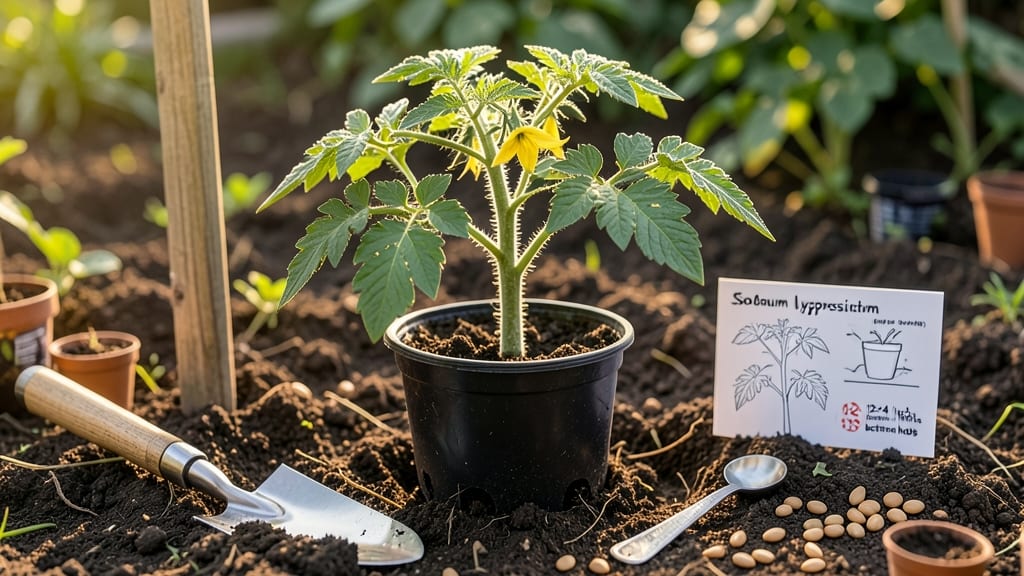
Planting just one tomato seed per hole saves you heartache—and a whole lot of thinning. 🌱 I’ve learned the hard way that cramming seeds together leads to weak, leggy plants fighting for sunlight, not the juicy harvests we dream of.
The secret isn’t just the number of seeds; it’s the space between them that lets roots spread and vines thrive.
Start with a 1/4-inch deep hole, spaced 12–18 inches apart for bush varieties or 24–36 inches for indeterminate vines. Use a pencil to mark spots before planting—trust me, it’s worth the extra minute.
The soil should be loose and amended with compost; packed dirt suffocates those tiny roots before they even get started.
By the time your seedlings are ready to transplant, they’ll be sturdy enough to handle the move without shock. No more crowded, stunted plants—just strong stems, lush foliage, and fruit so heavy it bends the vines.
And if you’re worried about germination rates, planting two seeds per hole (then snipping the weaker one) gives you a backup without the chaos.
This method works for backyard gardens, raised beds, or even large containers. Once you see how much easier it is to care for properly spaced plants, you’ll never go back to the guesswork. Ready to turn those seeds into a harvest?
Why it happens
If you’ve ever planted tomato seeds and wondered why some holes yield weak, stunted plants while others produce nothing at all, the answer often lies in the science of seed spacing and competition.
Understanding the root causes behind poor germination or underperforming seedlings helps you fine-tune your planting strategy for stronger, healthier plants. Let’s break down why overcrowding—or under-planting—can sabotage your tomato harvest before it even begins.
🌱 Germination Competition for Resources
Tomato seeds packed too closely in a single hole create a resource war before they even sprout. Seeds compete for three critical factors:
- Moisture: When multiple seeds germinate in a tight space, their roots and shoots vie for the same water supply. If the soil isn’t consistently moist, the weakest seedlings drown out (literally) by stronger ones, leaving you with only the fittest survivors—or worse, no survivors at all.
- Nutrients: Young seedlings rely on stored energy from their seed coats. In crowded conditions, they deplete local nutrient reserves faster, leading to nutrient deficiency (e.g., yellowing leaves, stunted growth) before they can establish roots to forage for food.
- Light: Seedlings stretched toward the surface in dense clusters develop leggy, weak stems as they reach for sunlight. This makes them prone to lodging (falling over) and increases susceptibility to disease.
Actionable fix: Aim for 1–2 seeds per hole (max) with at least 12–18 inches between holes. If you’re direct-sowing, thin seedlings aggressively to avoid competition.
🧬 Genetic Suppression in Overcrowded Holes
Some tomato varieties are self-pollinating, meaning they don’t need cross-pollination to produce fruit. However, when seeds are planted too densely, the resulting seedlings may exhibit genetic suppression—a phenomenon where weaker genetic traits dominate due to limited space. Here’s how it happens:
- Weak seedlings outcompete strong ones: If two seeds germinate but one is genetically weaker (e.g., slower-growing or disease-prone), it can stunt the growth of its neighbor by stealing resources, even if the neighbor is healthier.
- Delayed maturity: Crowded seedlings take longer to bolster their root systems, pushing back flowering and fruiting by 2–4 weeks in severe cases.
- Blossom end rot risk: Nutrient and calcium imbalances from competition stress plants, leading to poor fruit set and blossom end rot (a common tomato disease caused by calcium deficiency).
Actionable fix: Use high-quality, certified seeds and plant only 1 seed per hole for determinate (bush) varieties. For indeterminate (vining) types, space holes 18–24 inches apart to reduce genetic interference.
🦠 Disease and Fungal Pressure
Moist, crowded seedling environments are a breeding ground for pathogens. When seeds are planted too close together, excess moisture lingers in the soil, creating ideal conditions for:
- Damping-off: A fungal disease (Pythium or Rhizoctonia) that attacks seedlings at the soil line, causing them to rot and collapse. Crowded plants trap humidity, accelerating the spread.
- Powdery mildew: Fungal spores thrive in shaded, high-humidity microclimates—exactly what you get with dense seedling clusters. Infected leaves turn yellow and crispy, reducing photosynthesis.
- Bacterial wilt: Spreads through root contact in overcrowded holes, clogging vascular systems and killing plants within days.
Actionable fix:
- Sterilize soil with hydrogen peroxide (3%) or baking soda before planting.
- Space holes 12–18 inches apart and avoid overhead watering (use drip irrigation instead).
- Thin seedlings to one per hole as soon as they develop 2 true leaves to improve airflow.
🌡️ Temperature and Soil Stress
Seeds planted too densely generate heat stress as competing roots and microbes increase metabolic activity. This raises soil temperature locally, which can:
- Speed up germination too quickly: Seeds may sprout too fast, exhausting their energy reserves before roots can anchor. Result? Floppy, weak seedlings that topple over.
- Disrupt microbial balance: Beneficial soil bacteria and fungi (like mycorrhizae) struggle to colonize roots when seeds are packed in. This reduces nutrient uptake by up to 40%.
- Inhibit root growth: High root density in a small hole forces roots to grow in circles (a condition called root binding), restricting water and nutrient absorption.
Actionable fix:
- Plant seeds 1/4 inch deep and space holes 18+ inches apart for indeterminate varieties.
- Use mulch (straw or grass clippings) to regulate soil temperature and retain moisture.
- Avoid planting in direct sunlight during peak heat (10 AM–4 PM); opt for morning or evening sowing.
Quick Fixes for Perfect Seed Spacing
Now that you understand why spacing matters, let’s tackle the practical solutions to ensure your tomato seeds get the ideal start. Whether you’re dealing with overcrowding, poor germination, or uneven growth, these step-by-step fixes will help you plant with precision—and avoid common pitfalls.
Cause: Too many seeds per hole (or too many holes too close together) leads to weak, competing plants. Solution:
- 📏 Measure First, Plant Later
- Use a ruler or spacing guide to mark holes 18–24 inches apart for indeterminate tomatoes and 12–18 inches for determinate varieties.
- Pro tip: 💡 Snap a wooden dowel or chopstick into the soil at each marked spot to visualize depth (seeds should go ½ inch deep).
- 🌱 Thin Early, Thin Often - If you’ve already planted too close, wait until seedlings have 2–3 true leaves (not just the initial "seed leaves"). - Gently grasp the thinnest sprout at the base and pull upward—no need for tools!
Leave the strongest plant per hole. - Prevention: 🎯 Plant 1–2 seeds per hole (max) and thin to one once they sprout.
- 🔄 Repurpose Extras
- Save thinned seedlings for transplanting elsewhere (e.g., pots, containers, or a second garden bed).
- Bonus: 🌿 If you have extra seeds, try succession planting—sow a few more seeds 2 weeks later for a staggered harvest.
Cause: Poor spacing or weak starts due to disease, pests, or improper depth. Solution:
- 🚿 Hydrate and Support
- If seedlings look leggy or weak, water deeply (1 inch per week) and add a stake or cage early to encourage vertical growth.
- Fix: 🌡️ If soil is too wet (leading to rot), mix in compost or perlite to improve drainage.
- 🛡️ Pest and Disease Defense
- Aphids or fungus? Spray with a neem oil solution (1 tsp neem oil + 1 tsp mild soap per quart of water).
- Crowded plants attract pests—immediately thin or prune lower leaves to improve airflow.
- Prevention: ✨ Rotate crops yearly to avoid soil-borne diseases.
- 🔄 Transplant with Care
- If a seedling is struggling in its original hole, gently transplant it to a new spot with fresh soil.
- How-to: 👨🍳 Dig a hole slightly larger than the root ball, place the seedling in, and firm soil around it to eliminate air pockets.
Cause: Guessing on seed counts leads to wasted seeds or overcrowding. Solution:
- 📝 Calculate Your Needs
- Formula: (Garden bed length in feet × spacing in inches) ÷ 12 = number of holes
- Example: A 10-foot bed with 24-inch spacing = 4 holes (10 × 24 ÷ 12 = 20, but round down for buffer).
- Pro tip: 💡 Add 10–20% extra seeds for germination loss (not all seeds sprout!).
- Formula: (Garden bed length in feet × spacing in inches) ÷ 12 = number of holes
- 📅 Plan for Variety
- Indeterminate tomatoes (vining, like Roma or Beefsteak) need more space (24+ inches).
- Determinate tomatoes (bush-type, like Cherry) can tolerate 12–18 inches.
- Visual aid:
| Tomato Type | Spacing (Holes) | Seeds per Hole |
|---|---|---|
| Indeterminate | 24–36 inches | 1–2 |
| Determinate | 12–18 inches | 1–2 |
- 🌱 Use Row Markers
- DIY hack: 🔥 Stick popsicle sticks or bamboo skewers at each hole’s edge to avoid misplanting.
- For large gardens, use a garden flag or spray-paint marks on the soil.
- 🌱 Start Small: If you’re new, begin with 1–2 tomato plants to practice spacing before expanding.
- 📅 Succession Plant: Stagger plantings every 2–3 weeks for continuous harvests (but keep spacing consistent!).
- 🌿 Soil Health: Test soil pH (6.0–6.8 is ideal for tomatoes) and amend with compost or aged manure before planting.
- 📖 Keep Records: Note what worked (or didn’t) in a gardening journal for next year!
By following these fixes, you’ll transform guesswork into garden precision—leading to healthier plants, fewer pests, and a tomato harvest that rivals the pros! 🍅✨
Frequently asked questions
Why do you recommend planting only 1-2 tomato seeds per hole?
Planting just 1-2 seeds per hole prevents overcrowding, which causes seedlings to compete for sunlight, water, and nutrients. With proper spacing (12-36 inches between holes), each plant gets room to develop strong roots and healthy foliage. It also makes thinning easier—you can keep the strongest seedling and repurpose extras for other areas.
What happens if I plant more than 2 seeds per hole?
Planting more than 2 seeds per hole risks disease spread and weak growth as seedlings fight for resources. Crowded roots trap moisture, creating ideal conditions for damping-off fungus. You’ll likely need to thin aggressively, which can stress plants. For best results, stick to 1-2 seeds max and space holes appropriately.
Can I plant tomato seeds directly in the ground, or should I start indoors first?
Both methods work, but timing matters! For direct sowing, plant seeds 1/4-inch deep after your last frost when soil is 60°F+. For indoor starts, sow 6-8 weeks before transplanting (use seed trays with 1 seed per cell). Indeterminate varieties often benefit from starting indoors to get a head start.
How do I know when to thin my tomato seedlings?
Thin seedlings when they develop 2-3 true leaves (not the initial seed leaves). Gently grasp the thinnest sprout at the base and pull upward—no tools needed! Leave the strongest, most vigorous plant per hole. If you’re unsure which to keep, choose the one with the most uniform growth and darkest green leaves.
What's the best spacing for cherry tomatoes vs. beefsteak tomatoes?
Cherry tomatoes (determinate) can handle 12-18 inches between holes since they stay compact. Beefsteak tomatoes (indeterminate) need 24-36 inches to support their heavy vines. Always check seed packets for variety-specific recommendations—some heirlooms grow even larger!