
Companion Plants
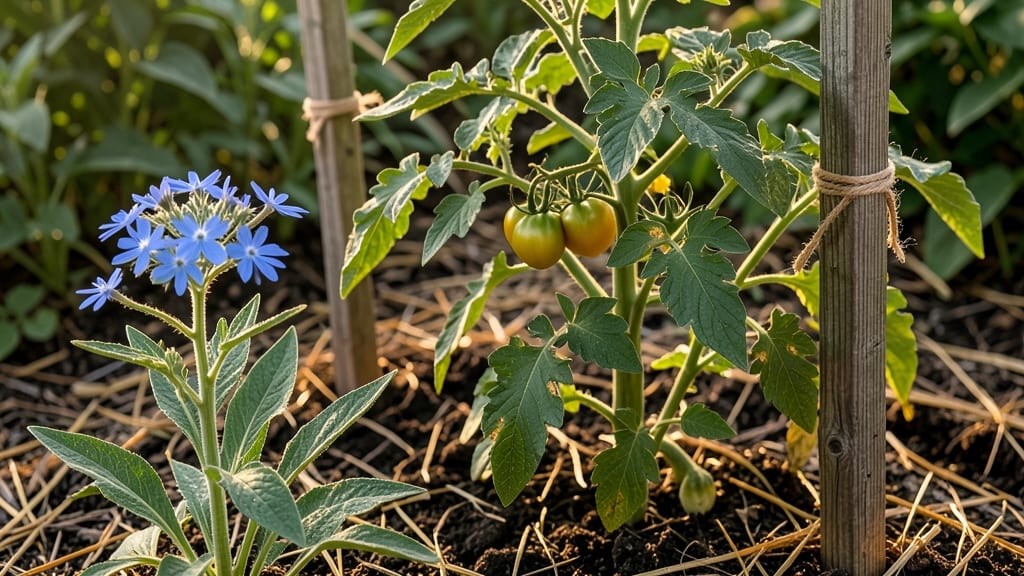
Planting borage alongside tomatoes transforms your garden into a pest-repelling powerhouse. 🌱 I learned this the hard way—my tomato plants used to get ravaged by hornworms until I added borage, and now they thrive while keeping pests at bay.
The fragrant blue flowers attract beneficial insects that hunt the bugs threatening your tomatoes, creating a natural defense system right in your backyard.
The secret to success lies in proper spacing and timing. Start borage seeds 4-6 weeks before your last frost, and plant them near tomato seedlings once they're established. Keep borage about 18-24 inches apart from tomatoes, giving both plants room to spread.
This companion duo works best in well-draining soil with full sun—just what tomatoes crave—and borage's deep roots help loosen the soil for better tomato growth.
What you'll end up with is a garden where tomatoes grow stronger and more productive, while borage provides edible flowers and leaves for salads. The bees love the borage, increasing tomato pollination, and the whole system becomes self-sustaining.
You'll notice fewer pests, healthier plants, and a harvest that keeps coming all season long.
This pairing works in containers too—just use larger pots for tomatoes and smaller ones for borage. Whether you're dealing with limited space or a full garden bed, these two plants will work together to give you a bounty you'll be proud of.
Here's how to make it work for your garden this year!
📚 In This Guide
- What you need
- Instructions
- Tips and common mistakes
- Wrapping up and next steps
What you need
- ● Tomato seeds or seedlings: 2–4 plants (choose disease-resistant varieties like 'Cherry Tomato,' 'Roma,' or 'Beefsteak').
- ● Borage seeds: 5–10 seeds (or 1–2 young plants if transplanting).
- ● Well-draining potting mix or garden soil: 5–10 gallons (amend with compost for nutrient-rich soil).
- ● Containers or garden bed: At least 12" deep (tomatoes need space to sprawl).
- ○ Organic fertilizer: Balanced 10-10-10 or compost tea (optional but recommended).
- ● Garden trowel or small shovel (for planting).
- ● Watering can or hose with a gentle nozzle (avoid overwatering!).
- ● Pruning shears (to trim borage flowers for tea or pest control).
- ● Garden gloves (for handling prickly borage stems).
- ○ Stakes or cages (optional):** 1–2 per tomato plant (for support as they grow).
- ● A sunny spot with 6+ hours of direct sunlight daily.
- ● Access to water (consistent moisture, but not soggy soil).
- ● Patience! Borage grows fast, but tomatoes take 60–85 days to mature.
How to plant borage and tomatoes together for a thriving garden
This dynamic duo works magic—borage repels pests while boosting tomato flavor and yield.
🌱 Step 1: Choose the Right Location for Both Plants
Tomatoes need 6-8 hours of full sun daily, while borage thrives in the same conditions but tolerates partial shade. Pick a spot with at least 6 hours of direct sunlight—a south-facing area works best. I always test the site first by observing how much sun it gets over a few days before planting.
You'll notice that tomatoes planted in full sun produce larger, sweeter fruit and grow more vigorously. Borage, meanwhile, will spread happily around the tomato plants, its bright blue flowers attracting pollinators. If your garden has afternoon shade, opt for a location where tomatoes get morning sun and borage can handle the cooler afternoon light.
🪴 Step 2: Prepare the Soil for Optimal Growth
Amend the soil with 2-3 inches of compost mixed into the top 12 inches of soil. Tomatoes love rich, well-draining soil with a pH between 6.0 and 6.8. Borage is more adaptable but also benefits from fertile soil. I like to add a handful of aged manure or worm castings to boost nutrients without overwhelming the plants.
Work the compost into the soil until it’s loose and crumbly—you should be able to dig a 6-inch deep hole with ease. Avoid compacting the soil, as tomatoes and borage both dislike heavy, dense ground. If your soil drains poorly, add a layer of sand or perlite to improve aeration. You’ll see roots grow more easily in loose soil, leading to healthier plants.
🌿 Step 3: Plant Tomatoes and Borage in Complementary Positions
Plant tomato seedlings 18-24 inches apart in rows spaced 2-3 feet apart. This gives them room to sprawl while still allowing borage to fill the gaps. Borage seeds can be sown directly into the soil ½ inch deep, about 12-18 inches away from tomato stems. I like to scatter them loosely—they self-seed easily and will pop up wherever they land.
Here’s the thing—borage grows fast and can shade tomato leaves if planted too close. Keep the distance between the two plants so tomatoes get plenty of light. You’ll notice borage’s tall stems reaching toward the sky, while tomatoes will spread outward. This balance ensures neither plant competes for sunlight or nutrients.
💧 Step 4: Water and Maintain for a Pest-Free Duo
Water tomatoes at the base 1-2 inches deep every 2-3 days, ensuring the soil stays consistently moist but not soggy. Borage is drought-tolerant but will thrive with the same watering routine. I water in the morning so the foliage dries quickly, reducing the risk of fungal diseases like blight.
Borage’s strong scent deters pests like hornworms and aphids, which love tomatoes. You’ll see fewer signs of damage on your tomato plants when borage is nearby. Mulch around the base of both plants with 2-3 inches of straw or grass clippings to retain moisture and suppress weeds. This keeps the soil cool and reduces evaporation, making watering easier.
✂️ Step 5: Prune and Harvest for Continuous Growth
Prune tomato suckers (the small shoots growing between the main stem and branches) to direct energy into fruit production. Borage doesn’t need pruning but can be harvested regularly—snip the flowers and leaves as needed for culinary use or to encourage more growth. I like to harvest borage flowers in the morning when they’re freshest, which also prevents the plant from going to seed too quickly.
You’ll notice that tomatoes planted near borage develop fewer pests and produce fruit with a slightly sweeter flavor. Harvest tomatoes when they’re fully colored and slightly soft to the touch. Borage leaves can be used fresh in salads, while the flowers add a delicate cucumber flavor to drinks. This companion planting isn’t just practical—it’s a game-changer for garden productivity.
Tips & tricks for perfect borage-tomato pairings
These simple strategies will help you maximize the benefits of this powerful garden duo while avoiding common pitfalls that can throw off your harvest.
Sunlight Strategy: While both plants love sun, tomatoes need that full 6-8 hours daily, but borage can handle partial shade. I've found that planting borage on the north side of tomato plants gives them morning sun while protecting tomatoes from afternoon heat stress. This creates a natural shade canopy that keeps soil cooler and retains moisture longer.
Soil Prep Secret: The 2-3 inches of compost we mix into the top 12 inches of soil should be aged—fresh compost can burn young tomato roots. I always add a handful of worm castings to this mix because they contain beneficial microbes that help both plants absorb nutrients more efficiently. This step makes all the difference in preventing blossom end rot in tomatoes.
Planting Distance Matters: That 12-18 inch spacing between borage and tomatoes isn't arbitrary—it's the sweet spot where borage can still deter pests without shading tomato leaves. I've learned the hard way that planting too close means borage will outcompete tomatoes for sunlight, while planting too far apart reduces the pest-repelling benefits. Think of it like a protective buffer zone.
Watering Wisdom: The 2-3 day watering schedule works best when you water deeply at the base—never overhead. I water in the morning because it gives the foliage time to dry completely before evening, which dramatically reduces fungal diseases like early blight. Borage's deep roots also help prevent soil erosion during heavy rains, keeping your tomatoes stable.
Pro Tips for Borage And Tomato Plants
- These simple strategies will help you maximize the benefits of this powerful garden duo while avoiding common pitfall...
- Sunlight Strategy: While both plants love sun, tomatoes need that full 6-8 hours daily, but borage can handle partial...
- Soil Prep Secret: The 2-3 inches of compost we mix into the top 12 inches of soil should be aged—fresh compost can bu...
Frequently asked questions
Got questions about growing borage and tomatoes together?
You’re not alone! Here are answers to the most common queries from gardeners like you.
Why do borage and tomatoes make good companion plants?
Borage acts as a natural pest repellent—its strong scent deters hornworms and aphids, while its flowers attract pollinators. Tomatoes benefit from improved growth and flavor, plus borage’s deep roots help break up compacted soil.
How close should I plant borage near my tomatoes?
Keep borage 1–2 feet away from tomato stems to avoid shading. Plant it in a separate row or cluster at the edge of your tomato patch. This balance maximizes pest protection without competing for sunlight.
What if borage doesn’t deter pests? What are alternatives?
If pests persist, try these tomato-friendly companions:
- Basil – Repels flies and mosquitoes
- Marigolds – Deter nematodes and beetles
- Garlic/Onions – Confuse tomato hornworm moths
- Nasturtiums – Trap aphids and improve flavor
Can borage harm tomatoes if overgrown?
Borage is non-toxic but may compete for nutrients if planted too densely. Prune borage flowers regularly to encourage leafy growth (which deters pests better) and avoid overcrowding tomato roots.
Do I need to harvest borage flowers for tomato benefits?
No! While harvesting flowers adds to salads or garnishes, leaving them on the plant boosts pollinator activity and pest-repelling benefits. Just trim dead blooms to redirect energy to new growth.
Still curious? Drop your questions in the comments—we’re happy to help!
Wrapping up and next steps
Growing borage and tomato plants together isn’t just smart—it’s a game-changer for your garden! 🌱 This dynamic duo deters pests, boosts flavor, and even improves soil health, making your harvests more abundant and delicious.
Whether you’re a seasoned gardener or just starting out, this natural partnership simplifies your work while maximizing results.
Ready to put it into action? Start by planting borage near your tomatoes this season and watch your garden thrive. Happy gardening! 🌿