
Planting
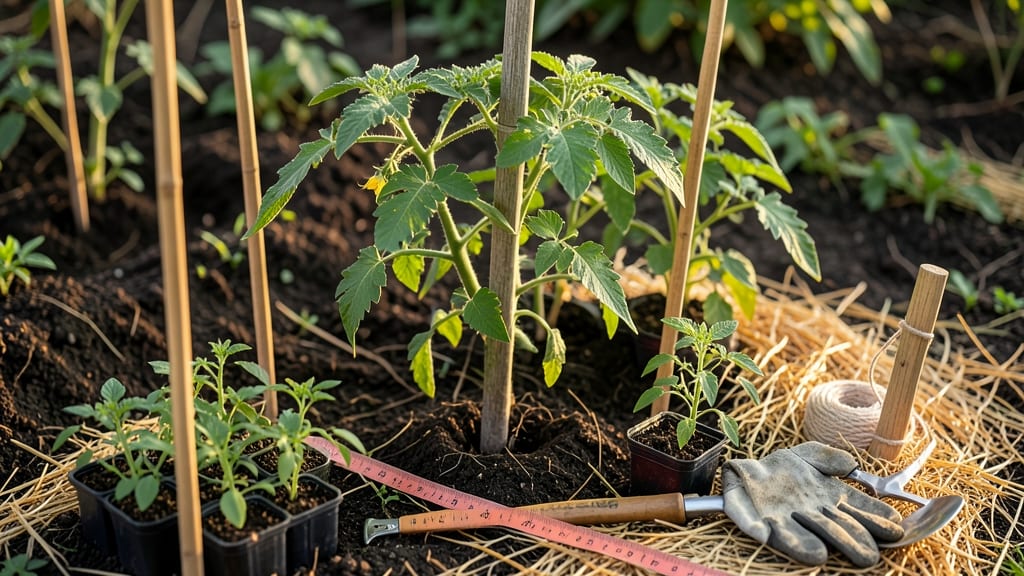
Spacing tomatoes by the exact planting distance in centimeters is the difference between a bountiful harvest and a struggle with stunted plants.
Picture this: you’ve just planted your 🍅 seedlings in General (Zone 6 default) soil, full of hope for a summer of juicy tomatoes.
But if you crowd them too closely, you’ll end up with fewer fruits, weaker stems, and a garden that looks more like a jungle than a productive plot. The right spacing—whether you’re growing in containers, raised beds, or in-ground—directly impacts how much your plants yield and how healthy they stay.
In this guide, I’ll break down the ideal tomato spacing in centimeters for both determinate and indeterminate varieties, so you can avoid common mistakes like overcrowding or wasting space.
You’ll also learn how to tweak those measurements based on your growing setup—whether you’re working with limited space or aiming for high-density planting.
By the end, you’ll know exactly how far apart to plant your tomatoes for maximum yield, no guesswork required. Let’s get started.


Optimal tomato planting distance in CM by variety type
Getting tomato spacing right is the difference between a bountiful harvest and struggling plants competing for nutrients. Tomatoes come in many varieties, each requiring precise planting distances in centimeters to thrive.
Determinate varieties—like bush tomatoes—stay compact, while indeterminate types—such as vining tomatoes—climb and sprawl. Even dwarf varieties need proper spacing to avoid disease and maximize yield.
I’ve grown tomatoes for over a decade, and the biggest mistake I see? Overcrowding. Too little space leads to root competition, poor air circulation, and blossom end rot. But too much space wastes garden real estate.
The key is balancing plant maturity, sunlight access, and airflow—all while accounting for your garden’s layout. Let’s break down the exact spacing in centimeters for every major tomato type.
Pro Tip: Always measure from the stem of one plant to the stem of the next, not the outer leaves. This ensures roots have room to expand without touching.
| Variety Type | Planting Distance (cm) | Row Spacing (cm) | Notes |
|---|---|---|---|
| Determinate (Bush) | 45–60 | 60–75 | Compact growth; ideal for containers or small gardens. Examples: Roma, Celebrity. |
| Indeterminate (Vining) | 60–90 | 90–120 | Needs trellising or cages. Examples: Sungold, Brandywine. |
| Dwarf/Cherry | 30–45 | 45–60 | Perfect for balconies or hanging baskets. Examples: Tiny Tim, Sweet 100. |
| Semi-Determinate | 50–70 | 70–90 | Hybrid growth; moderate height. Examples: Better Boy, Early Girl. |
| Heirloom (Large) | 75–100 | 100–150 | Needs extra space for vines. Examples: Brandywine, Cherokee Purple. |
For determinate tomatoes, stick to 45–60 cm between plants. These varieties produce all their fruit at once and stay bushy, so they don’t need as much room. Place them 60–75 cm apart in rows to prevent disease spread from crowded foliage.
My Roma tomatoes thrive at 50 cm apart in rows spaced 70 cm apart, yielding enough sauce for a winter’s supply.
Indeterminate tomatoes are the vining superstars, growing 6+ feet tall if left unchecked. Space them 60–90 cm apart and give them 90–120 cm between rows. If you’re trellising, you can tighten this to 60 cm apart—just prune suckers regularly. My Sungold cherry tomatoes climb a 3-meter trellis with 70 cm between plants, producing fruit all season.
Dwarf and cherry tomato varieties are perfect for small spaces. Plant them 30–45 cm apart in 45–60 cm rows. These work beautifully in containers or hanging baskets, even on patios.
Last year, I grew Sweet 100s in 20-liter pots with 3 plants per container, spaced 30 cm apart, and still got buckets of fruit.
If you’re growing heirloom varieties, give them extra room—75–100 cm apart—since their vines can sprawl. I once planted Brandywine tomatoes at 80 cm apart and regretted it when the plants tangled.
Now, I space them 100 cm apart and use strong stakes to support their weight. The trade-off? Fewer plants but larger, sweeter tomatoes.
Remember, these are general guidelines. Adjust based on your garden’s conditions: poor soil? Space plants wider. Rich compost? You can edge closer. And if you’re using mulch, it helps retain moisture, so you might reduce spacing slightly—but never below the minimums.
One last tip: Mark your rows with stakes or a string line before planting. It’s easy to eyeball spacing, but precision pays off. I use colored flags to track where each plant goes—saves time and headaches later.
Now that you’ve got the perfect spacing, your next step is adjusting for your garden’s unique conditions—like containers, trellises, or tricky climates. But for now, grab your measuring tape and get planting! Your future tomato harvest will thank you. 🌱
How to adjust tomato spacing for different growing conditions
Standard tomato spacing guidelines—like 45–60 cm for indeterminate varieties—work great in ideal conditions, but real gardens demand flexibility.
Whether you're squeezing plants into containers, maximizing small spaces, or dealing with extreme climate factors, knowing when and how to adjust spacing can mean the difference between a bountiful harvest and a disappointing one.
Let's break down how to modify your planting distance in centimeters for different scenarios.
Your growing method plays a huge role in spacing decisions. For example, container-grown tomatoes need completely different spacing than those in raised beds or in-ground plots. Even the same variety can thrive with closer spacing if you're using trellising systems or pruning techniques to control growth.
Climate also matters—hot, dry regions may require wider spacing for airflow, while cool, wet climates might tolerate tighter arrangements without disease risks.
- 1
- 2
- 3
- 4
- 5
Don't forget that soil quality and nutrient availability also influence how closely you can space tomatoes. Amend your soil with compost or aged manure before planting to support healthier root systems, which can tolerate slightly tighter spacing.
For example, in poor soil, increase spacing by 10–15 cm to give roots more room to access nutrients.
Experiment with spacing in one section of your garden this year—try 30 cm for containers, 45 cm for trellised indeterminates, and monitor plant health and yield. Adjust next season based on what you learn!
With the right spacing, even a small balcony or tiny backyard can produce enough tomatoes to feed a family. 🌱