
Light Requirements
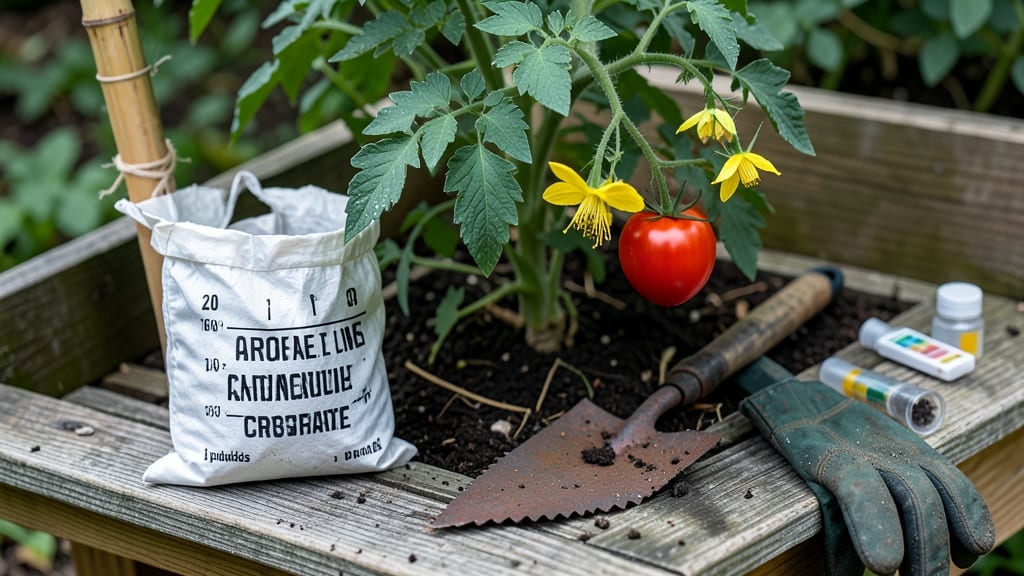
To get the right amount of lime for tomato plants 🍅, you’ll need to test your soil first—most gardeners use 5–10 pounds of lime per 100 square feet for acidic soil, but that’s just the starting point.
Struggling with stunted tomato growth or yellowing leaves? Your soil’s pH might be the culprit—and lime could be the game-changer you need. But how much lime per tomato plant is just right to boost growth without burning roots?
Tomatoes thrive in slightly acidic to neutral soil (pH 6.0–6.8), and lime raises pH over time. Too little won’t fix the problem, while too much can lock out nutrients like iron and manganese, leaving your plants weak. The key is balancing the dose with your soil’s current pH.
Below, I’ll break down the exact lime amounts for your soil type, when to apply it, and how to spot over-liming before it’s too late. No guesswork—just science-backed steps to get your tomatoes growing strong.


Lime dosage chart: how much lime for tomato plants by soil type
Tomatoes thrive in slightly acidic to neutral soil with a pH range of 6.0–6.8. If your soil test shows levels below 6.0, lime can help raise the pH—but applying too much can lock out essential nutrients like iron and manganese.
The key is precision, especially since lime types vary in potency and speed.
Granular lime (like agricultural lime or dolomitic lime) works slowly, while pelletized lime dissolves faster. Your soil type (clay, loam, or sandy) also affects how much lime you need. For example, sandy soil requires more lime than clay soil because it drains faster and holds less calcium.
Below is a science-backed lime dosage chart tailored to your soil’s current pH and type. Always test your soil first—never guess! A simple home soil test kit (around $10) or lab test will give you the exact pH and lime recommendations.
| Soil pH Range | Soil Type | Lime Type | Dosage per 100 sq ft | Notes |
|---|---|---|---|---|
| 4.5–5.0 (Very Acidic) | Sandy | Pelletized Lime | 5–7 lbs | Fast-acting; re-test in 3 months |
| 4.5–5.0 (Very Acidic) | Loam | Granular Lime | 3–5 lbs | Slow-release; apply 6 months before planting |
| 5.1–5.5 (Moderately Acidic) | Clay | Dolomitic Lime | 2–4 lbs | Adds magnesium; best for heavy soils |
| 5.6–6.0 (Slightly Acidic) | Sandy | Pelletized Lime | 2–3 lbs | Light application; monitor pH after 2 months |
| 6.1–6.5 (Near Ideal) | Loam | None Needed | 0 lbs | Optimal pH; focus on compost instead |
| 6.6–7.0 (Slightly Alkaline) | Clay | Elemental Sulfur | 1–2 lbs | Lowers pH; apply in fall for spring planting |
For container-grown tomatoes, scale down the dosage. For example, a 5-gallon pot needs only ½–1 teaspoon of lime if the pH is below 6.0. Always mix lime into the top 6 inches of soil and water thoroughly afterward to activate the amendment.
If your soil is already at or above 6.5, skip the lime entirely. Instead, focus on organic matter like compost or peat moss, which naturally buffers pH without risking nutrient lockout. Over-liming can cause blossom-end rot in tomatoes, so err on the side of caution!
Pro tip:
Step-by-step guide: when and how to apply lime for tomato plants
Tomatoes thrive in slightly acidic to neutral soil with a pH range of 6.0–6.8. If your soil test reveals a pH below 6.0, lime can raise it safely—but timing and method matter.
Applying lime too late or incorrectly can stunt growth or even harm your plants. Let’s break down the best when and how to apply lime for healthy tomato plants.
Most gardeners apply lime 3–6 months before planting tomatoes, giving it time to break down and adjust the soil pH. This is ideal for pre-planting preparation, especially in acidic soils.
If you’re working with existing tomato plants showing yellowing leaves or stunted growth, you can apply lime early in the growing season (spring) but avoid mid-season applications, as they may disrupt nutrient uptake.
For application methods, choose between broadcast spreading (evenly over the soil surface) or banding (placing lime in a narrow trench near plant roots). Broadcast works for large garden beds, while banding is better for container-grown tomatoes or precise adjustments.
Always water the soil thoroughly after applying lime to help it dissolve and distribute evenly.
How Much Lime for Tomato Plants: Dosage by Soil Type
- Test your soil first: Use a soil pH test kit (available at garden centers) to determine your current pH. Aim for 6.0–6.8 for tomatoes.
- Acidic soil (pH < 5.5): Apply 5–10 pounds of lime per 100 sq ft (pelletized lime works faster). For containers, use 1–2 tbsp per gallon of soil.
- Moderately acidic (pH 5.5–6.0): Use 2–5 pounds per 100 sq ft. For containers, 1 tbsp per gallon is sufficient.
- Neutral soil (pH 6.0–6.8): No lime needed—tomatoes are happy here! Focus on compost or organic matter instead.
- Alkaline soil (pH > 6.8): Avoid lime entirely—it will worsen the problem. Use sulfur or peat moss to lower pH instead.
- Application timing: For pre-planting, apply lime 3–6 months ahead. For existing plants, apply in early spring before new growth starts.
- Method: Spread lime evenly over the soil (broadcast) or place 1–2 tbsp per plant in a trench (banding). Water deeply after applying.
Safety is key when applying lime. Never apply lime within 2 weeks of planting—it can raise soil pH too quickly, causing nutrient lockout (e.g., iron or manganese deficiency). Also, avoid over-liming, which can lead to blossom-end rot or leaf curl.
If you’re unsure, start with a small test area and monitor your plants for 2–3 weeks before full application.
After applying lime, re-test your soil in 3–6 months to confirm the pH adjustment. Tomatoes are sensitive to sudden pH changes, so gradual adjustments yield the best results. Pair lime with compost or organic fertilizer to ensure your soil retains essential nutrients while balancing pH.
Remember, lime isn’t a quick fix—it’s a long-term soil amendment. Patience and proper timing will give your tomato plants the ideal growing conditions they crave for bountiful harvests. Happy gardening! 🌱🍅