
How To
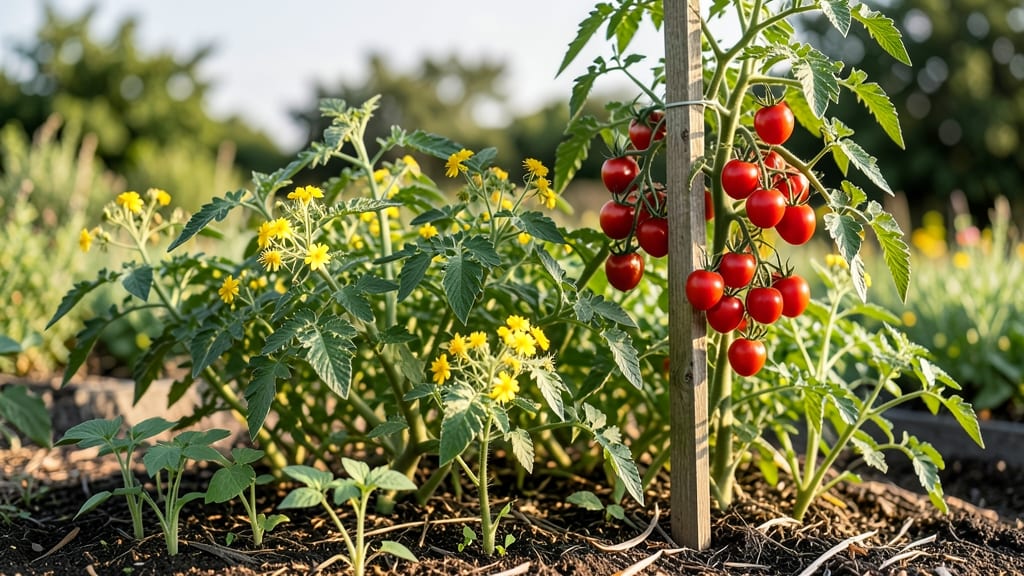
Tomato plants grow anywhere from 1 to 10 feet tall, depending on the variety and how you train them 🍅 — and knowing this range is the key to saving space, avoiding overcrowding, and maximizing your harvest.
If you’ve ever watched your tomato plants sprawl uncontrollably or struggle to fit in your garden beds, understanding their mature height is the first step to better spacing, support, and harvests.
Determinate varieties stay compact at 3 to 5 feet, making them perfect for containers or small gardens, while indeterminate types can climb 6 to 10 feet like vines if given proper trellises or stakes.
In this guide, I’ll break down the height differences between varieties, how to choose the right support for your garden, and simple tricks to control growth without sacrificing yield.

Tomato plant height by variety: determinate vs indeterminate growth explained
Choosing the right tomato variety starts with understanding their growth habits. Determinate (bush) tomatoes grow to a fixed height—typically 3-5 feet—while indeterminate (vining) types keep growing until frost, reaching 6-12 feet or taller.
This difference affects everything from spacing to support needs, so let’s break it down by popular varieties.
Determinate tomatoes are the workhorses of small gardens and containers. Their compact size makes them ideal for high-density planting and early harvests, as they produce fruit all at once. Indeterminate varieties, on the other hand, offer continuous harvests throughout the season but require more space and sturdy support structures.
The height of your tomato plants directly impacts your garden layout. Overcrowding leads to poor airflow, increasing disease risk, while underestimating height can result in floppy plants and missed harvests. Let’s explore how tall common varieties grow and how to plan accordingly.
🌱 Key Takeaway: Determinate = compact, Indeterminate = vining. Your choice depends on space, time, and desired harvest style.
Let’s dive into the specifics. Cherry tomatoes like Sungold are often indeterminate, climbing to 8-10 feet if left unpruned. Their prolific vines produce fruit continuously, but they need strong trellis support to prevent breakage.
In contrast, Roma tomatoes, a determinate variety, max out at 3-4 feet and are perfect for sauce-making due to their concentrated flavor.
Beefsteak tomatoes, another indeterminate favorite, can tower over 6 feet and produce golf-ball-sized fruits. Their height makes them ideal for vertical gardening, saving precious ground space. Meanwhile, Stupice, a determinate heirloom, stays under 4 feet but delivers hundreds of small, tangy tomatoes in a single harvest.
Visualizing these heights helps with planning. Imagine a 6-foot indeterminate plant next to a 3-foot determinate bush—the difference in support needs is dramatic. Trellises or cages are essential for tall varieties, while determinate types may only need stakes or minimal cages.
Always check seed packets for cultivar-specific height ranges, as even within types, variations exist.
For container growers, determinate varieties like Patio Princess (2-3 feet) are ideal, fitting neatly in 5-gallon pots. Indeterminate types need larger containers (15+ gallons) and regular pruning to control height.
If you’re short on space, consider dwarf indeterminate varieties like Tiny Tim, which max out at 18-24 inches but still produce continuously.
Pruning plays a crucial role in managing height. With indeterminate varieties, pruning suckers (side shoots) can reduce height by 20-30% while improving airflow and fruit quality. Determinate types rarely need pruning, as their compact growth minimizes disease risk. Always use sterilized pruners to prevent spreading diseases between plants.
One common mistake is assuming all cherry tomatoes are indeterminate. While many are, some like Tiny Tim or Balcony Red are determinate, staying under 2 feet. Double-check before planting to avoid overcrowding or support mismatches.
Pro tip: Keep a garden journal to track each variety’s actual height—soil, sunlight, and care can influence growth even within expected ranges.
Understanding these height differences ensures your tomato garden thrives. Whether you’re a container gardener, raised-bed enthusiast, or large-scale grower, matching varieties to your space and support systems is key to a bountiful harvest. 🌿
Optimal spacing plans for tomato heights: preventing overcrowding and disease
Proper spacing is the foundation of a thriving tomato garden. Overcrowded plants compete for nutrients, struggle with poor airflow, and become prime targets for fungal diseases like early blight. The key lies in matching your spacing plan to each tomato variety's mature height and growth habit.
Determinate varieties—like Roma or Celebrity—stay compact at 3-4 feet tall, while indeterminate types such as Sungold or Brandywine can climb to 6+ feet without stopping. Ignoring these differences leads to stunted growth, fewer fruits, and wasted space in your garden.
Airflow is non-negotiable—plants spaced too closely trap moisture, creating the perfect breeding ground for blight and mold. Even the hardiest varieties need room to breathe. For container gardening, dwarf varieties like Tiny Tim thrive in 5-gallon pots with 18-inch spacing, while vining types need 3-5 feet of vertical support.
For indeterminate varieties, I recommend trellising to save space and improve airflow. Use strong bamboo stakes or wire trellises to guide vines upward, reducing the risk of soil-borne diseases.
Prune aggressively—remove suckers (the shoots between stems) and lower leaves to direct energy to fruit production and keep foliage off the ground.
In raised beds, stagger plantings by height: place tall indeterminate varieties at the back and shorter determinate types in front. This creates a natural airflow pattern and makes harvesting easier. If space is tight, consider succession planting—replace harvested determinate plants with new seedlings to maximize bed use.
Never underestimate the power of mulching. A 2-inch layer of straw or wood chips suppresses weeds, retains moisture, and prevents soil splatter on leaves—reducing disease pressure. For container growers, ensure pots have drainage holes and use lightweight potting mix to avoid root rot from overwatering.
By matching spacing to variety and providing proper support, you’ll transform your tomato garden into a high-yielding, disease-resistant powerhouse. Start with the right layout, and your plants will reward you with bountiful harvests all season long. 🌱