
How To
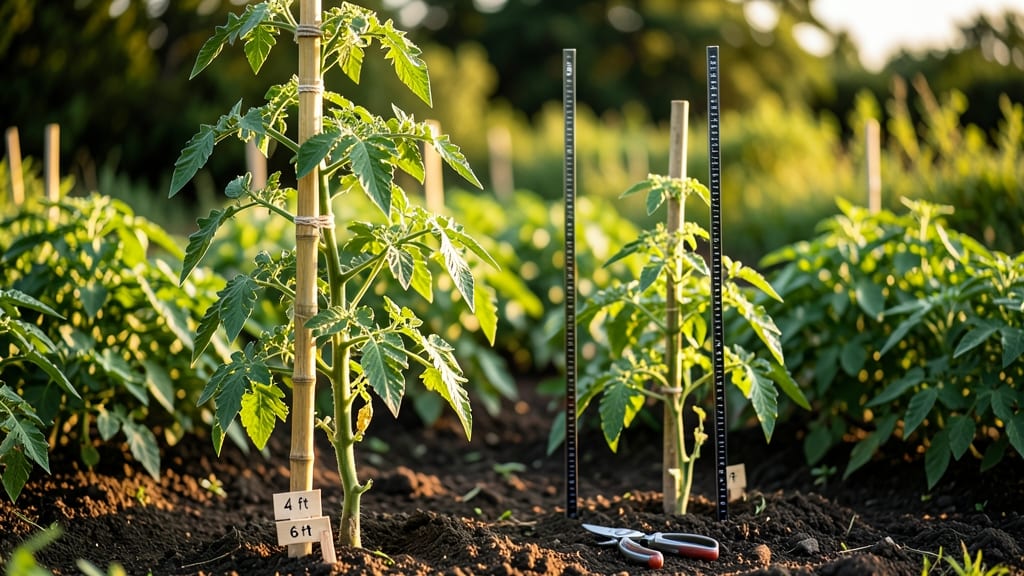
How tall you should let your tomato plants grow depends on their variety: indeterminate types can reach 6–12 feet with proper pruning, while determinate varieties naturally top out at 3–5 feet. Pruning early helps manage height, improves airflow, and maximizes fruit production for both types.
Tomato plant height isn't just about space—it's about yield and plant health.
Indeterminate varieties like 'Cherry Roma' or 'Sungold' grow continuously, needing support to reach their full 8–12 feet potential, while determinate types such as 'Celebrity' or 'Roma' produce all their fruit in one flush before stopping at 4–5 feet. The key difference?
Indeterminate plants keep growing and fruiting until frost, while determinate ones focus energy on a single harvest. 🌱 Pruning isn't just about height control—it's about directing energy where you want it: more flowers mean more tomatoes later in the season.
For container gardeners, height becomes even more critical. Compact determinate varieties like 'Patio' or 'Tiny Tim' stay under 2–3 feet, making them perfect for balconies, while dwarf indeterminate types (like 'Tumbling Tom') can spill elegantly over edges without overwhelming small spaces.
The right pruning technique—removing suckers and lateral stems—can turn a 10-foot vine into a productive, manageable plant that still delivers a bountiful harvest.
💡 In This Article
- Tomato Plant Growth Types: Indeterminate vs Determinate Heights
- Pruning Techniques to Control Tomato Plant Height and Boost Yield
Tomato plant growth types: indeterminate vs determinate heights
The height difference between indeterminate and determinate tomato plants comes down to their genetic growth habits. Indeterminate varieties grow continuously throughout the season, producing new leaves and stems until frost kills them. This vertical growth can reach 8–12 feet if left unchecked, with each new stem capable of producing fruit.
Think of them like vines—without proper support, they'll sprawl uncontrollably. Their growth pattern is driven by apical dominance, where the main stem grows upward while lateral branches form in the leaf axils.
Determinate tomatoes, on the other hand, follow a bush-like growth pattern with a genetic limit of 3–5 feet. They produce all their flowers and fruit on the main stem and branches that form at the base, then stop growing entirely once they reach maturity.
This makes them ideal for gardeners who prefer a compact, self-contained plant. Varieties like 'Roma' or 'Celebrity' focus their energy on a single, concentrated harvest rather than continuous growth.
The key difference lies in their flowering genes—determinate types produce a terminal flower cluster that signals the plant to stop growing vertically.
For gardeners working with limited space, this distinction matters greatly. Indeterminate varieties like 'Sungold' or 'Beefsteak' need strong trellises or cages to support their weight, while determinate types like 'Patio' or 'Tiny Tim' thrive in containers without additional support.
The growth habit also affects fruit production timing: indeterminate plants produce fruit over months, while determininate varieties offer a single, abundant harvest before declining. This makes indeterminate types better for extended harvests, while determininate ones suit canners or those wanting a quick, concentrated yield.
What most gardeners don't realize is how pruning can modify these natural growth patterns. Even indeterminate plants can be trained to stay shorter by removing lateral shoots, while determininate varieties benefit from selective pruning to improve airflow and reduce disease risk.
The plant's hormonal balance shifts dramatically with each cut—auxin production (the growth hormone) decreases in pruned areas, redirecting energy toward fruit production rather than vertical growth. This is why properly pruned indeterminate plants can produce 30–50% more fruit than unpruned ones, despite appearing shorter.
Consider the environmental impact too. Tall indeterminate plants require more water and nutrients to reach their full height, while compact determinate varieties use resources more efficiently.
In hot climates, the taller growth of indeterminate types can create shade that protects fruit from sun scald, while in cooler regions, their height might require additional protection from frost.
The right variety choice depends on your climate, available space, and desired harvest timing—each growth type offers distinct advantages for different gardening scenarios.
For visual learners, imagine a tomato plant as a tree: indeterminate varieties are like willows, growing continuously with new branches at each node, while determinate types resemble apple trees, producing all their fruit on established branches before stopping.
This fundamental difference explains why some gardeners swear by one type over the other—it's not just about height, but about how the plant allocates its energy throughout the growing season. 🌿