
How To
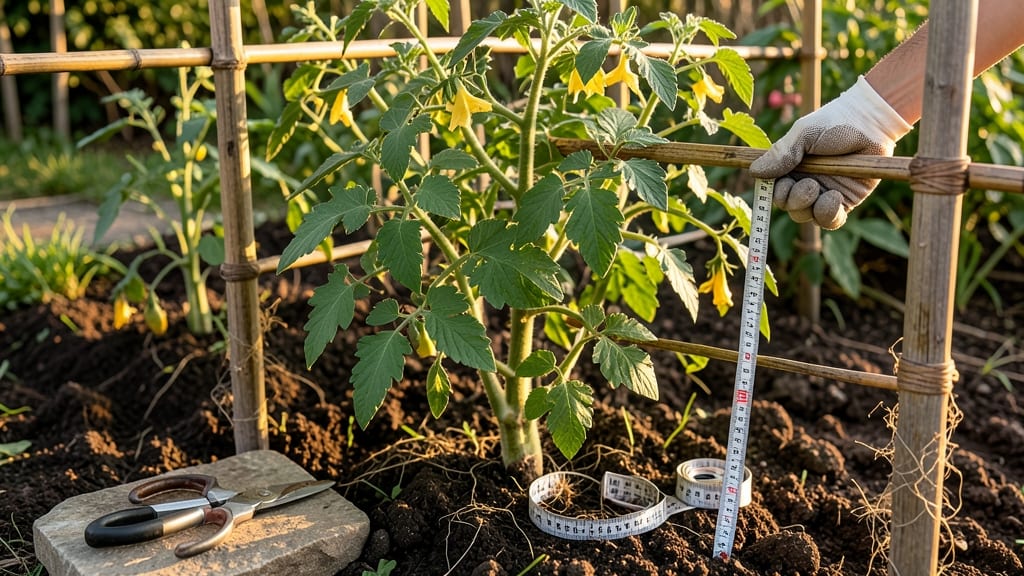
How tall should tomato plants grow? The answer depends on the variety and care—most thrive between 3 and 6 feet, striking the perfect balance for yield and ease of maintenance.
Picture this: you’ve spent weeks nurturing your 🍅 plants, only to watch them either sprawl uncontrollably or produce sparse fruit. The right height isn’t just about space—it’s the key to healthier vines, better airflow, and a bumper harvest.
Determinate varieties like ‘Roma’ stay compact (3–4 feet), while indeterminate types like ‘Brandywine’ can climb to 6 feet or taller if left unchecked. Without proper support or pruning, even the hardiest plants struggle—leading to disease, broken stems, or wasted energy.
In this guide, I’ll break down the ideal heights for your favorite varieties, when to prune for optimal growth, and how to use stakes or cages to keep your plants thriving without sacrificing yield.

Ideal tomato plant heights by variety: determinate vs indeterminate guide
Understanding your tomato plant's ideal height isn't just about garden aesthetics—it directly impacts yield, airflow, and disease prevention. Determinate and indeterminate varieties grow differently, requiring distinct space planning and support systems. Let me break down the height expectations for common types so you can optimize your garden layout.
Determinate tomatoes—like 'Roma' or 'Celebrity'—grow to a compact 3-5 feet and produce fruit all at once. Their bushy habit makes them perfect for containers or small spaces.
Indeterminate varieties, such as 'Sungold' or 'Brandywine', keep growing until frost, often reaching 6-10 feet with proper support. This continuous growth means staggered harvests throughout the season.
| Variety Type | Height Range | Space Needs | Best For |
|---|---|---|---|
| Dwarf (Determinate) | 1-3 ft | Containers (5+ gal), small beds | Balconies, patios, urban gardens |
| Bush (Determinate) | 3-5 ft | 2-3 ft spacing in rows | Traditional gardens, trellises |
| Semi-Dwarf (Indeterminate) | 4-6 ft | 3-4 ft spacing, stakes/trellis | Small yards, vertical gardening |
| Standard (Indeterminate) | 6-10 ft | 4-6 ft spacing, strong support | Large gardens, fences, pergolas |
🌱 Note: Height varies by variety and growing conditions.
For dwarf varieties, think 'Tiny Tim' or 'Patio'—these stay under 3 feet, making them ideal for container gardening. Their compact size also means they ripen faster, often producing fruit 50-60 days after transplanting.
If you're short on space, these are your best bet for high-yield, low-maintenance tomatoes.
Bush varieties like 'Roma' or 'Better Boy' reach 3-5 feet and thrive in raised beds or in-ground plots. They’re perfect for gardeners who want a balance between space efficiency and productivity.
These plants typically produce fruit over a 2-3 week window, so plan for a single harvest event rather than continuous picking.
When dealing with indeterminate varieties, height becomes a year-long commitment. Plants like 'Sungold' cherry tomatoes or 'Brandywine' heirlooms can grow 8-10 feet tall if given proper support.
This means installing trellises, cages, or stakes at planting time. Without support, these vining plants can flop and break, reducing both yield and plant health.
Your garden layout should account for these heights. Place tall indeterminate varieties along fences or trellises to save space, while bushy determinates can be spaced closer together in rows.
For example, a 6-foot indeterminate needs at least 3 feet of vertical clearance, while a 4-foot semi-dwarf only requires 2 feet of headroom.
Don’t overlook the root zone when planning height. Deeper-rooted indeterminate varieties need more soil volume to support their growth. Amend your soil with compost or aged manure to ensure nutrients reach the roots. For containers, choose pots that are at least 12-18 inches deep to accommodate root growth.
If you're growing multiple varieties, group them by height to simplify care. Place tall indeterminates at the back of your garden or along the fence line, with shorter determinates in the front.
This not only saves space but also makes harvesting easier. Just remember: airflow is key—crowding plants can lead to disease outbreaks like blight.
For urban gardeners, consider vertical gardening techniques. Use wall-mounted trellises or hanging planters for indeterminate varieties to maximize your small space. Even a 10-foot vine can thrive in a 2-foot-wide vertical planter if given proper support and training.
Pro tip: Prune regularly to manage height and encourage fruit production. For indeterminates, pinch off suckers (the small shoots in the leaf axils) to redirect energy to fruit growth. For determinates, minimal pruning is needed—just remove damaged or diseased leaves to improve airflow.
🌿 Whether you're growing dwarf tomatoes on your balcony or heirloom vines along your fence, understanding height expectations helps you plan, support, and maximize your harvest.
Start with the right variety for your space, and don’t forget to invest in proper support early—your tomatoes will thank you with bigger, healthier fruit all season long.
When and how to prune tomato plants for perfect height control
Pruning your tomato plants isn't just about keeping them neat and tidy—it directly impacts fruit production and plant health. The right pruning technique helps control height while encouraging more vigorous growth and larger yields.
Whether you're growing bushy determinate varieties or tall indeterminate vines, timing and method matter.
For indeterminate tomatoes, which grow continuously, pruning helps manage height and airflow while directing energy to fruit production. Meanwhile, determinate varieties typically don't need pruning but benefit from removing suckers and diseased leaves to improve air circulation. Let's dive into the best practices for pruning at different growth stages.
⚠️ Height Warning: Don't Let Tomatoes Get Too Tall
Most indeterminate tomato varieties can grow 6-10 feet tall if left unpruned, but this often leads to overcrowded foliage and poor fruit quality. Aim to keep plants between 4-6 feet tall for optimal yield and easier harvesting. Determinate varieties should stay under 3-4 feet—any taller risks stem breakage and disease spread.
Start pruning when your tomato plants are about 12-18 inches tall. This early stage is ideal for removing the first few suckers—those small shoots that grow in the leaf axils where the stem meets a leaf.
Use clean, sharp pruning shears or your fingers to pinch them off. Early pruning encourages a stronger main stem and more fruit-bearing branches.
In the mid-season, focus on maintaining your desired height by pruning suckers regularly. For indeterminate varieties, leave 2-3 main stems to maximize fruit production while keeping the plant manageable.
Remove any yellow or diseased leaves immediately to prevent spread of blight. Avoid over-pruning—never remove more than 1/3 of the foliage at once.
Late in the season, shift your focus to harvesting and cleanup. Prune away old leaves near the base to improve airflow and reduce fungal diseases. For determinate tomatoes, stop pruning entirely once fruit sets to allow energy to go toward ripening.
Never prune after the first frost, as the plant won't recover and new growth is vulnerable to cold damage.
Common pruning mistakes include removing too many leaves, which reduces the plant's ability to photosynthesize, or pruning at the wrong time, like during hot afternoons when stress increases. Always prune in the morning on a cool, cloudy day to help the plant recover quickly.
With the right approach, your tomato plants will stay healthy, productive, and at the perfect height for your garden space.