
How To
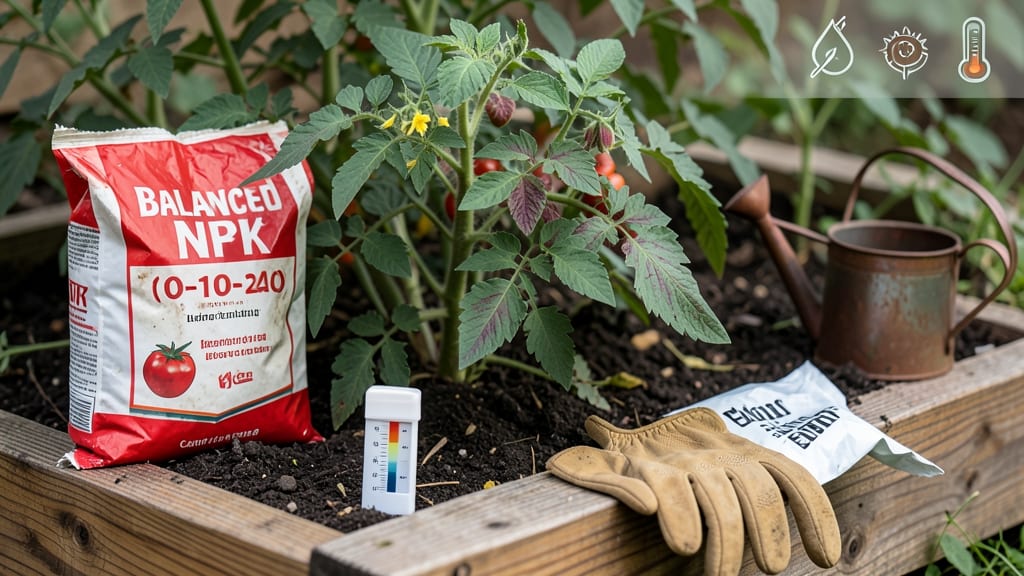
Purple tomato leaves mean your plants are screaming for help—usually phosphorus or calcium, but sometimes heat or disease. 🌱 I’ve seen this turn around in 48 hours with the right fix, and I’ll show you exactly how to diagnose and rescue your plants before the fruit suffers.
Start by checking the soil pH (should be 6.0-6.8 for tomatoes) and look for other signs: yellowing between veins means phosphorus, while brown spots on fruit signal calcium.
A quick soil test kit (under $20) gives you the answers fast, and I’ll walk you through the 3 most effective fixes—no guesswork.
Once you know the cause, you’ll adjust with either a phosphorus-rich fertilizer (like bone meal) or a calcium boost (crushed eggshells or lime). Prune any severely purple leaves to redirect energy, and keep soil moisture steady—dry spells worsen stress.
Most plants bounce back within 1-2 weeks, and you’ll save your harvest.
📚 In This Guide
- What you need
- Instructions
- Tips and common mistakes
- Wrapping up and next steps
What you need
- ● Balanced fertilizer (e.g., 10-10-10 or 20-20-20) – 1-2 tablespoons per plant (check label for specific dilution instructions).
- ● Phosphorus-rich fertilizer (e.g., bone meal or superphosphate) – 1 tablespoon per plant (helps with flowering and fruiting).
- ● Potassium-rich fertilizer (e.g., potassium sulfate or wood ash) – 1 teaspoon per plant (supports overall plant health).
- ● pH testing kit (digital or liquid test strips) – to check soil acidity (ideal range: 6.0–6.8).
- ● Calcium supplement (e.g., crushed eggshells, lime, or calcium nitrate) – 1 tablespoon per plant (if soil is deficient).
- ● Watering can or hose (with a gentle spray nozzle for foliage).
- ○ Gloves and protective eyewear (optional but recommended for handling fertilizers or soil amendments).
- ● Garden trowel or small shovel – for mixing amendments into the soil.
- ● Pruning shears – to trim severely affected leaves (if needed).
- ● Compost or well-aged manure – 1-2 cups per plant (for organic nutrient boost).
- ● Mulch (straw, grass clippings, or wood chips) – 2-3 inches thick (to retain moisture and regulate soil temp).
- ● Epsom salt (magnesium sulfate) – 1 tablespoon dissolved in 1 gallon of water (if magnesium deficiency is suspected).
- ● Notebook or camera – to track progress and note changes in leaf color.
Step-by-step solutions for purple tomato leaves
Here’s how to diagnose and correct the issue fast—before it spreads to the rest of your plants.
🌿 Step 1: Identify the Root Cause
Purple leaves on tomatoes usually mean phosphorus deficiency or environmental stress. Check the undersides of the leaves for a dull, almost violet tint—this is your first clue. Phosphorus helps roots develop and flowers set fruit, so when it’s missing, the plant redirects energy to critical functions, leaving leaves purple.
Rule out other issues first: overwatering (leads to yellowing), underwatering (causes crispy edges), or excessive nitrogen (leaves stay green but grow weak). Purple leaves alone? Phosphorus is the culprit. Grab a soil test kit if you’re unsure—it’s the only way to confirm nutrient levels accurately.
💧 Step 2: Apply a Phosphorus Boost
Use a balanced fertilizer (like 10-10-10) or a phosphorus-specific amendment (bone meal or rock phosphate). Mix 1 tablespoon of bone meal per plant into the top 2 inches of soil, then water deeply to activate it. Avoid liquid fertilizers with high nitrogen—they’ll worsen the imbalance.
If you’re growing in containers, dissolve 1 teaspoon of Epsom salt (for magnesium) and 1 teaspoon of superphosphate in 1 gallon of water, then water the plant thoroughly. Repeat every 7-10 days until the purple fades. Watch for new growth—first true leaves should return to green within 2-3 weeks if the fix works.
☀️ Step 3: Adjust Watering and Light
Purple leaves can also signal drought stress or too much sun. Check the soil: if it’s bone-dry 2 inches down, water deeply until moisture reaches 6 inches deep. Use a moisture meter for accuracy—wilting leaves mean you’ve waited too long.
If your tomatoes are in full sun (6+ hours daily), they might be overheating. Provide afternoon shade with a lightweight shade cloth (30-50% coverage) to reduce stress. Purple leaves often recover within 5-7 days once watering and light are balanced.
✂️ Step 4: Prune and Support Existing Growth
Remove any severely purple leaves to redirect energy to healthier foliage. Use sterilized pruners to avoid introducing disease. Snip just above a leaf node (where new leaves grow) to encourage bushier, greener regrowth.
If the plant is struggling, stake or cage it immediately to prevent wind damage. Weak stems can’t support fruit, and purple leaves make them even more brittle. A 5-foot tomato cage or bamboo stake gives structure while you correct the nutrient imbalance.
⏰ Step 5: Monitor and Prevent Relapse
After 2 weeks, reassess the leaves. If purple persists, the issue may be calcium deficiency (common in alkaline soils). Mix 1 cup of crushed eggshells into the soil around the base—calcium helps cell walls stay strong.
To prevent future issues, rotate crops every 3 years (tomatoes deplete phosphorus fast) and add compost annually. Mulch with straw or grass clippings to retain moisture and slowly release nutrients. Purple leaves are fixable—but catch them early, or yield suffers.
Tips & tricks for reviving purple tomato leaves
Here’s how to turn those purple-tinged leaves back to vibrant green—fast and effectively.
Diagnosis Tip: Before treating, confirm phosphorus deficiency by checking for a dull, violet tint on leaf undersides. This visual clue helps distinguish it from overwatering (yellowing) or nitrogen excess (weak, pale leaves). A soil test kit is your best tool for accuracy—it measures exact nutrient levels, not just guesswork.
Phosphorus Application: When mixing 1 tablespoon of bone meal into the top 2 inches of soil, water it in immediately to activate the nutrients. The key is placement—focus on the root zone where phosphorus uptake happens. For container plants, the 1 teaspoon of superphosphate in 1 gallon of water method works best when applied directly to the soil surface before watering.
Watering Wisdom: The 6-inch deep moisture target ensures roots access water without drowning. Use a moisture meter to avoid overwatering—wilting leaves mean you’ve waited too long. For afternoon shade, opt for a 30-50% coverage shade cloth; lighter coverage prevents overheating while still allowing light penetration for photosynthesis.
Pruning Precision: When removing severely purple leaves, snip just above a leaf node to encourage new growth. Sterilize your pruners with rubbing alcohol between cuts to prevent bacterial spread. This technique redirects the plant’s energy to healthier foliage, accelerating recovery.
Pro Tips for Fix Purple Tomato Leaves
- Here’s how to turn those purple-tinged leaves back to vibrant green—fast and effectively.
- Diagnosis Tip: Before treating, confirm phosphorus deficiency by checking for a dull, violet tint on leaf undersides.
- Phosphorus Application: When mixing 1 tablespoon of bone meal into the top 2 inches of soil, water it in immediately to activate the nutrients.
Frequently asked questions
Got questions about those pesky purple tomato leaves? You’re not alone!
Here are some of the most common concerns—and quick answers—to help you get your tomato plants back on track.
Why are my tomato leaves turning purple?
Purple leaves usually mean a phosphorus deficiency or stress from cold temperatures. Phosphorus helps with energy transfer in plants, so when it’s lacking, leaves may turn purple or reddish, especially on older foliage. Check your soil pH too—if it’s too alkaline (above 7.0), phosphorus becomes less available.
How long does it take to fix purple tomato leaves?
With the right care, you’ll see improvements in 1–2 weeks. If you’re using organic amendments like bone meal or compost, results may take a little longer (up to 3–4 weeks) because nutrients release slowly. Monitor your plants daily—new growth should return to green within 2–3 weeks if the issue is resolved!
Can I still harvest tomatoes if the leaves are purple?
Yes! Purple leaves are a sign of nutrient stress, not a disease, so your tomatoes won’t be unsafe to eat. However, if the issue isn’t addressed, it can reduce yield and fruit quality. Focus on fixing the problem ASAP—your next harvest will thank you! For best flavor, pick tomatoes when they’re fully colored and slightly soft to the touch.
What if my tomato leaves turn purple after adding fertilizer?
Too much nitrogen (or an imbalance of nutrients) can cause purple leaves, especially if your soil is already phosphorus-deficient. Flush the soil with water to dilute excess salts, then switch to a balanced fertilizer (like 10-10-10) or a phosphorus-specific amendment. Avoid over-fertilizing—more isn’t always better!
Will cold weather cause permanent damage to my tomato plants?
Cold stress (below 50°F/10°C) can turn leaves purple, but it’s usually temporary if temperatures warm up. If frost hits, your plant may suffer permanent damage. To prevent this, use row covers, mulch, or move potted plants indoors during chilly nights. Hardy varieties (like ‘Solar Fire’ or ‘Mountain Merit’) tolerate cooler temps better.
Wrapping up and next steps
Fixing purple tomato leaves is totally doable with the right care! Whether it’s nutrient imbalances, pH issues, or environmental stress, your plants can bounce back with patience and consistency.
Start by testing your soil and adjusting care based on what you’ve learned—your tomatoes will thank you with vibrant green leaves and juicy, flavorful fruit soon! 🌱
Ready to see your garden thrive? Grab your gloves, check those soil levels, and give your tomatoes the TLC they deserve! Happy growing! 🌿