
Pests
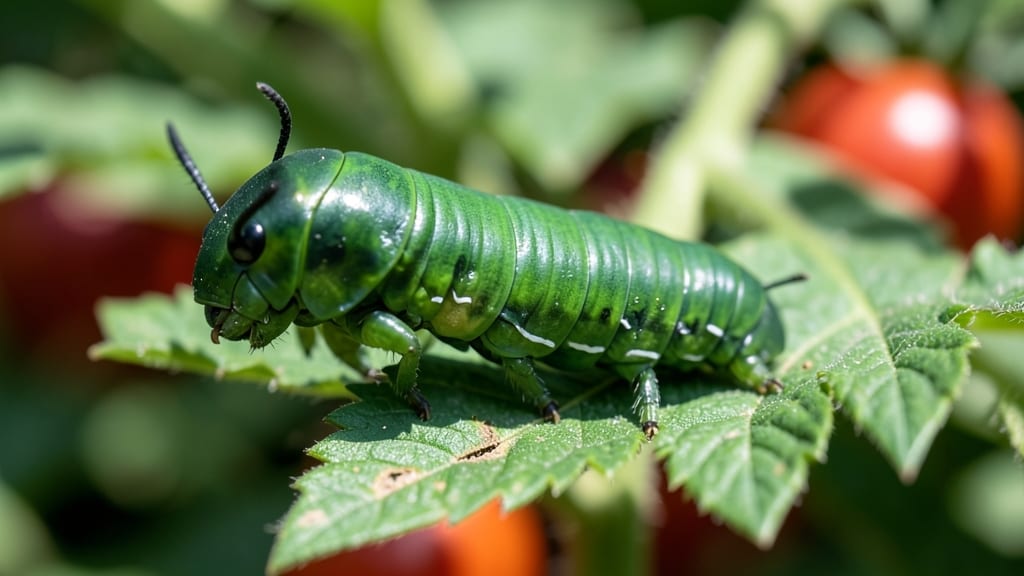
Spotting a large green caterpillar munching your tomato plant is every gardener’s worst nightmare. 🌱 These striped invaders—likely tomato hornworms—can strip a plant bare in a single night, leaving you scrambling to save your harvest. The good news? They’re easy to spot and remove before they cause serious damage.
These caterpillars grow up to 4 inches long and sport white diagonal stripes along their sides, blending perfectly into tomato foliage. Look for chewed leaves, missing flowers, or even the caterpillar itself lurking on stems.
The key is acting fast—handpicking is the most effective organic solution, and it works better than store-bought pesticides.
Once you spot one, grab a pair of gloves and a bucket of soapy water. Drop the caterpillar in, and watch it dissolve—no chemicals needed. Repeat daily for a week to ensure no stragglers remain.
Your plants will bounce back faster than you think, and you’ll avoid the heartbreak of a ruined harvest.
Prevention is simple: handpick regularly, use row covers early in the season, or introduce beneficial predators like parasitic wasps. This method keeps your garden healthy without harming pollinators or the environment. Now go save those tomatoes!
📚 In This Guide
- What you need
- Instructions
- Tips and common mistakes
- Wrapping up and next steps
What you need
- ● Handheld magnifying glass – Helps identify the caterpillar (e.g., tomato hornworm) and inspect plants thoroughly.
- ● Gloves (nitrile or rubber) – Protects your hands from prickly plants and potential irritants.
- ● Pruning shears or sharp scissors – For cleanly cutting infested leaves or stems.
- ● Bucket or jar (with lid) – To safely relocate caterpillars (1–2 quart size recommended).
- ● Soapy water solution – Mix 1 tbsp mild dish soap (like Castile soap) with 1 gallon of water in a spray bottle.
- ○ Neem oil (optional but effective) – 1–2 tbsp per gallon of water for a natural deterrent spray.
- ● Diatomaceous earth (food-grade) – 1–2 tbsp sprinkled around the base of plants as a barrier (reapply after rain).
- ○ Beneficial nematodes (optional) – Steinernema carpocapsae or Heterorhabditis bacteriophora (follow package instructions for application).
- ● Garden twine or cloth strips – To tie up tomato plants and deter egg-laying moths.
- ● Yellow sticky traps – Helps monitor and catch adult moths before they lay eggs.
- ● Bacillus thuringiensis (Bt) spray – A biological pesticide safe for organic gardens (follow label rates).
- ● Garden journal or camera – To track infestations and note which methods work best for future seasons.
Swift organic removal for healthy tomato plants
Here's how to tackle those pesky green caterpillars without harming your plants or the ecosystem.
🌿 Step 1: Identify the Caterpillar and Assess Damage
First, examine the caterpillar closely to confirm it's not a beneficial species like a tomato hornworm (which has white diagonal stripes). Most large green caterpillars on tomatoes are actually hornworms or loopers, both of which can defoliate plants quickly. Look for chewed leaves, frass (black droppings), and visible feeding damage along leaf edges.
Check the undersides of leaves and near stems—these are their favorite hiding spots. If you see more than one, act fast. A single caterpillar can consume an entire leaf overnight. I always inspect plants in the early morning when caterpillars are sluggish and easier to spot.
✂️ Step 2: Manual Removal Using Gloves and a Container
Put on thick gardening gloves to protect your hands from potential irritation. Use a small container like a mason jar or plastic cup with a lid to capture the caterpillar. Gently shake the plant to make the caterpillar move, then quickly scoop it up with your fingers or a small tool like a chopstick.
Drop the caterpillar directly into the container and seal it tightly. I like to use a jar with a lid because it's easy to transport and dispose of later. Avoid squishing the caterpillar—this can release pheromones that attract more pests. Place the container in a sealed bag and dispose of it in outdoor trash.
💧 Step 3: Apply Organic Sprays for Immediate and Preventative Control
After removing visible caterpillars, treat the plant with an organic spray like neem oil or insecticidal soap. Mix 1 tablespoon of neem oil with 1 quart of water and a few drops of dish soap as an emulsifier. Spray the solution thoroughly on the tops and undersides of leaves, focusing on areas with heavy caterpillar activity.
Apply in the early morning or late evening to avoid harming beneficial insects like ladybugs or lacewings. Reapply every 5-7 days or after rain. I've found that combining neem oil with a light application of kaolin clay (food-grade) creates a protective barrier that deters caterpillars from returning.
☀️ Step 4: Introduce Natural Predators for Long-Term Defense
Encourage beneficial insects like parasitic wasps and braconid wasps, which naturally control caterpillar populations. These tiny wasps lay their eggs inside caterpillars, eventually killing them. Planting dill, fennel, or cilantro nearby attracts these predators. You can also purchase and release Trichogramma wasps from garden centers.
Another effective strategy is to invite birds to your garden. Install a bird feeder or bath near your tomato plants to attract insect-eating species like chickadees and wrens. I've seen wrens swoop in and snatch caterpillars right off the plants—it's like having a built-in pest control system.
🌱 Step 5: Monitor and Maintain Plant Health
After treatment, keep a close eye on your tomato plants for any signs of new caterpillars. Check daily for the first week, then reduce to every other day once the plants are stable. Healthy plants are less susceptible to pests, so ensure they receive 6-8 hours of sunlight, 1-2 inches of water weekly, and a balanced organic fertilizer every 4-6 weeks.
Prune any heavily damaged leaves to encourage new growth and improve air circulation. Avoid over-fertilizing with nitrogen, as this promotes lush foliage that attracts more pests. I like to use a fish emulsion fertilizer for a balanced boost without overstimulating leaf growth.
Tips & tricks for effective organic caterpillar control
Real talk: The key to saving your tomato plants isn't just removing caterpillars—it's preventing them from coming back. These targeted strategies will help you protect your harvest without harming your garden's ecosystem.
Timing Secret: In Step 1, when you're identifying caterpillars, focus on early morning inspections—this is when caterpillars are slowest and easiest to spot before they start feeding. I've found that checking between 6-8 AM gives me the best chance to catch them before they cause serious damage. Look for fresh feeding marks along leaf edges, which are a dead giveaway for recent activity.
Equipment Upgrade: For Step 2, consider using a pair of long-handled tongs instead of just your fingers. This gives you better reach for those hard-to-get caterpillars hiding deep in the foliage while keeping your hands protected. I keep a pair of tongs in my gardening toolkit specifically for this purpose—they're especially helpful for tall tomato plants where caterpillars often hide near the top.
Spray Technique: When applying your organic sprays in Step 3, focus on the undersides of leaves where caterpillars often hide. Use a fine mist setting on your sprayer to ensure thorough coverage, particularly along leaf veins where pests tend to cluster. I like to spray until the leaves are visibly wet, but avoid oversaturating the soil to prevent fungal issues. The 5-7 day reapplication schedule is critical—don't skip it, even if you don't see immediate results.
Predator Attraction: For Step 4, if you're planting dill or cilantro to attract beneficial insects, choose varieties with dense foliage—they'll provide better shelter for parasitic wasps. I've had the most success with 'Mammoth' dill and 'Calypso' cilantro, which grow tall enough to create ideal hiding spots for these tiny predators. Place these plants within 3-4 feet of your tomato plants for maximum effectiveness.
Pro Tips for Large Green Caterpillar On Tomato Plant
- Real talk: The key to saving your tomato plants isn't just removing caterpillars—it's preventing them from coming back.
- Timing Secret: In Step 1, when you're identifying caterpillars, focus on early morning inspections—this is when caterpillars are slowest and easiest to spot before they start feeding.
- Equipment Upgrade: For Step 2, consider using a pair of long-handled tongs instead of just your fingers.
Frequently asked questions
Got questions about that large green caterpillar munching your tomato plants? You’re not alone!
Here are answers to the most common concerns—so you can act fast and protect your harvest.
What kind of caterpillar is eating my tomato plants?
That large green caterpillar is likely a hornworm (tomato hornworm or tobacco hornworm). These striped, voracious pests can devour entire leaves overnight! Identify them by their smooth, green bodies (sometimes with white diagonal stripes) and horn-like projections on their rear.
How quickly can a single caterpillar destroy my tomato plants?
Fast! A single hornworm can consume 20+ leaves in one day and strip a plant bare in 3–5 days if left unchecked. Since they’re nocturnal, you might not notice damage until morning. Act within 24–48 hours to prevent total defoliation.
Are there organic ways to remove them without harming my plants?
Yes!
Try these non-toxic methods:
- Handpick them (drop in soapy water).
- Use Bt (Bacillus thuringiensis) spray—a natural bacteria that targets caterpillars.
- Introduce parasitic wasps (like Cotesia congregata), which lay eggs inside hornworms.
- Apply neem oil or kaolin clay as a deterrent.
Why do I keep finding more caterpillars even after removal?
Hornworms reproduce fast—a single female can lay 2,000+ eggs in her lifetime! Check undersides of leaves for egg clusters (tiny, green, or translucent). Remove eggs daily, and inspect plants every 2–3 days at dawn/dusk when they’re most active.
Will hornworms affect my tomatoes’ fruit quality or yield?
While they won’t directly damage fruit, severe defoliation weakens plants, reducing yield and stressing tomatoes. Early removal ensures healthier vines and better fruit production. If you spot chewed leaves + wilting, act immediately—your harvest depends on it!
Wrapping up and next steps
Encountering a large green caterpillar on your tomato plants can feel overwhelming, but with the right organic methods, you can protect your harvest without harming your garden’s balance. 🌱 From handpicking to introducing natural predators, these solutions are simple, effective, and eco-friendly. Don’t let pests discourage you—take action today!
Your next step? Pick one method from this guide and try it this week. Monitor your plants regularly, and soon, you’ll be enjoying juicy, pest-free tomatoes all season long! 🍅