
Flowers
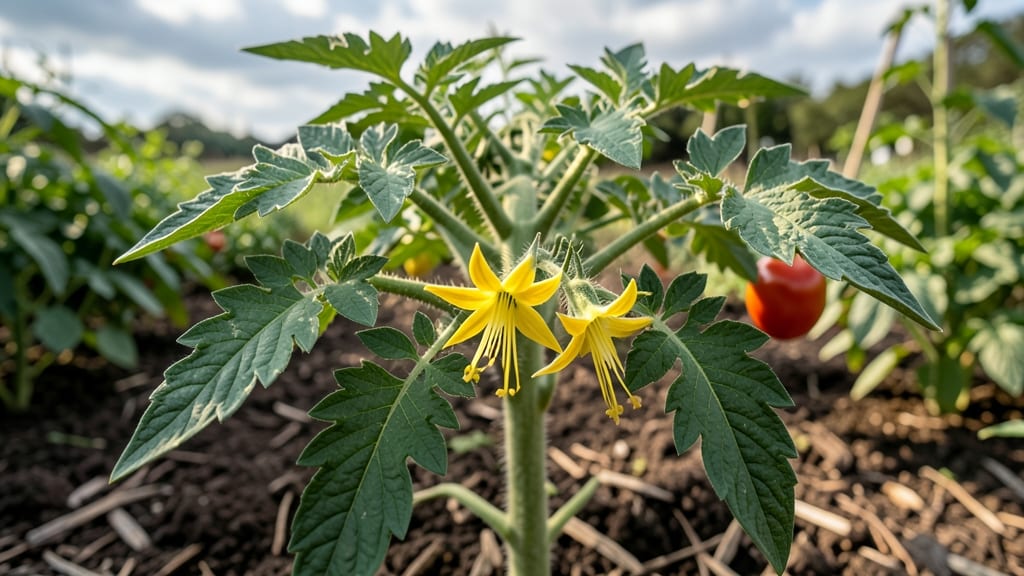
Male tomato flowers enable pollination and fruit development without producing fruit themselves. Removing excess male blooms helps channel energy toward female flowers, boosting yields in determinate tomato varieties. Spot them by their slender stems and absence of fruit-setting potential at the base.
Understanding these flowers is key to maximizing your tomato harvest. 🌱 Male flowers appear first in the season and rely on bees or wind to transfer pollen to female flowers, which develop into fruit.
The difference in stem shape—male flowers have long, slender stems while female flowers have tiny fruit buds at the base—makes identification straightforward. This distinction is especially important for gardeners growing hybrid varieties, where pollination efficiency directly impacts fruit size and quality.
For best results, remove male flowers when they first appear to encourage more female blooms later in the season. This technique works particularly well for determinate varieties, which produce fruit in clusters.
A balanced fertilizer with equal parts nitrogen, phosphorus, and potassium supports healthy flower development, while consistent watering prevents stress that could reduce flowering. Pruning in the early morning minimizes plant shock and keeps your garden thriving.
💡 In This Article
- How Male and Female Tomato Flowers Differ in Pollination
- Best Pruning and Care Tips to Boost Female Flower Growth
How male and female tomato flowers differ in pollination
The key difference between male and female tomato flowers lies in their reproductive roles. Male flowers contain only stamens (pollen-producing structures) and rely on pollinators like bees or wind to transfer pollen to female flowers. Their slender stems—typically 1-2 inches long—lack the swollen ovary base that female flowers develop.
This structural difference makes them easy to spot: male flowers hang freely while female flowers sit closer to the plant's main stem with a tiny fruit bud forming at their base.
Female flowers, on the other hand, possess both stamens and a pistil (the ovary that will develop into fruit). Their stems are usually shorter (0.5-1 inch) and thicker, with a noticeable swelling where the fruit will form.
The hormonal trigger for female flower development comes from ethylene gas, which plants produce in response to stress or maturity. Hybrid varieties often produce more female flowers earlier in the season compared to heirlooms, which may require more time to develop fruit-bearing blooms.
Pollination efficiency varies dramatically between these flower types. Male flowers act as pollen donors, while female flowers are the recipients. When bees visit a male flower, they pick up pollen that gets deposited on female flowers' stigmas.
This process is why removing excess male flowers can actually improve fruit set—it forces the plant to focus its energy on developing female flowers that are already primed to receive pollen. In greenhouse settings, growers sometimes use hand-pollination techniques to ensure even better fruit development.
Temperature plays a surprising role in flower development. Male flowers tend to appear first when temperatures are 65-75°F, while female flowers dominate when nights dip below 60°F. This is why late-season tomatoes often produce more fruit—cooler temperatures trigger ethylene production.
For gardeners in warm climates, providing afternoon shade can help encourage more female blooms. The plant's natural response to stress (like heat or drought) often shifts its energy toward reproductive growth rather than vegetative growth.
Visual identification becomes easier with practice. Hold a flower between your fingers: if it has a small fruit bud at the base, it's female.
If it's just a slender stem with no swelling, it's male. 🌸 This distinction is especially valuable for heirloom varieties, where pollination efficiency directly impacts fruit size and flavor.
For example, 'Brandywine' tomatoes produce fewer male flowers than hybrids like 'Better Boy,' meaning you'll need to be more deliberate with pruning to maximize fruit production.
Understanding this botanical dance helps explain why some tomato plants produce more fruit than others. The ratio of male to female flowers can shift based on growing conditions, variety selection, and even the plant's age.
For instance, indeterminate varieties like 'Sungold' will continue producing male flowers throughout the season, while determinate varieties like 'Roma' shift focus to female flowers after the first flush of blooms.