
Vegetables
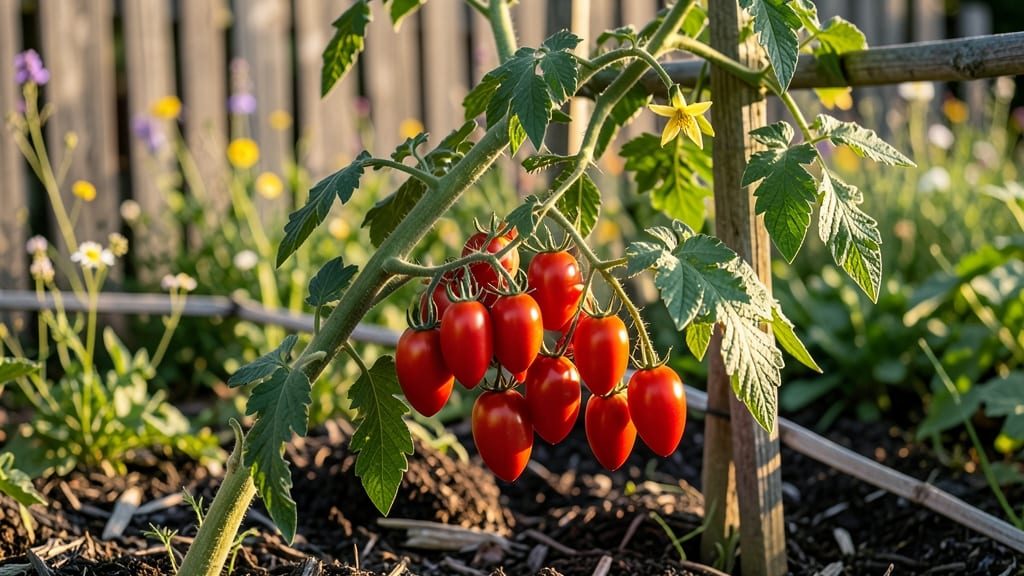
An oblong tomato type like Roma and San Marzano delivers the richest flavors and thickest sauces you'll ever grow. 🌱 The first time I tasted a homegrown Roma tomato sauce, I knew I'd never buy store-bought again—it's that much better.
These tomatoes aren't just for sauces though; their meaty texture holds up perfectly for stuffing, roasting, or slicing onto sandwiches.
Growing them is simpler than you might think. They thrive in full sun (6-8 hours daily) and well-draining soil with plenty of organic matter. Most varieties grow on indeterminate vines, so they'll need sturdy cages or trellises—though some bush types like 'Plum Perfect' stay compact.
The key is consistent moisture; let the top inch of soil dry between waterings to prevent cracking.
You'll start seeing fruit in 70-85 days, and the harvest keeps coming until frost. The secret to heavy yields? Pruning suckers regularly and feeding with compost tea every 3-4 weeks. My Roma plants produced 20+ pounds of tomatoes last season—enough for sauce, salsa, and gifts to neighbors.
These tomatoes shine in recipes that need depth of flavor, like homemade marinara, bruschetta, or even fresh salsa. For best results, harvest when fully colored but still firm, and store in the fridge for up to a week.
If you love rich, meaty tomatoes, these are the varieties to grow—no fancy equipment required.
📚 In This Guide
- What you need
- Instructions
- Tips and common mistakes
- Wrapping up and next steps
What you need
- ● Oblong tomato seeds or seedlings: Choose varieties like San Marzano, Roma, or Plum (3–5 plants per household, depending on yield goals).
- ● Opt for heirloom or hybrid seeds based on your preference for flavor or disease resistance.
- ● Growing containers or garden space: For containers: 5-gallon pots or larger (at least 12–18 inches deep) with drainage holes.
- ● For in-ground planting: Full-sun location (6–8+ hours/day) with well-draining soil (pH 6.0–6.8).
- ● Potting mix or soil: High-quality seed-starting mix (for seedlings) or compost-amended garden soil (for transplants).
- ● Add perlite or vermiculite (20–30%) to improve drainage.
- ● Fertilizer: Balanced organic fertilizer (e.g., 5-5-5 or 10-10-10) or compost (1 cup per plant at transplanting).
- ● Slow-release tomato-specific granules (follow package instructions).
- ● Support system: Cages (5–6 feet tall) or stakes (6+ feet) to prevent sprawling.
- ● Trellis or tomato clips for indeterminate varieties.
- ● Watering supplies: Drip irrigation kit or soaker hose (to keep soil consistently moist).
- ● Watering can with a rose attachment (for seedlings).
- ● Mulch: Straw or shredded leaves to retain moisture and suppress weeds.
- ● Pruning shears: For trimming suckers and dead leaves (sterilize with rubbing alcohol).
- ● Row covers: Frost blankets for early-season protection.
- ● pH test kit: To monitor soil acidity and adjust with lime or sulfur if needed.
- ● Grow lights: If starting seeds indoors (12–16 hours of light/day).
How to select and grow oblong tomato varieties for maximum yield
Here's the method I rely on to grow high-producing, disease-resistant oblong tomatoes that keep bearing all season.
🌱 Step 1: Choose the Right Varieties for Your Climate
Oblong tomato types like 'Brandywine,' 'Cherokee Purple,' and 'Black Krim' thrive in 60-90°F ranges but need full sun (8+ hours daily). For cooler climates, opt for early-maturing varieties like 'Mountain Merit'—they ripen in 70-75 days and resist cracking. If you're in a hot, dry region, heat-tolerant types such as 'Solar Fire' hold up better under 90°F+ conditions.
I always check seed packets for disease resistance codes (look for V, F, or N labels). 'Celebrity' and 'Better Boy' are top picks for vertical growing—their indeterminate vines produce 10-15 pounds per plant when staked properly. For smaller spaces, 'Patio' or 'Tiny Tim' stay compact but still deliver pound after pound of oblong fruit.
☀️ Step 2: Plant in Well-Draining Soil with Full Sun Exposure
Oblong tomatoes need rich, slightly acidic soil (pH 6.2-6.8) with 3-4 inches of organic matter mixed in. Amend heavy clay with compost and perlite to prevent root rot—waterlogged soil is their #1 enemy. I test soil moisture by sticking my finger 2 inches deep; if it feels dry, it's time to water.
Plant seeds ¼ inch deep in warm soil (70°F+) or transplant 6-8 weeks before last frost when night temps stay above 50°F. Space plants 18-24 inches apart in rows 3-4 feet apart to allow airflow. This spacing prevents blight and fungal diseases that plague crowded tomato beds.
💧 Step 3: Water Deeply at the Base and Fertilize Strategically
Water once a week with 1-2 inches of water—more in 90°F+ heat—directly at the soil base. Avoid wetting leaves to prevent early blight. I use a drip irrigation system set on a timer to keep roots consistently moist without overwatering. Yellowing leaves? That's your cue to increase watering or check for root-bound plants.
Feed plants every 2-3 weeks with a balanced 10-10-10 fertilizer until flowering, then switch to low-nitrogen, high-phosphorus (5-10-10) to boost fruit production. Too much nitrogen = leafy growth, no tomatoes. I also side-dress with compost tea mid-season for a natural nutrient boost.
✂️ Step 4: Prune and Support for Heavy Fruit Loads
Prune suckers (the small shoots in the leaf axils) to direct energy to fruit production. I remove all suckers below the first flower cluster and 50% above to keep the plant balanced. This prevents overcrowding and disease while maximizing air circulation.
Use strong stakes or cages to support indeterminate varieties—their vines can grow 6-10 feet tall under ideal conditions. Trellising also makes harvesting easier and reduces soil-borne diseases by keeping fruit off the ground. Pinch off the first flower cluster if seedlings are small; let them grow 4-5 feet tall first for stronger stems.
🍅 Step 5: Harvest and Store for Long-Term Enjoyment
Pick oblong tomatoes when they're fully colored and slightly soft to touch. Ripe fruit stores best at 55-60°F for 1-2 weeks. I harvest in the morning when temps are coolest—this preserves flavor and firmness. For long-term storage, freeze whole or slice after blanching for 2 minutes to retain texture.
Save seeds from heirloom varieties by fermenting the pulp in a jar for 3-5 days, then rinsing and drying. This preserves genetic integrity for next year's garden. If you notice cracked fruit, reduce watering slightly and mulch heavily to keep soil moisture even.
Tips & tricks for maximizing your oblong tomato harvest
These garden-tested strategies will help you coax the most flavorful, disease-resistant oblong tomatoes from your plants all season long.
Climate Matching: Pay attention to your local microclimate when selecting varieties. While 'Brandywine' thrives in the 60-90°F range, I've found that planting it in cooler morning areas with afternoon sun protection prevents sunscald. For coastal gardens, choose varieties like 'Solar Fire' that tolerate the 90°F+ heat without wilting. The key is matching the variety's ideal temperature range to where your plants experience their warmest hours.
Soil Prep Secret: Before planting, mix in 3-4 inches of compost and perlite to create the perfect well-draining environment. I always add a handful of crushed eggshells for calcium—this prevents the dreaded blossom-end rot that plagues so many tomato gardens. For heavier clay soils, create raised beds or mounds to improve drainage, which is absolutely critical for oblong varieties that are prone to cracking.
Pruning Strategy: When pruning suckers in Step 4, focus on maintaining an open center that allows sunlight to reach all fruit clusters. I remove all suckers below the first flower cluster and about 50% above it, but I leave some foliage near the top to provide shade for the lower fruit as it ripens. This balance prevents sunburn while still maximizing air circulation to reduce disease risk.
Harvest Timing: The 2-minute blanching time before freezing is your best friend for preserving texture. I harvest early in the morning when tomatoes are coolest and most flavorful, then immediately blanch them in boiling water before shocking in ice water. This process locks in color and prevents the mushy texture that develops when tomatoes freeze without proper preparation.
Pro Tips for Oblong Tomato Type
- These garden-tested strategies will help you coax the most flavorful, disease-resistant oblong tomatoes from your plants all season long.
- Climate Matching: Pay attention to your local microclimate when selecting varieties.
- Soil Prep Secret: Before planting, mix in 3-4 inches of compost and perlite to create the perfect well-draining environment.
Frequently asked questions
Got questions about growing and using oblong tomato varieties?
You’re not alone! Here are answers to the most common queries to help you grow a bountiful harvest with ease.
What’s the best time to plant oblong tomato seeds or seedlings?
Plant oblong tomato seeds indoors 6–8 weeks before your last frost date, or transplant seedlings after soil warms to 60°F+ (15°C+). For cooler climates, opt for early-maturing varieties like ‘San Marzano’ or ‘Roma’. Avoid planting too early—cold soil stunts root growth and invites disease.
How long does it take for oblong tomatoes to ripen?
Most oblong varieties mature in 70–90 days from transplanting, depending on the type and growing conditions. ‘Plum Crunch’ or ‘Black Krim’ may take slightly longer (up to 100 days), while hybrids like ‘Sweet 100 Roma’ ripen faster (60–70 days). Monitor color changes—deep red, purple, or yellow hues signal peak ripeness!
Can I grow oblong tomatoes in containers, or do they need a garden bed?
Oblong tomatoes thrive in 5-gallon+ containers with proper support (cages or stakes). Choose compact varieties like ‘Tiny Tim’ or ‘Patio Roma’ for small spaces. Ensure containers have drainage holes and use a lightweight potting mix to prevent root stress. Just mimic garden conditions with full sun (6–8 hours/day) and consistent watering.
What can I do if my oblong tomatoes crack or split?
Cracking often happens due to uneven watering—soak soil deeply but consistently, especially during fruit set. Mulch around plants to retain moisture and reduce temperature swings. If cracks appear, harvest promptly and use affected tomatoes in sauces or salsas (they’re still safe to eat!). For prevention, avoid over-fertilizing with high-nitrogen feeds late in the season.
Are oblong tomatoes better for sauces, slicing, or canning?
Oblong tomatoes are versatile powerhouses! Their thick flesh and low water content make them ideal for sauces, pastes, and canning (e.g., ‘San Marzano’). Some varieties, like ‘Roma’, are also great for slicing when fully ripe. For canning, opt for paste varieties with fewer seeds. Pro tip: Blend unripe tomatoes with herbs for a tangy green sauce!
Wrapping up and next steps
Growing oblong tomato varieties can transform your garden into a bountiful harvest hub—whether you’re a seasoned gardener or just starting out! These unique types offer delicious flavors, disease resistance, and high yields, making them a standout choice for any plot.
With the right soil, sunlight, and care, you’ll soon be enjoying homegrown tomatoes that rival store-bought (or even beat them!).
Ready to take the next step? Start by picking one or two varieties that suit your climate and space, then gather your supplies and dive in! Your future self—and your taste buds—will thank you. 🌱✨