
Pests and Diseases
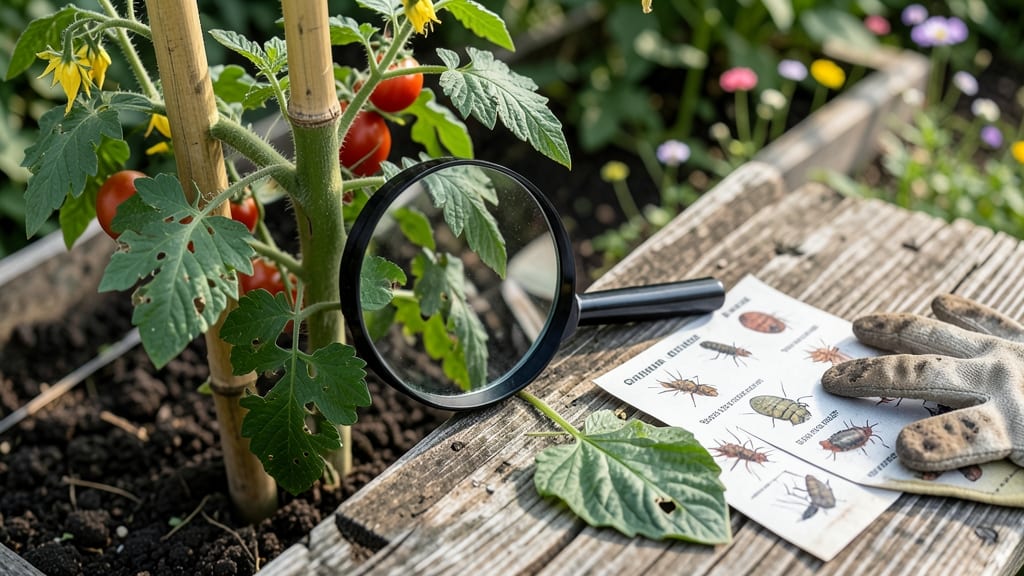
Those small holes in your tomato leaves aren’t just annoying—they’re a sign your plants are under attack. 🌱 I've seen flea beetles turn lush foliage into Swiss cheese in just a few days, and the damage adds up fast if you don't act.
The culprits are usually flea beetles, spider mites, or even environmental stress from hail or strong winds. You'll spot the difference in the pattern: flea beetles leave random holes, while mites create fine webbing between leaves. The good news? Both can be controlled without harsh chemicals.
By the time you see these holes, your plants are already fighting back. With the right organic treatments—like neem oil, row covers, or companion planting—you can stop the damage and keep your tomatoes thriving. I've saved entire plants using these methods. Works for backyard gardens, containers, and even raised beds.
Let's get those leaves healthy again!
Hidden Culprits Behind Tiny Leaf Damage
When you spot small holes in tomato leaves, it’s rarely a random act of nature—these punctures are almost always a sign of a pest invasion or environmental stress. Understanding the root cause is the first step to restoring your plants’ health.
Below, we break down the most common reasons these tiny wounds appear, along with the science behind them.
Most small holes in tomato leaves are caused by insects that feed directly on foliage, leaving behind precise, jagged punctures. These pests often go unnoticed until the damage becomes visible. Here’s who’s likely to blame:
-
Spider Mites 🕷️
These microscopic arachnids use their needle-like mouthparts to pierce plant cells and suck out sap. While they don’t create large holes, their feeding causes stippling—tiny white or yellow specks that eventually turn brown and create a "sandy" texture. Heavy infestations can lead to leaf drop and weakened plants.
Why it happens: Spider mites thrive in hot, dry conditions (especially above 85°F) and low humidity. They multiply rapidly, often going unnoticed until the damage is severe.
-
Flea Beetles 🐞
These tiny, jumping beetles (1/16" long) create shotgun-like holes in leaves, often with a chewed, ragged edge. They’re most active in early morning or after rain, making them hard to spot. Heavy feeding can stunt growth and invite fungal infections.
Why it happens: Flea beetles are drawn to young, tender tomato seedlings and prefer warm soil (above 60°F). They’re also attracted to weeds and cover crops near tomato plants, which act as breeding grounds.
-
Leafminers 🐛
While leafminers create blister-like trails or serpentine tunnels (not just holes), their larvae can also cause pinprick-sized exit holes as they mature. Look for translucent, winding paths inside leaves.
Why it happens: Leafminer eggs are laid on the underside of leaves, and larvae burrow into the tissue for protection. They favor stressed or over-fertilized plants and thrive in greenhouse or high-humidity conditions.
Not all small holes are caused by pests—sometimes, your tomato plants are damaging themselves due to environmental factors. These issues often mimic pest damage but lack the characteristic feeding patterns.
| Cause | How It Happens | Key Signs |
|---|---|---|
| Hail or Wind Damage ⚡ | Sudden storms can puncture leaves with ice or debris, creating irregular holes. Unlike pest damage, these holes are randomly shaped and may affect the entire plant. |
|
| Ozone or Pollution Injury 🌆 | High levels of ground-level ozone (common in urban areas or during heatwaves) can cause intercellular damage, leading to tiny, brown or grayish holes, especially on upper leaves. |
|
| Excessive Moisture or Fungal Spot 💧 | Certain fungi, like Alternaria or Septoria leaf spot, can create tiny, water-soaked lesions that eventually turn brown and crust over, resembling holes. |
|
Sometimes, well-meaning gardeners unintentionally create small holes in tomato leaves through improper care. Here’s how:
-
Overhead Irrigation 💦
Splashing water can disrupt leaf surfaces, creating tiny tears or abrasions. This is especially true for delicate tomato varieties like cherry tomatoes.
Why it happens: Water droplets act like mini projectiles, weakening cell walls. Combined with wind or hail, the damage worsens.
-
Physical Trauma from Pruning or Harvesting ✂️
Aggressive pruning, rough handling during harvesting, or even brushes against leaves (like from nearby plants) can cause pinpoint tears.
Why it happens: Tomato leaves are thin and brittle when stressed (e.g., drought or heat). A single snag can split the epidermis, leading to unsightly holes.
-
Nutrient Burn from Over-Fertilizing 🌿
Too much salt or nitrogen can cause leaf tissue to blister or crack, resulting in small, irregular holes as cells burst.
Why it happens: Excessive fertilizer (especially synthetic types) raises soil salinity, disrupting water uptake and causing cellular damage.
💡 Pro Tip: To distinguish between pest damage and environmental causes, examine the undersides of leaves (for eggs or webbing) and check for patterns. Pest holes are usually uniform in size and shape, while stress-related damage is irregular and scattered.
Quick fixes for tomato leaf damage
When you spot tiny perforations or chewed edges on your tomato leaves, it’s time to act fast—but don’t stress! Most issues caused by pests or environmental factors have straightforward, organic solutions.
Below, we’ve mapped the most common culprits to their fixes, so you can diagnose and treat your plants like a pro. Bonus: We’ve included prevention tips to keep your tomatoes thriving all season long.
1. Flea Beetles: The Tiny Leaf Punchers
If your leaves have tiny, irregular holes (like a shotgun blast) and the beetles are barely visible, flea beetles are likely the troublemakers. These pests are most active in warm, dry weather and can devastate young plants.
🔥 How to Fix It:- Handpick and crush 👨🍳: Early in the morning, shake plants over a bucket of soapy water to drown them. Or simply squish them between your fingers (gross but effective!).
- Use row covers 🛡️: Cover seedlings with lightweight floating row fabric to block beetles before they lay eggs. Remove when flowers appear to allow pollination.
- Spray with neem oil 🌿: Mix 2 tbsp neem oil + 1 tsp mild soap in 1 gallon of water. Spray leaves (especially undersides) every 5–7 days. Pro tip: Apply in the evening to avoid harming bees.
- Diatomaceous earth (DE) 💀: Sprinkle food-grade DE around the base of plants. It’s a natural abrasive that dehydrates beetles—but reapply after rain.
- Interplant tomatoes with basil, marigolds, or nasturtiums to repel beetles.
- Water deeply in the morning to encourage strong, resilient plants that beetles avoid.
2. Spider Mites: The Web-Weaving Menaces
Look for fine webbing on leaves and stippled, yellowing patches—these are classic signs of spider mites. They thrive in hot, dry conditions and multiply rapidly.
🍳 How to Fix It:- Blast them off with water 💦: Use a strong spray nozzle to wash mites away, especially on the undersides of leaves.
- Introduce predator insects 🐞: Ladybugs, lacewings, and predatory mites eat spider mites. Buy them online or attract them with diverse plantings.
- Horticultural oil spray 🛢️: Mix 2 tbsp horticultural oil + 1 tsp soap in 1 gallon of water. Spray thoroughly and repeat every 5–7 days.
- Increase humidity 🌧️: Mites hate moisture. Mist plants daily or use a humidifier near your garden.
- Keep your garden weeded and clean—mites hide in debris.
- Avoid over-fertilizing with nitrogen, which attracts mites.
3. Slugs and Snails: The Nighttime Leaf Munchers
If holes are large, jagged, and often accompanied by slime trails, slugs or snails are likely sneaking in after dark. They prefer tender young leaves and can skeletonize foliage overnight.
👨🍳 How to Fix It:- Set beer traps 🍺: Bury a shallow dish filled with beer near plants. Slugs crawl in and drown—easy and effective!
- Handpick at night 🌙: Use a flashlight and a damp towel to collect and relocate slugs to a far-away compost pile.
- Copper tape barrier ⚡: Wrap copper tape around pots or raised beds. The electric shock repels slugs.
- Crushed eggshells or coffee grounds 🥚☕: Sprinkle these around plants—they create a sharp, uncomfortable surface that deters slugs.
- Water in the morning (slugs love damp, shady spots).
- Remove hiding spots like boards, rocks, or thick mulch near plants.
4. Wind or Hail Damage: Nature’s Punctures
If holes are random, uneven, and lack chewing marks, your tomatoes might be victims of wind, hail, or even curious critters (like rabbits).
🔪 How to Fix It:- Prune damaged leaves ✂️: Remove heavily torn leaves to redirect energy to new growth.
- Protect with stakes or netting 🪵: Use tomato cages or windbreaks to shield plants from harsh elements.
- Mulch heavily 🌿: Add straw or wood chips to stabilize soil and reduce wind damage.
- Plant tomatoes in sheltered spots or against a fence/wall.
- Choose wind-resistant varieties like ‘Solar Fire’ or ‘Mountain Merit.’
Healthy tomatoes resist pests better! Follow these tips to boost your plants’ natural defenses:
- Water consistently 💧: Deep watering (1–2 inches per week) prevents stress that attracts pests.
- Rotate crops 🔄: Avoid planting tomatoes in the same spot yearly to break pest/disease cycles.
- Fertilize balanced 🌱: Use a low-nitrogen, high-potassium fertilizer (like 5-10-10) to strengthen leaves.
- Inspect regularly 👀: Check undersides of leaves and new growth weekly for early signs of trouble.
With these targeted fixes, your tomato plants should bounce back stronger than ever. Act fast for minor damage, but don’t panic—even heavily damaged leaves won’t stop your tomatoes from producing fruit! 🍅💪
Frequently asked questions
Why do my tomato leaves have tiny holes but no other signs of pests?
Those small holes in tomato leaves without visible pests could be from leafminers (exit holes) or ozone pollution in urban areas. Check for fine webbing (mites) or serpentine trails (leafminers) on leaf undersides. If no pests, it might be wind damage—examine stems for bruising or torn edges.
Can I still harvest tomatoes if the leaves have holes?
Tomato plants produce fruit even with damaged leaves. The holes reduce photosynthesis slightly, but your plant will prioritize fruit development. Focus on removing heavily chewed leaves to redirect energy. Just watch for fruit rot if holes expose stems to moisture.
How do I tell if the holes are from flea beetles vs. hail?
Flea beetle holes are uniform, jagged edges (like shotgun blasts) while hail creates irregular, torn shapes. Look for tiny black specks (flea beetle frass) or no frass + bruising on stems (hail). Flea beetles also target new growth first—check seedlings carefully.
Will neem oil work if I already see holes in the leaves?
Yes, but act fast! Neem oil prevents new eggs from hatching but won't repair existing damage. Mix 2 tbsp neem oil + 1 tsp soap per gallon and spray both sides of leaves every 5-7 days for 2 weeks. For severe cases, combine with row covers to block adult beetles.
Are there tomato varieties that resist small-hole pests?
Yes! Try 'Mountain Merit' (resists flea beetles) or 'Solar Fire' (tolerates stress). For containers, 'Tiny Tim' has thicker leaves. Plant near basil or marigolds—these companion plants naturally repel pests. Just remember: no variety is 100% pest-proof!