
Tomato Plant Cold Tolerance: Hardy Varieties That Survive Light Freezes

Plants

Tomato Plant Cold Tolerance: Hardy Varieties That Survive Light Freezes

Understanding tomato plant cold tolerance is the key to saving your harvest when spring’s last frost sneaks in—or when summer’s unpredictable chill threatens your 🍅 plants.

Cold snaps can devastate tomato plants—but some hardy varieties thrive even when temperatures dip below freezing.

Whether you’re in Zone 6a or just planting early, knowing which tomatoes survive light frosts and how to shield them from unexpected chills can mean the difference between a bountiful harvest and a sad pile of wilted vines.

In this guide, I’ll share the top cold-tolerant tomato varieties that shrug off light freezes, plus smart gardening tricks—like mulching, row covers, and staggered planting—to extend their resilience. You’ll also learn how to spot cold damage early and revive plants that take a hit.

By the end, you’ll have a step-by-step plan to protect your tomatoes from early-season chills, no matter where you garden. Let’s keep those plants thriving!

🍅 Tomato Planting Timeline
🌸
🍂 🍁 🍂 🍁
zz
☀️
🍂
❄️
Spring Summer Fall Winter
🌱 Plant: April 15 - May 15 (after last frost)
🍅 Harvest: June - October

Top 7 cold-tolerant tomato varieties that survive light freezes

If you live in a cooler climate or struggle with unpredictable spring frosts, don't give up on growing tomatoes! Some varieties are surprisingly resilient, surviving light freezes and even 28°F (-2°C) temperatures.

These hardy tomatoes can extend your growing season and protect your harvest from unexpected chills. The key is choosing cold-tolerant varieties that thrive in cooler conditions while still delivering flavorful fruit.

Most tomato plants struggle when temperatures drop below 50°F (10°C), but these seven varieties push the limits. They're bred to handle cooler nights and early-season planting, making them perfect for gardeners in USDA Zones 4-6 or those who want to start plants earlier.

Let's explore their unique traits, cold tolerance thresholds, and how they perform in chilly climates.

Comparison Table: Cold-Tolerant Tomato Varieties

<

How to extend tomato plant cold tolerance with smart gardening techniques

Cold weather can turn your tomato plants from thriving vines into sad, wilted relics overnight—but it doesn’t have to. With the right strategies, you can extend your tomato plant’s cold tolerance and protect your harvest from unexpected chills.

The key lies in preventative measures like mulching, row covers, and smart planting techniques that create a safer microclimate for your plants.

Even cold-hardy tomato varieties (like Stupice or Mountain Merit) have limits. When nighttime temperatures drop below 50°F (10°C), growth slows, and below 32°F (0°C), frost damage becomes inevitable. That’s why layered protection—combining soil warmth, physical barriers, and strategic planting—is your best defense against cold snaps.

⚠️ Cold Damage Warning: Act Fast!

Frost kills tomato foliage instantly, but roots may survive if protected. If leaves turn black or mushy after frost, prune damaged areas immediately and monitor for new growth. Never remove all foliage—healthy leaves power recovery. For severe damage, check roots: if they’re firm and white, your plant can bounce back with proper care!

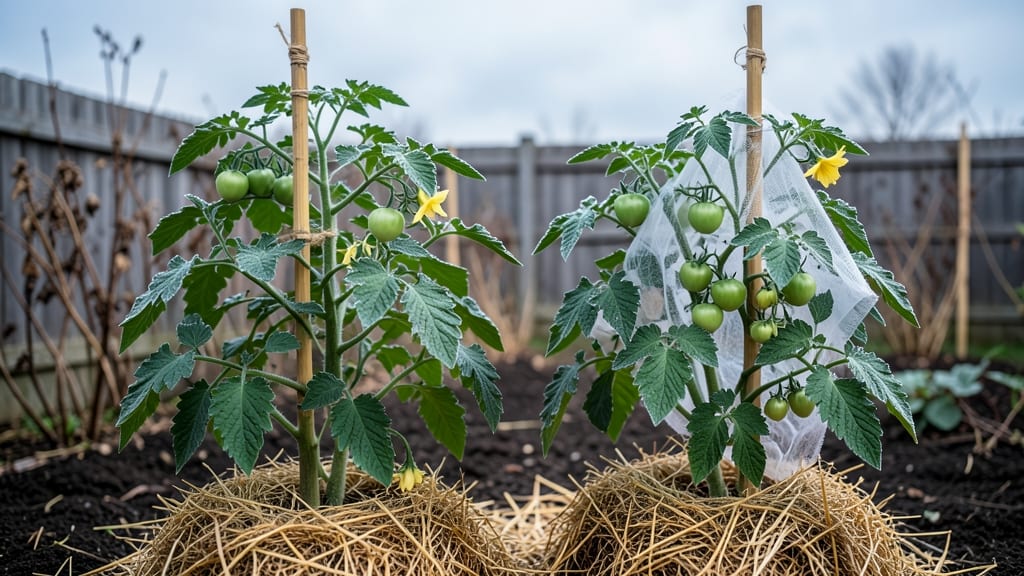
Start with mulching—a simple but powerful tool. Spread 3-4 inches of straw or shredded leaves around your tomato plants to insulate roots and maintain soil warmth. Organic mulch also suppresses weeds and retains moisture, giving your plants a fighting chance during temperature swings.

Pair this with black plastic mulch in early spring to absorb sunlight and warm the soil faster.

For extra protection, use floating row covers (made of lightweight fabric) to trap heat and shield plants from light frosts (28-32°F/-2 to 0°C). Secure the edges with bricks or soil to prevent wind from tearing the cover.

If a hard freeze (below 28°F/-2°C) is forecasted, remove the cover during the day to let sunlight warm the plants, then replace it at dusk for insulation.

Timing matters too! Stagger your planting by 2-3 weeks to ensure some plants are already established when cold weather hits. Hardier varieties planted earlier in the season (like ‘Cold Set’) can often survive light frosts better than late-season transplants.

Additionally, choose sheltered spots near fences, walls, or hills—these microclimates can be 5-10°F warmer than open areas.

If frost does strike, don’t panic. Prune blackened leaves with sterilized shears and watch for new growth from the stem. Increase water slightly (but avoid soggy soil) to help recovery.

For container-grown tomatoes, move pots to a protected garage or under a porch if temperatures drop below 40°F (4°C). With patience and these techniques, your plants can rebound stronger than ever.

★★★★★4.7(2 reviews)
Categories Plants
Variety Cold Tolerance Days to Maturity Fruit Type Yield Potential Best For
Stupice Survives 28°F (-2°C) 70-80 days Cherry (red) High (prolific) Early planting, containers
Mountain Merit Tolerates 32°F (0°C) 75-80 days Beefsteak (red) Very high Short season climates
Cold Set Survives 28°F (-2°C) 65-75 days Cherry (red/yellow) High Early harvests
Glacier Tolerates 30°F (-1°C) 70-80 days Cherry (red) Very high Northern gardens
Siberian Survives 28°F (-2°C) 80-90 days Beefsteak (red) High Cold climates
Iron Man Tolerates 32°F (0°C) 70-75 days Beefsteak (red) Very high Early planting
Red Robin Tolerates 30°F (-1°C) 65-75 days Cherry (red)