
Planting
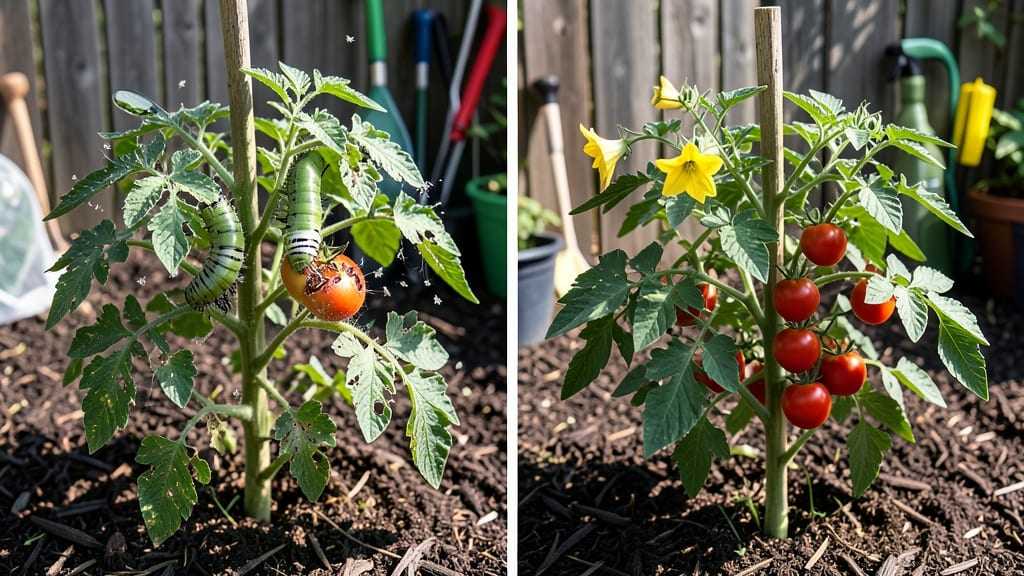
Tomato plant pests turn your thriving vines into a buffet for hungry insects—aphids, hornworms, and whiteflies can strip leaves faster than you can say "sauce." I learned the hard way when my prize heirlooms went from lush to skeletonized in days, but there's a better way than reaching for chemicals.
The key is catching problems early, using nature's defenses, and keeping your plants so healthy pests don't stand a chance.
Most damage starts small—tiny holes in leaves, sticky residue, or wilting that won't quit. Those are your warning signs to act fast.
I've found that a mix of physical barriers (row covers, collars), beneficial insects (ladybugs, lacewings), and homemade sprays (neem oil, soapy water) keeps 90% of pests at bay without harming your harvest. The secret isn't fancy equipment—it's consistent monitoring and quick action before problems explode.
With these organic defenses, you'll watch your tomatoes grow strong and pest-free all season. The plants stay vibrant, the fruit develops properly, and you avoid the heartbreak of ruined harvests.
Plus, you'll attract more pollinators and beneficial bugs that keep the ecosystem balanced. It's not about fighting pests—it's about creating a garden they won't want to visit.
Works for backyard gardens, containers, or even small urban plots. The same principles apply whether you're growing cherry tomatoes or beefsteaks—just scale the solutions to your space. Let's get those vines protected!
Root Causes of Tomato Plant Attacks
Tomato plants are a magnet for pests—not because they’re weak, but because they’re nutrient-rich, tender, and packed with moisture. Understanding why these critters target your vines is half the battle. Below, we break down the science behind the chaos, so you can outsmart the invaders before they strike.
When tomato plants are stressed, they become easy prey. Overcrowding, poor soil health, or nutrient deficiencies weaken their natural defenses, making them more vulnerable to pests like aphids, whiteflies, and spider mites.
- Why it happens: Healthy plants produce stronger cell walls and natural repellents (like volatile organic compounds that deter pests). When roots are starved for nitrogen, phosphorus, or potassium, the plant’s immune system drops.
- Actionable fix:
- Space plants 18–24 inches apart for airflow and sunlight.
- Test soil pH (aim for 6.0–6.8) and amend with compost or organic fertilizer.
- Rotate crops yearly to starve out soil-borne pests.
Tomatoes love water, but excess moisture turns your garden into a five-star hotel for slugs, fungus gnats, and root maggots. Damp soil and foliage also slow evaporation, making plants more appealing to sap-sucking insects.
- Why it happens:
- Fungus gnats and root maggots thrive in soggy soil because their larvae need moisture to survive.
- Overhead watering keeps leaves wet, creating ideal conditions for aphids and whiteflies to multiply.
- Poor drainage leads to root rot, which weakens plants and makes them more attractive to pests seeking easy meals.
- Actionable fix:
- Water at the base (not overhead) and early in the day to let foliage dry.
- Improve drainage with organic matter (compost, perlite) or raised beds.
- Use drip irrigation to avoid wetting leaves.
Pests don’t just attack weak plants—they’re drawn to specific nutritional signals. For example, aphids flock to new, tender growth high in nitrogen, while hornworms target leafy, fast-growing plants with plenty of potassium.
| Pest | Why They’re Drawn In | How to Disrupt the Signal |
|---|---|---|
| Aphids | Love nitrogen-rich new shoots (they’re sweet and soft). | Balance NPK with phosphorus-heavy fertilizers (like bone meal) to toughen growth. |
| Hornworms | Target potassium-rich leaves (they need it for their own growth). | Add wood ash or kelp meal to reduce potassium availability. |
| Whiteflies | Thrive on stressed, yellowing leaves (low chlorophyll = easy feeding). | Feed iron and magnesium (Epsom salt) to keep leaves green. |
Pro tip: 💡 Interplant tomatoes with basil or marigolds—these act as nutrient distractors, luring pests away with their own chemical signals.
Pests like colorado potato beetles and stink bugs time their attacks with tomato maturity. If you plant late or extend the season, you’re giving them a longer buffet.
- Why it happens:
- Cooler nights in early spring slow pest activity, but as temps rise, their populations explode.
- Late-season tomatoes (like heirlooms) stay tender longer, making them prime targets for chewing insects.
- Migratory pests (e.g., cucumber beetles) arrive in late spring when tomatoes are flowering.
- Actionable fix:
- Use floating row covers in early season to block pests.
- Plant early-maturing varieties (e.g., ‘Early Girl’) to harvest before peak pest season.
- Set up yellow sticky traps in late spring to monitor beetle activity.
Now that you know why pests throw a party on your tomatoes, the next step is shutting the party down—for good. 🚫🐜
Quick Fixes for Common Tomato Threats
Tomato plants are delicious but vulnerable—especially to pests that can turn your garden dreams into a chewed-up nightmare. 🍅🐛 The good news? Most problems have simple, organic solutions that work fast.
Below, we’ve matched the most common tomato plant pests to their fixes, plus prevention tips to keep your vines thriving all season.
Signs: Large green caterpillars with white stripes, skeletonized leaves, or missing tomato fruits overnight.
How to Treat It:
🔥 Handpick at dawn – Hornworms are sluggish in the cool morning. Grab them (gloves optional) and drop them in soapy water. Pro tip: 🌡️ Check undersides of leaves—they love to hide!
🍳 Bacillus thuringiensis (Bt) spray – This natural bacteria kills caterpillars but is safe for bees and humans. Reapply after rain.
👨🍳 Plant companion herbs – Marigolds and basil repel hornworms with their strong scents.
⏰ Prevention: Plant dill, fennel, or parsley nearby to attract parasitic wasps (their natural predators).
Signs: Sticky residue (honeydew), curled leaves, or tiny green/black clusters on stems.
How to Treat It:
🔥 Blast them off – Use a strong stream of water from a hose to knock them away.
🍳 Neem oil spray – Mix 1 tsp neem oil + 1 tsp mild soap in 1 quart of water. Spray undersides of leaves where they hide.
👨🍳 Ladybugs & lacewings – Release beneficial insects (buy online or from garden centers) to eat aphids naturally.
⏰ Prevention: Reflective mulch (aluminum foil or silver plastic) confuses aphids. Also, avoid over-fertilizing with nitrogen—it attracts them.
Signs: Fine webbing on leaves, yellow stippling, or leaves that look "bronzed."
How to Treat It:
🔥 Wipe leaves with damp cloth – Mites hate moisture. Do this weekly during dry spells.
🍳 Spray with water + dish soap – Mix 1 tbsp mild soap in a gallon of water. Spray both sides of leaves.
👨🍳 Introduce predatory mites – Phytoseiulus persimilis (sold at garden stores) feast on spider mites.
⏰ Prevention: Mist plants daily in hot weather—mites thrive in dry conditions. Avoid broad-spectrum pesticides, which kill their predators.
Signs: Yellow-orange beetles or larvae (striped, humpbacked) devouring leaves.
How to Treat It:
🔥 Pick off by hand – Drop adults and larvae into soapy water. Do this daily—they reproduce fast!
🍳 Diatomaceous earth (DE) – Sprinkle food-grade DE around the base of plants. It dehydrates their soft bodies.
👨🍳 Row covers – Use floating fabric to block adults before they lay eggs.
⏰ Prevention: Rotate crops—don’t plant tomatoes or potatoes in the same spot yearly.
Signs: Irregular holes in leaves, silvery slime trails, or missing seedlings overnight.
How to Treat It:
🔥 Beer traps – Bury a shallow dish filled with beer near plants. Slugs crawl in and drown. Refresh every 2 days.
🍳 Copper barriers – Wrap copper tape around pots or create a ring in the soil. The electric charge repels them.
👨🍳 Crushed eggshells or coffee grounds – Sprinkle around plants as a natural deterrent.
⏰ Prevention: Water in the morning (slugs hide during the day). Remove hiding spots like boards or dense mulch.
Signs: Brown spots on leaves, white powdery growth, or wilting vines.
How to Treat It:
🔥 Prune infected leaves – Remove and dispose of (don’t compost) to stop spread.
🍳 Baking soda spray – Mix 1 tbsp baking soda + 1 tsp soap in a gallon of water. Spray every 7-10 days.
👨🍳 Improve airflow – Space plants 18-24 inches apart and stake tomatoes to prevent humidity buildup.
⏰ Prevention: Water at the base (not overhead) and harvest ripe tomatoes quickly to reduce fungal spores.
✨ Healthy soil = strong plants – Use compost and avoid chemical fertilizers (they weaken natural defenses). ✨ Crop rotation – Don’t plant tomatoes in the same spot yearly. ✨ Diverse garden – Interplant with basil, marigolds, or nasturtiums to confuse pests. ✨ Regular checks – Inspect plants 2-3 times a week (early detection = easier fixes).
With these targeted, organic solutions, your tomato plants will bounce back faster—and you’ll enjoy juicy, pest-free harvests all season! 🍅🌟
Frequently asked questions
What are the most destructive tomato pests I should watch for?
Prioritize hornworms (green caterpillars that skeletonize leaves), aphids (tiny clusters causing sticky honeydew), and whiteflies (tiny white moths under leaves). These three often cause the most visible damage and can spread quickly. Check undersides of leaves daily during warm months.
Can I use chemical pesticides safely on tomato plants?
Only as a last resort! Many chemicals harm beneficial insects and leave residues on edible fruit. Instead, try neem oil, Bacillus thuringiensis (Bt), or insecticidal soap—these target pests while protecting your harvest. Always follow label instructions for organic sprays.
How often should I inspect my tomato plants for pests?
Check 2-3 times per week during growing season, focusing on leaf undersides and new growth where pests hide. Early detection is key—catching aphids or mites before they spread saves your plants from major damage. Morning inspections work best when pests are sluggish.
Will companion planting really keep pests away?
Plant basil (repels thrips and mosquitoes), marigolds (deter nematodes), or nasturtiums (lure aphids away). These act as natural pest barriers while improving flavor and yield. The stronger the scent, the better the protection—just keep them close to your tomatoes.
What should I do if my tomato plants already have severe pest damage?
Start by removing heavily infested leaves and pruning back affected areas to stop the spread. Then apply targeted organic treatments (like Bt for hornworms or neem oil for aphids) and focus on strengthening plant health with balanced fertilizer. In worst cases, consider replanting with resistant varieties next season.