
Planting
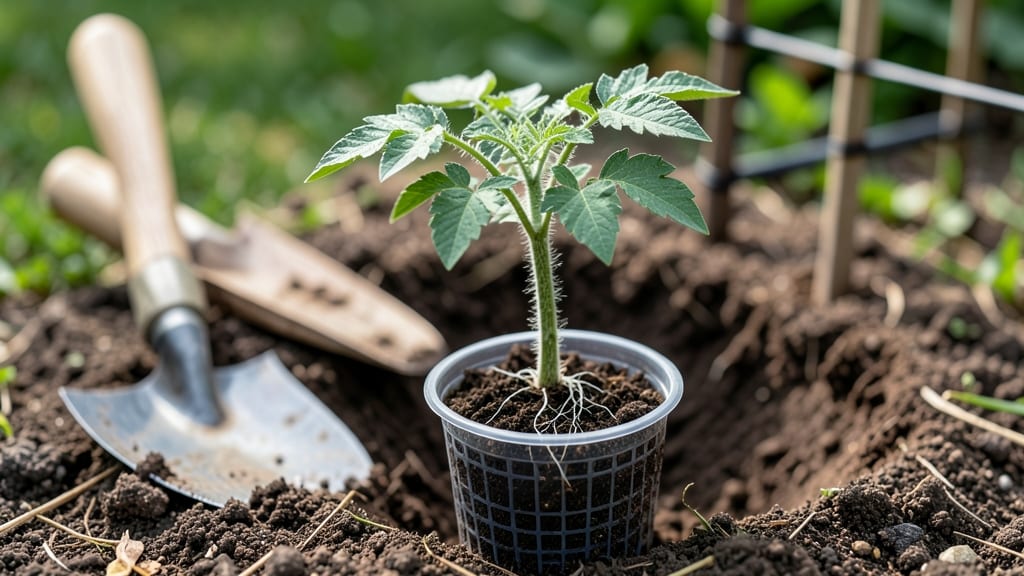
Planting your 🍅 tomato plants at the right depth is the secret to stronger roots and bigger harvests—yet most gardeners bury them too deep or too shallow, setting up failure before the first leaf unfurls.
Too shallow, and the stem flops like a drunk giraffe; too deep, and the plant gasps for air, stunting growth. The difference between a thriving vine and a sad, stunted plant often comes down to those first few inches in the soil.
Whether you're dropping seeds or transplanting seedlings, I’ll break down the exact planting depth for your zone, soil type, and tomato variety—plus how to spot (and fix) the mistakes that kill plants before they even flower.
By the end, you’ll know not just how deep to plant, but why it matters and how to adjust for everything from clay soil to heat waves. No more guessing—just science-backed inches for a garden full of juicy fruit.


Optimal tomato planting depth by growth stage (seedlings vs transplants)
Getting the tomato planting depth right isn't just about sticking a seedling in the ground—it's a science that directly impacts your plant's ability to thrive. Seedlings and mature transplants have completely different needs, and planting too deep or too shallow can lead to weak stems, poor root development, or even death.
I've learned through years of trials (and a few failed harvests!) that the right depth ensures strong root systems and vigorous growth.
For tomato seedlings, the general rule is to plant them shallowly—just 1/6 to 1/3 of their stem above soil. This might sound counterintuitive, but it encourages the plant to develop a robust root system at the buried portion while keeping the stem above ground sturdy.
When transplanting mature tomato plants, however, you’ll want to bury more of the stem—up to halfway up the stem—to promote additional root growth along the buried portion.
Here’s the key: Tomato stems can grow roots anywhere they touch moist soil, so deeper planting for transplants isn’t a risk—it’s a strategy. But for seedlings, too much depth can suffocate the plant or cause stem rot.
Let’s break down the exact depths and techniques you need to know for each stage.
One of my biggest tomato planting mistakes was burying seedlings too deeply, thinking it would make them stronger. Instead, it led to stem rot and stunted growth.
The trick is to harden off seedlings for 7-10 days before transplanting—this means gradually exposing them to outdoor conditions (sun, wind, and temperature fluctuations) so their stems toughen up.
For mature transplants, I now use a simple technique: I dig a trench, lay the stem gently, and cover it with soil up to the recommended depth. This encourages roots to form along the buried portion, giving your plant a stronger foundation.
Visual markers are your best friend when planting tomatoes at the right depth. I like to use a toothpick or chopstick as a soil level indicator—just stick it next to the plant at the desired depth before covering it with soil.
This way, you can easily see how much stem is above ground. Another pro tip: if you’re planting in heavy clay soil, consider adding a layer of compost or sand to improve drainage and prevent waterlogging, which can rot buried stems.
For indeterminate tomatoes (the vining types like 'Sungold' or 'Brandywine'), you can get away with burying up to 2/3 of the stem because they’ll keep growing and sending out roots along the buried portion.
But for determinate tomatoes (bush varieties like 'Roma' or 'Celebrity'), burying too much can weaken the plant’s natural structure. Stick to 1/3 to 1/2 stem buried for these varieties to avoid flopping or disease.
After planting, give your tomatoes a deep watering to settle the soil and encourage root contact. Avoid wetting the leaves to prevent fungal diseases like early blight.
In the first week, keep an eye out for signs of stress—yellowing leaves or wilting can indicate either too much or too little depth. If you notice these issues, gently adjust the soil around the stem to get it closer to the ideal depth.
Remember, the goal is to create a strong root system without sacrificing the plant’s ability to photosynthesize. The stem above soil should be sturdy enough to support the plant’s growth, while the buried portion should be moist and dark enough to encourage root formation.
With these guidelines, you’ll set your tomatoes up for a bountiful harvest—not
How to adjust planting depth for different tomato varieties and soil types
Getting the planting depth right for your tomato varieties isn't one-size-fits-all. Determinate tomatoes (bush types) need shallower planting than indeterminate varieties (vining types), while soil composition can change the equation entirely. Sandy soil drains fast, while clay holds moisture—both require different depth adjustments to prevent rot or drought stress.
For determinate tomatoes, plant just 1/2 inch deep to encourage strong root systems near the surface. Indeterminate varieties, however, benefit from slightly deeper planting—1-2 inches deep—to stabilize their tall, sprawling growth.
This simple adjustment can mean the difference between a weak stem and a plant that stands strong all season.
| Tomato Type | Soil Type | Planting Depth | Adjustment Tip |
|---|---|---|---|
| Determinate | Sandy | 1/4 inch | Add organic mulch to retain moisture |
| Determinate | Clay | 1/2 inch | Create raised beds for better drainage |
| Indeterminate | Sandy | 1-1.5 inches | Stake immediately for support |
| Indeterminate | Clay | 1.5-2 inches | Use drip irrigation to prevent waterlogging |
If your garden has poor drainage, adjust planting depth by 1 inch deeper than recommended for your tomato type. This extra depth helps roots access moisture without sitting in soggy soil. Conversely, in well-draining sandy soil, plant 1/4 inch shallower to prevent roots from drying out too quickly.
Heavy mulching can also affect planting depth. When using thick mulch layers (3+ inches), plant 1/2 inch deeper than usual to account for the mulch's insulating effect. This keeps the stem base at the right temperature while preventing exposure issues as mulch settles over time.
For container-grown tomatoes, adjust depth based on pot size. In small containers (<10 gallons), plant 1/4 inch deeper to maximize root space. In larger containers, follow standard depth guidelines but ensure the pot has adequate drainage holes to prevent root rot from overwatering.
Always harden off seedlings before transplanting to prevent shock. Bury the stem slightly deeper than in seedling trays—this encourages stronger root growth and compensates for any soil settling after watering. With these adjustments, your tomatoes will thrive regardless of soil type or variety.