
How To
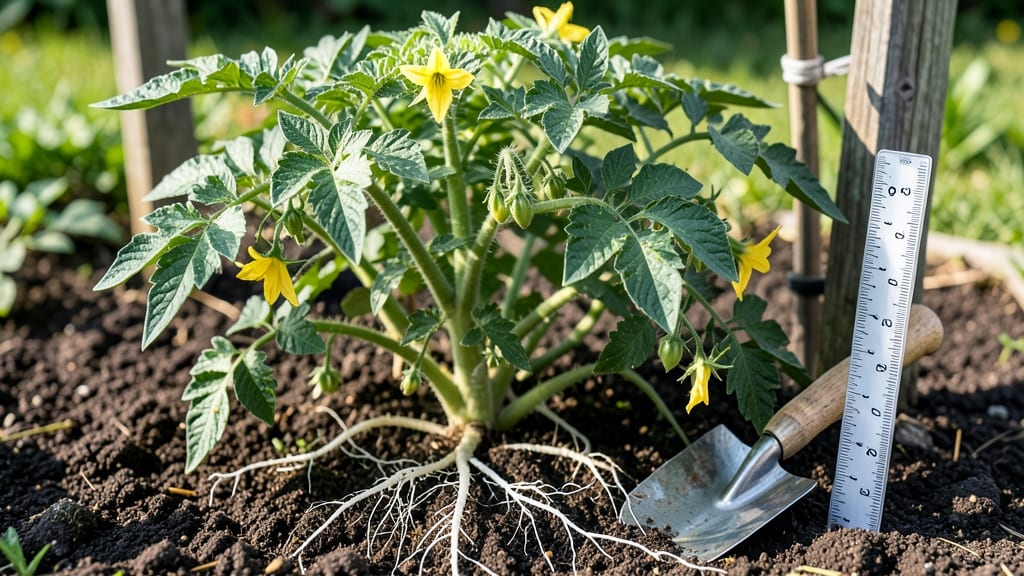
Tomato plant roots grow 12 to 24 inches deep—far deeper than most gardeners realize—and that depth is the difference between a thriving vine and a struggling one.
Picture this: you’ve just planted your 🍅 seedlings, dreaming of a bountiful harvest, only to watch them wilt under the summer sun because their roots never had the space to stretch. That’s not just bad luck—it’s a common mistake tied to how deep you plant them.
Deeper roots mean better drought resistance, stronger nutrient uptake, and bigger yields. But getting there isn’t just about digging a hole—it’s about soil prep, spacing, and even how you water.
I’ll walk you through the exact depth to aim for, how to encourage those roots to grow, and the simple tweaks that keep your tomatoes flourishing all season.
Ready to dig into the details? Let’s turn your tomato patch from a guesswork gamble into a predictable powerhouse.


How deep do tomato plant roots grow and why it matters
When I first started growing tomatoes, I planted them just an inch or two deep—like most beginner gardeners.
Little did I know, my tomatoes were missing out on their full potential because I wasn’t giving their roots the space they needed. Tomato plant roots can grow 12 to 24 inches deep, depending on soil conditions and variety.
This depth isn’t just about space; it’s about survival, stability, and a bountiful harvest.
Deeper roots mean better access to water and nutrients, especially during dry spells. They also help anchor the plant, preventing it from toppling over under the weight of heavy fruit.
If you’ve ever seen a tomato plant struggle in shallow soil, you’ve witnessed the consequences of insufficient root depth firsthand.
Scientifically, tomato roots follow a fibrous root system with a central taproot that can extend deep while smaller lateral roots spread horizontally. The deeper these roots go, the more resilient your plant becomes.
For example, indeterminate varieties like 'Sungold' or 'Brandywine' often develop deeper roots than determinate types like 'Roma' or 'Celebrity'.
But here’s the catch: most gardeners only dig a hole 6 to 8 inches deep when planting. That’s barely a third of the potential root zone! Shallow planting can lead to stunted growth, poor fruit set, and even blossom end rot due to inconsistent moisture and nutrient uptake.
One of the biggest mistakes I see is planting tomatoes in containers that are too shallow. A 5-gallon pot might work for dwarf varieties, but standard tomatoes need at least a 12-inch-deep container to thrive. Without enough depth, roots become root-bound, leading to poor growth and smaller yields.
To encourage deeper roots, I always amend the soil with compost or aged manure before planting. This improves drainage and aeration, making it easier for roots to penetrate deeper. Additionally, mulching with straw or grass clippings helps retain moisture, which signals roots to grow downward in search of water.
Another pro tip: avoid overwatering at the surface, as this can encourage shallow root growth. Instead, water deeply 1–2 times per week to motivate roots to explore deeper soil layers. This simple adjustment can make a world of difference in your tomato’s health and productivity.
If you’re growing tomatoes in heavy clay soil, consider adding gypsum or sand to improve structure. Clay soils can suffocate roots, limiting their depth and causing stress. A soil test can help you determine if your garden bed needs amendments to support deeper root growth.
Remember, the goal isn’t just to plant deeper—it’s to create an environment where roots can thrive. By understanding how deep tomato roots grow and what they need to reach their full potential, you’ll set your plants up for success from day one.
Best practices for encouraging deeper tomato roots in your garden
Deeper roots mean stronger tomato plants that withstand drought, absorb more nutrients, and produce bigger yields. But achieving this requires intentional care—especially since most gardeners accidentally stunt root growth without realizing it.
The good news? With a few simple adjustments to your soil, watering, and planting techniques, you can encourage roots to reach their full 12-24 inch potential naturally.
Start by focusing on soil aeration—compacted soil is the #1 enemy of deep roots. Heavy clay or tightly packed dirt suffocates roots, forcing them to grow shallowly. Even well-draining loam can become compacted after rain or foot traffic.
The solution? Loosen the soil to 12 inches deep before planting using a broadfork or garden fork, breaking up any hardpan layers without disturbing the soil structure too much.
Next, prioritize organic mulching—a 3-4 inch layer of straw or shredded leaves around (not touching) the stem keeps soil cool, retains moisture, and prevents crusting. Dark mulches like black plastic might seem efficient, but they actually heat the soil and can burn young roots.
Organic mulches also slowly decompose, adding nutrients to the soil and improving its structure over time.
Don’t overlook companion planting—certain plants create ideal conditions for deep roots. Pair tomatoes with basil (repels pests and improves flavor) or marigolds (natural fungicide). Avoid planting near corn or fennel, which compete for nutrients and can stunt root growth.
Even the right neighbors can influence how far roots explore downward by improving soil microbial activity.
Finally, resist the urge to fertilize heavily at planting. Too much nitrogen early on promotes leafy growth at the expense of roots. Instead, use a balanced organic fertilizer (like 5-5-5) at planting, then switch to a phosphorus-rich blend (like 3-12-6) when flowers appear.
This encourages root development while supporting fruiting. Always water fertilizers in to prevent salt buildup near the surface.
With these organic methods, your tomato plants will develop the strong, deep root systems they need to thrive—without synthetic shortcuts. The payoff? Healthier plants, more resilient to stress, and a bounty of flavorful tomatoes all season long. 🌱