
Planting
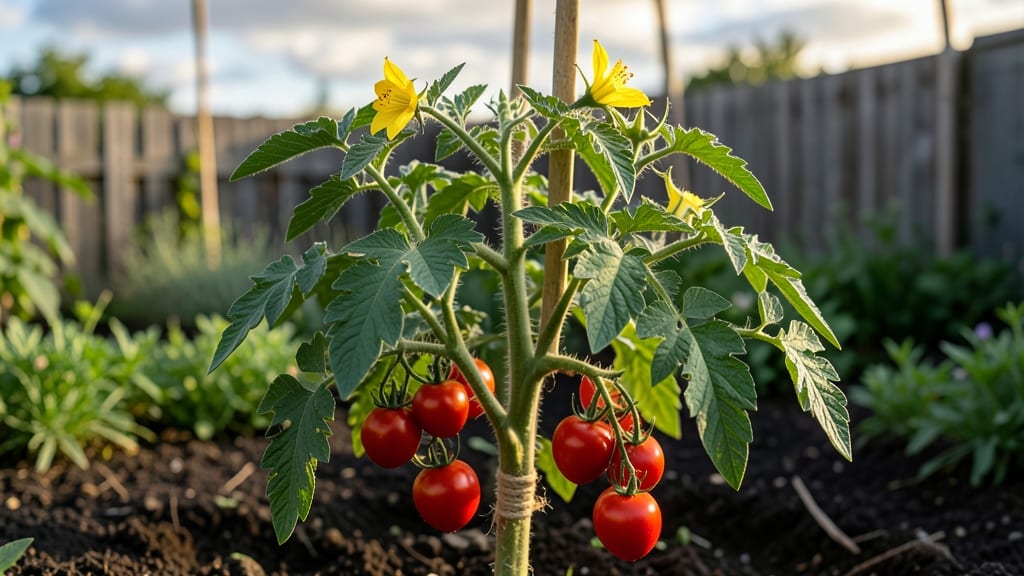
The ideal tomato plant soil type is well-draining loam, rich in organic matter with a slightly acidic to neutral pH (6.0–7.0). Sandy soil requires amendments, while clay soil needs aeration to prevent root damage.
Loam soil—with its perfect balance of sand, silt, and clay—gives tomato roots both breathability and nutrient retention, which is why it's the gold standard for these plants. 🌱 Sandy soil drains too fast, flushing away nutrients, while clay holds moisture so tightly that roots suffocate.
I've seen tomato plants wilt dramatically in heavy clay unless I mix in perlite or compost to improve structure. The key is mimicking nature: tomatoes thrive where water and air circulate freely around roots while still holding enough moisture to support growth.
For sandy soil, I blend in 2-3 inches of compost and a handful of peat moss per square foot, while clay benefits from coarse sand or vermiculite to break up compaction.
A simple DIY test—squeeze a handful of soil—helps determine texture: if it crumbles easily, it's too sandy; if it forms a tight ball, it's too clay-heavy. Most garden centers sell pH test kits for under $10, and adjusting with lime (for acidity) or sulfur (for alkalinity) keeps tomatoes happy.
💡 In This Article
- How Soil Composition Affects Tomato Plant Growth
- Amending Soil for Optimal Tomato Cultivation
How soil composition affects tomato plant growth
Loam soil is the perfect foundation for tomato plants because it strikes the ideal balance between sand, silt, and clay—typically around 40% sand, 40% silt, and 20% clay. This composition allows water to drain efficiently while retaining enough moisture and nutrients for steady growth.
The tiny air pockets in loam soil also promote beneficial microbial activity, which breaks down organic matter into nutrients like nitrogen, phosphorus, and potassium that tomatoes crave. Without this balance, roots struggle to access oxygen or water, leading to stunted growth or disease.
Sandy soil drains so quickly that nutrients wash away before roots can absorb them. Picture water flowing through a sieve—what little moisture remains evaporates fast, forcing tomato plants to work overtime to find hydration.
In my garden, I've seen plants in pure sand develop yellow leaves within weeks because they can't hold onto essential minerals. The solution? Adding organic matter like well-rotted compost or leaf mold to boost the soil's ability to retain moisture and nutrients.
Even a 5% increase in organic content can transform sandy soil into something more tomato-friendly.
Clay soil, on the other hand, holds water like a sponge, creating anaerobic conditions where roots suffocate. The dense particles compact easily, restricting airflow and promoting rot. I once grew tomatoes in heavy clay and watched their roots turn black within days—classic signs of oxygen deprivation.
The fix involves breaking up clay with coarse materials like perlite or gypsum, which improve drainage while maintaining some moisture. Think of it as creating tiny tunnels for roots to breathe while still keeping them hydrated.
Tomato roots thrive in soil that maintains 60-70% porosity, meaning air and water fill the remaining space. Loam naturally achieves this, while sandy soil often drops below 50% porosity and clay can exceed 80% density.
The pH also plays a role: tomatoes prefer slightly acidic to neutral soil (6.0-7.0) because this range maximizes nutrient availability. For example, phosphorus becomes more soluble in slightly acidic soil, which is crucial for root development and fruit formation.
Visualize the difference: in loam, roots spread easily through a crumbly, dark brown medium, while in clay they struggle through a sticky, gray mass. The texture alone tells the story—loam feels like a soft, moist handshake, while clay clumps together.
This physical contrast directly impacts how well tomatoes establish themselves and resist stress from drought or disease. 🌱