
Light Requirements
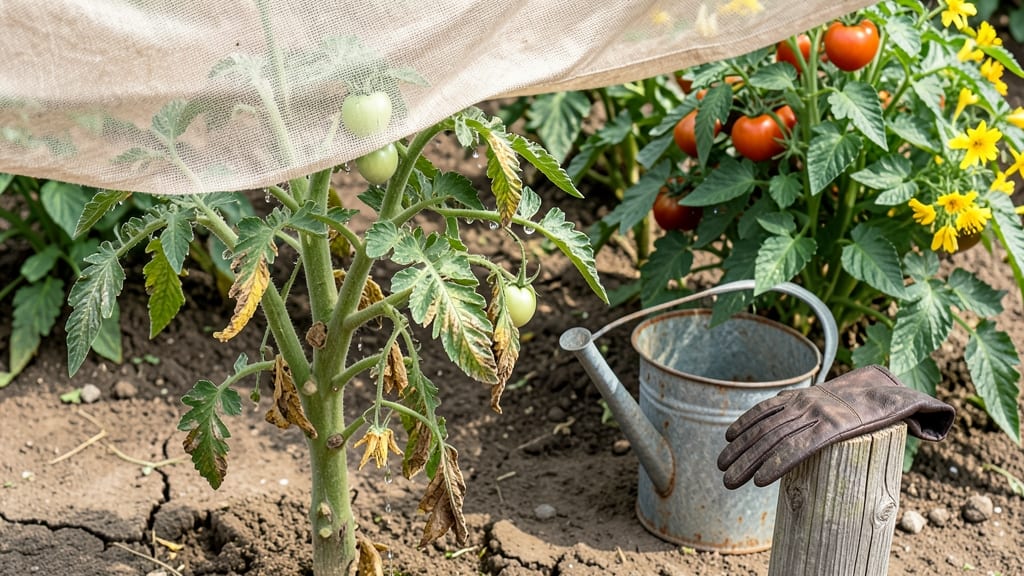
Your tomato plants are screaming for shade when leaves turn white and crispy from too much sun. 🌿 I’ve seen this happen after a heatwave—what starts as pale spots becomes brittle, blistered skin that ruins the plant’s ability to photosynthesize.
The good news? Simple fixes can save your harvest before the damage spreads.
First, check the time of day—midday sun is the worst offender. If your tomatoes are in full sun (6+ hours daily), they may need afternoon shade, especially in hot climates.
A lightweight shade cloth (30-50%) draped over a hoop or trellis works instantly, or move pots to a spot with partial shade (4-6 hours of sun). Mulch also helps by keeping roots cooler.
Watering matters too—deep, morning watering prevents stress that makes plants more vulnerable to sunburn. For severe cases, prune damaged leaves to redirect energy to healthy growth. Heat-tolerant varieties like ‘Solar Fire’ or ‘Heatmaster’ are worth considering for next season if this keeps happening.
With these adjustments, your plants should bounce back in 7-10 days, and you’ll avoid the heartbreak of blistered leaves ruining your harvest. The key is acting fast—before the damage turns irreversible.
How Over-Exposure Damages Plants
When your tomato plants bask in too much direct sunlight—especially during peak summer hours—they can suffer from more than just wilting. The intense UV rays and high temperatures trigger a cascade of physiological stress, leading to visible damage like blistered or sun-scorched leaves.
But why does this happen? Let’s break down the science behind the struggle.
Tomatoes thrive in full sun, but their leaves aren’t built to handle prolonged, extreme heat. When temperatures soar above 90°F (32°C), the plant’s cells struggle to regulate their internal temperature. Here’s what goes wrong:
- Protein Denaturation: Heat disrupts the delicate structure of proteins (like enzymes) in leaf cells. These proteins are essential for photosynthesis and nutrient transport. When they denature (unravel), the plant’s ability to process energy and repair damage grinds to a halt.
- Cell Membrane Damage: The lipid bilayer of plant cell membranes becomes fluid and unstable under extreme heat. This causes leakage of vital nutrients (like potassium and magnesium) and disrupts the cell’s ability to maintain turgor pressure—leading to wilting and blistering.
- Oxidative Stress: High light intensity boosts the production of reactive oxygen species (ROS), like hydrogen peroxide. These molecules act like cellular Pac-Men, chewing up lipids, proteins, and DNA in leaf tissues. The result? Brown, crispy patches on leaves.
Actionable Insight: If your tomatoes are in a hot, dry climate (e.g., desert regions or greenhouses without ventilation), they’re at higher risk. Mulching with straw or shade cloth (30-50%) can drop soil temps by 10°F+, reducing heat stress.
While heat is a major culprit, ultraviolet (UV) radiation is the silent saboteur. UV rays penetrate leaf surfaces, causing:
- Photobleaching: UV light breaks down chlorophyll, the pigment responsible for green color. This leads to bleached or white patches on leaves—a sign of sunburn.
- Cuticle Damage: The waxy cuticle (a plant’s natural sunscreen) degrades under intense UV. Without protection, water evaporates faster, and the leaf loses its ability to shield delicate tissues underneath.
- Premature Aging: Chronic UV exposure accelerates senescence (the aging process) in leaves. Affected areas may turn yellow, brittle, or necrotic (dead tissue) within days.
Pro Tip: If your tomatoes are growing in low-humidity areas (e.g., near coasts or arid zones), UV damage worsens. Apply a light layer of horticultural oil or kaolin clay to leaves to create a protective barrier—just avoid spraying in direct sun to prevent further heat stress.
Too much sun doesn’t just cook your tomatoes—it dries them out from the inside. Here’s how:
| Mechanism | Effect on Tomato Plants |
|---|---|
| Transpiration Surge: Bright sunlight increases stomatal opening to cool the plant, but this also speeds up water loss. | Leaves curl and blister as cells collapse from dehydration. |
| Root Struggle: If soil moisture drops too fast, roots can’t keep up with demand. | Plants wilts midday (even with wet soil) and develops necrotic edges on leaves. |
| Osmotic Imbalance: Cells lose water faster than they can absorb it, causing plasmolysis (when the cell membrane shrinks away from the cell wall). | Leaves feel leathery or papery and may split or crack. |
Key Fix: Deep watering early in the morning (before 10 AM) gives roots time to absorb moisture before the sun peaks. Drip irrigation is ideal—it delivers water directly to roots without wetting leaves (which can magnify UV damage).
Not all tomato plants are created equal. Seedlings or shade-acclimated plants (like those moved from indoors to outdoor gardens) are extremely vulnerable to sudden sun exposure. Here’s why:
- Chlorophyll Shock: Plants gradually adjust their chlorophyll levels to light intensity. A sudden jump from low-light indoor conditions to full sun overwhelms their ability to produce protective pigments.
- Weak Cuticle Development: Young leaves have thinner cuticles, making them prone to blistering and sunburn when exposed too quickly.
- Root-to-Shoot Imbalance: If roots aren’t established, the plant can’t supply enough water and nutrients to support rapid leaf expansion in harsh conditions.
Solution: Hardening off seedlings gradually over 7–10 days by exposing them to 2–4 hours of morning sun daily, then increasing duration. For mature plants, provide afternoon shade (when UV is strongest) with 50% shade cloth.
Fixing Over-Sun Exposure in Tomatoes
When your tomato plants are basking in too much sun, the damage—like blistered leaves, sunburn, or stunted growth—can feel overwhelming. But don’t worry! With a few targeted fixes and preventive steps, you can nurse your plants back to health and keep them thriving.
Below, we’ve broken down the most common causes of sun damage and the practical, step-by-step solutions to address them.
Fix: Gradually introduce shade to prevent shock and reduce stress on your plants.
- 🌳 Install Temporary Shade Cloth
- Use 30-50% shade cloth (or even a lightweight row cover) to filter harsh afternoon sun (11 AM–4 PM).
- Secure it 3–4 feet above the plants to allow airflow and prevent mold.
- Pro Tip: 💡 Start with partial shade (2–3 hours of direct sun) and slowly increase exposure over 1–2 weeks to avoid sudden stress.
- 🏠 Relocate Potted Tomatoes
- If growing in containers, move them to a partially shaded spot (e.g., under a patio cover or near a north-facing wall).
- Ensure pots still get 4–6 hours of morning sun for photosynthesis.
- 🍃 Prune Damaged Foliage
- Use sterilized scissors to trim severely blistered or crispy leaves—this redirects energy to healthy growth.
- Avoid cutting into green stems—focus only on dead or sunburned leaves.
Fix: Boost hydration and soil health to help plants cope with extreme conditions.
- 💦 Deep Watering Techniques
- Water deeply at the base (1–2 inches per week) to encourage strong root growth.
- Morning watering (before 10 AM) reduces evaporation and prevents fungal issues.
- Pro Tip: 🌡️ If temps exceed 90°F (32°C), add mulch (straw or grass clippings) to retain moisture.
- 🌱 Improve Soil Drainage & Aeration
- Amend heavy clay soil with compost or perlite to prevent waterlogging, which worsens heat stress.
- Avoid overhead sprinklers—they can magnify sunburn by creating a lens effect on leaves.
- 🍅 Provide Afternoon Relief
- Use reflective mulch (white plastic or aluminum foil) around the base to bounce light away.
- Plant fast-growing shade crops (like bush beans or lettuce) nearby to create natural shade as they grow.
Fix: Choose heat-tolerant tomatoes or adjust growing conditions.
- 🍅 Switch to Heat-Resistant Varieties
- Opt for cherry tomatoes (e.g., ‘Solar Fire’, ‘Heatmaster’) or beefsteak types (e.g., ‘Arkansas Traveler’).
- These varieties handle high temps (90°F+) better than traditional slicers.
- 🌱 Adjust Planting Location
- If possible, move plants to a raised bed with better airflow or a greenhouse with shade netting.
- In extreme heat, succession plant (sow new seeds every 2 weeks) for a staggered harvest.
- 🛡️ Use Protective Barriers
- Wall-of-water systems (soaker hoses) or drip irrigation keep foliage cool.
- For container gardens, surround pots with damp burlap to regulate temperature.
Once your tomatoes recover, keep these habits to avoid repeat issues: ✅ Monitor weather forecasts and prepare shade solutions before heatwaves hit. ✅ Rotate plants every few weeks to balance sun exposure. ✅ Fertilize lightly with potassium-rich compost to strengthen cell walls against sun stress. ✅ Train vines upward (using cages or trellises) to elevate leaves away from scorching ground heat.
By tackling the root cause—whether it’s too much direct sun, heat stress, or poor variety selection—your tomato plants will bounce back stronger. With a little shade, smart watering, and proactive care, you’ll be back to harvesting juicy, sun-kissed tomatoes in no time! 🍅🌞
Frequently asked questions
What do blistered tomato leaves look like?
Blistered leaves appear white, papery, or crispy with raised, bubble-like spots—like tiny sunburn blisters. These patches often turn brown or yellow over time, and the affected areas may feel dry and brittle to the touch. Severe cases show cracked or split tissue.
Can tomato plants recover from too much sun?
Yes! With proper care, tomato plants can recover in 7-14 days. Remove severely damaged leaves, provide afternoon shade, and water deeply at the base. Mulch helps retain moisture, and avoid fertilizing until new growth appears. Heat-tolerant varieties bounce back faster.
How do I know if my tomatoes need shade?
Watch for these signs: leaves curling upward, white/yellow patches, or wilting by midday. If temps exceed 90°F (32°C) regularly, even healthy plants benefit from afternoon shade. Try a 30-50% shade cloth for 2-3 hours during peak sun hours (11 AM–3 PM).
Will pruning damaged leaves help my tomato plant?
Pruning removes stressed leaves that drain energy. Use clean scissors to cut just above a leaf node (growth point) on severely blistered leaves. This redirects the plant’s resources to healthy foliage and fruit production. Avoid removing more than 20% of leaves at once.
Are some tomato varieties more sun-resistant?
Yes! Heat-tolerant varieties like ‘Solar Fire’ or ‘Heatmaster’ handle intense sun better than standard types. These cherry tomatoes thrive in 90°F+ (32°C+) temps. For extreme climates, consider ‘Arkansas Traveler’ beefsteaks—they produce well even with afternoon shade.