
Vegetables
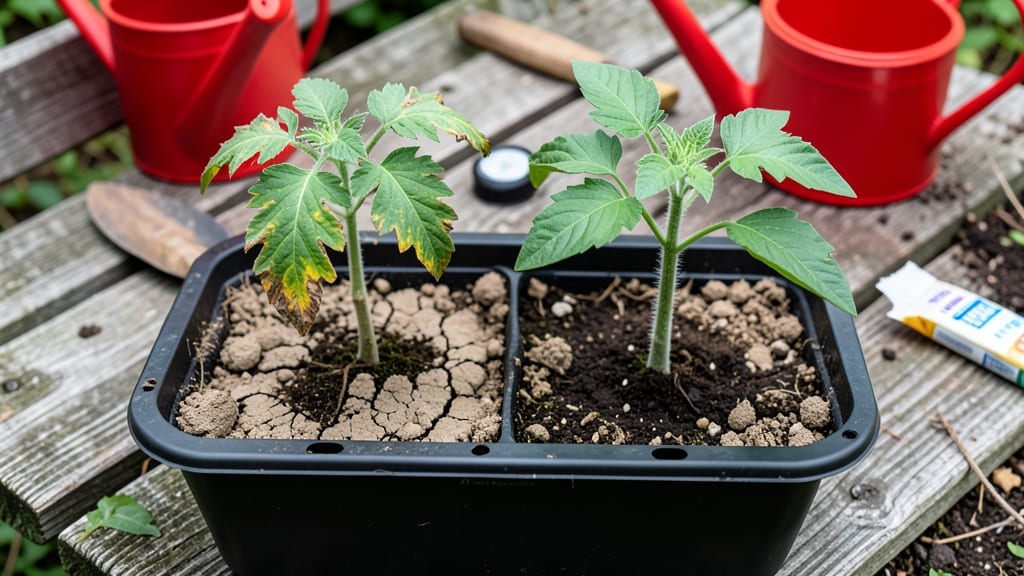
Wilting tomato seedlings don’t mean game over—root revival is possible in 3 simple steps. 🌱 I’ve nursed back dozens of limp seedlings with these exact fixes, and I’ll show you how to diagnose the real issue (overwatering? pests? heat stress?) before it’s too late.
The most common culprits are soggy soil or dry roots, but fungal wilt or spider mites can strike fast too. Start by checking the soil moisture with your finger—if it’s damp, hold off on watering; if it’s bone-dry, soak gently at the base.
A quick inspection of stems and leaves reveals the next move: prune damaged foliage or treat with neem oil if pests are the problem. Within 24-48 hours, you’ll see signs of recovery—perky leaves, new growth, or even tiny flowers.
The key is acting fast: if roots are mushy or seedlings stay limp after 3 days, it’s time to replant healthy ones. Prevention is easier than fixing: use well-draining soil and a heat mat for cooler starts. This method works for trays, pots, or even window-sill starts.
Let’s get those seedlings back on track!
Root Causes Behind Wilting Seedlings
When your tomato seedlings start drooping like overcooked spaghetti, it’s usually a cry for help from their roots—or something blocking their path to water and nutrients. Understanding the why behind the wilt is the first step to saving your future harvest.
Below, we break down the most common culprits, backed by science, so you can diagnose the problem fast and revive your plants.
Too much love can drown your seedlings. Overwatering suffocates roots by displacing oxygen in the soil, leading to anaerobic conditions—a root’s worst nightmare. Without oxygen, roots can’t absorb water efficiently, causing wilting even when the soil feels damp.
Why it happens:
- Compacted or clay-heavy soil holds excess water, trapping roots in a soggy prison.
- Lack of drainage holes in containers forces water to pool at the bottom.
- Frequent watering without drying cycles prevents roots from developing properly.
💡 Pro Tip: Stick your finger an inch into the soil—if it’s wet, wait. Use well-draining mixes (like 60% potting soil + 30% perlite + 10% compost) and ensure containers have drainage holes.
Wilting can also scream “I’m thirsty!” when seedlings don’t get enough water. Tomato seedlings have shallow root systems early on, making them vulnerable to rapid moisture loss. Even a day of neglect can cause leaves to curl and droop.
Why it happens:
- Inconsistent watering leads to uneven moisture levels, stressing roots.
- High temperatures or low humidity increase evaporation rates.
- Small or shallow containers dry out faster than deeper pots.
🎯 Quick Fix: Water deeply at the soil base (not the leaves) in the morning to mimic natural rainfall. Mulch with straw or shredded leaves to retain moisture.
If your seedlings wilt suddenly—even after adjusting water—root rot might be the silent killer. Fungi like Phytophthora or bacteria such as Pseudomonas thrive in waterlogged soil, attacking roots and blocking nutrient uptake.
Why it happens:
- Chronic overwatering creates the perfect damp, warm environment for pathogens.
- Contaminated soil or tools can introduce harmful microbes.
- Poor air circulation (e.g., crowded seedlings or dense foliage) traps moisture.
🔥 Red Flag: If stems turn black or mushy at the base, root rot is likely. Act fast: Remove affected seedlings, sterilize pots with a 10% bleach solution, and repot healthy ones in fresh, sterile soil.
Even healthy seedlings can wilt after transplanting if their roots are disturbed or not acclimated properly. Tomato roots are delicate—handling them roughly or moving them too soon can sever fine root hairs, halting water and nutrient absorption.
Why it happens:
- Rough handling during transplanting (e.g., pulling instead of lifting seedlings).
- Sudden temperature/humidity changes post-transplant.
- Overcrowded roots in small starter pots, leading to root binding.
🌡️ Prevention Tip: Harden off seedlings gradually (expose them to outdoor conditions for 1–2 weeks before planting). Use root stimulators (like mycorrhizal fungi) to encourage regrowth.
Wilting can also signal a hunger strike—especially for nitrogen, phosphorus, or potassium. Young seedlings need a balanced diet to support root and leaf growth. Deficiencies weaken cell turgor (the plant’s internal water pressure), causing wilting even with adequate moisture.
Why it happens:
- Poor-quality or depleted soil lacks essential nutrients.
- Over-fertilizing with nitrogen (e.g., too much manure) burns roots.
- Improper pH levels (tomatoes prefer 6.0–6.8) lock out nutrients.
💪 Solution: Test your soil and amend with compost or a balanced fertilizer (e.g., 10-10-10). Avoid synthetic fertilizers until seedlings are established (2–3 weeks post-transplant).
🔍 Key Takeaway: Wilting is rarely just one issue—combine these checks to pinpoint the problem. Start with water (the #1 culprit), then inspect roots and soil health. Your tomato seedlings will thank you with lush, vigorous growth!
Revive Your Wilting Seedlings Fast
When your tomato seedlings start drooping like they’ve lost their last energy drink, don’t panic—there’s almost always a fix! The key is identifying the root cause (literally and figuratively) and acting quickly.
Below are practical, step-by-step solutions tailored to common triggers, plus prevention tips to keep your plants perky and productive. Let’s turn those sad seedlings into thriving tomato towers!
Signs: Yellowing leaves, mushy stems, soil that smells sour or stays soggy.
How to Revive:
- 🔥 Pause Watering Immediately
- Let the top 1–2 inches of soil dry out completely before watering again. Overwatering suffocates roots by cutting off oxygen.
- 🍳 Improve Drainage Fast - If your pots lack drainage holes, poke them with a screwdriver or move seedlings to containers with holes. - Mix perlite or coarse sand (10–20%) into the soil to aerate it.
For potted plants, top-dress with a 1-inch layer of gravel or pebbles to prevent compaction.
- 👨🍳 Repot if Necessary
- If roots are circling or rotting, transfer seedlings to fresh, well-draining potting mix (avoid garden soil—it compacts). Gently tease apart roots to encourage spread.
Prevention Tips:
- 💡 Water only when the top inch of soil is dry (stick your finger in to check!).
- ✨ Use self-watering pots with moisture meters to avoid guesswork.
- 🌡️ Avoid watering at night—cool temps slow evaporation, increasing rot risk.
Signs: Wilting during peak sun, crispy leaf edges, seedlings leaning toward shade.
How to Revive:
- 🔪 Provide Shade Cloth or Partial Sun
- Move seedlings to a spot with morning sun + afternoon shade (or use 30–50% shade cloth).
- For indoor seedlings, place them 1–2 feet from a south-facing window (or use grow lights 12–14 hours/day).
- 🥘 Increase Humidity (Temporarily)
- Place a humidity dome (or a plastic bag with holes) over seedlings for 2–3 days to reduce transpiration.
- Mist leaves lightly in the morning (avoid evening misting—fungal risk!).
- 🌡️ Cool Them Down
- If temps exceed 90°F (32°C), move pots to a shadier, cooler spot (like a garage or basement with light).
- Never use ice water—gradually acclimate seedlings to cooler temps over hours.
Prevention Tips:
- 🎯 Harden off seedlings gradually before transplanting (expose to outdoor conditions for 1–2 weeks).
- 💪 Choose heat-tolerant varieties like ‘Solar Fire’ or ‘Heatmaster’ for hot climates.
- 🥗 Water deeply in the morning to help roots absorb moisture before the heat peaks.
Signs: Dry, crispy soil, leaves curling inward, roots growing out of drainage holes.
How to Revive:
- 🔥 Deep Watering Technique
- Soak the soil until water runs out the drainage holes (5–10 minutes). Repeat every 2–3 days until fully recovered.
- For stubbornly dry soil, place the pot in a tray of water for 15 minutes to encourage root absorption.
- 🍳 Loosen Compacted Soil
- Gently fork or dig around the roots to break up hardened soil and improve water penetration.
- Add compost or worm castings to boost moisture retention and nutrients.
- 👨🍳 Upgrade Their Home
- If roots are circling the pot, repot into a slightly larger container (2–3 inches wider) with fresh potting mix.
- Trim any black or mushy roots before repotting to prevent further stress.
Prevention Tips:
- 💡 Use mulch (straw or shredded leaves) to retain soil moisture.
- ✨ Group pots together to create a microclimate that slows evaporation.
- 🌡️ Monitor soil moisture with a moisture meter or your finger (dry = time to water).
Signs: Yellowing leaves, wilting despite water, chewed stems, white mold, or tiny bugs.
How to Revive:
- 🔪 Identify the Culprit
- Fungal issues (damping off, blight): Remove affected seedlings and sterilize tools with rubbing alcohol.
- Pests (aphids, spider mites, cutworms): Spray with neem oil or insecticidal soap (follow label instructions).
- 🍳 Treat Fungal Problems
- Drench soil with hydrogen peroxide (1 tbsp per quart of water) to kill fungi and bacteria.
- Apply copper fungicide (like Bordeaux mixture) if blight is suspected.
- 👨🍳 Rescue Pest-Infested Seedlings
- Handpick large pests (like cutworms) at night with a flashlight.
- Introduce beneficial insects (ladybugs for aphids) or row covers to block pests.
Prevention Tips:
- 💡 Rotate crops annually to prevent soil-borne diseases.
- ✨ Space seedlings properly (6–12 inches apart) for airflow.
- 🌡️ Water at the base (not overhead) to reduce fungal spores.
- 🎯 Use raised beds to improve drainage and deter pests.
Signs: Yellowing between leaf veins (nitrogen), purple stems (phosphorus), or weak, stunted growth.
How to Revive:
- 🔥 Diagnose the Deficiency
- Nitrogen (N): Yellow lower leaves → Use fish emulsion or blood meal.
- Phosphorus (P): Dark purple stems → Add bone meal or rock phosphate.
- Potassium (K): Brown leaf edges → Feed with kelp meal or wood ash.
- 🍳 Fertilize Smartly
- For seedlings: Use a balanced fertilizer (10-10-10 or 5-5-5) diluted to half-strength.
- Avoid high-nitrogen fertilizers until seedlings have 2–3 true leaves (can burn roots).
- 👨🍳 Boost Soil Health
- Mix in compost or worm castings for a slow-release nutrient boost.
- Avoid synthetic fertilizers until seedlings are established (can shock young roots).
Prevention Tips:
- 💡 Test your soil before planting (pH 6.0–6.8 is ideal for tomatoes).
- ✨ Side-dress with compost every 3–4 weeks for a steady nutrient supply.
- 🌡️ Avoid over-fertilizing—more isn’t better for seedlings!
Final Pro Tip: 🌟 When in doubt, check the roots! Gently remove a seedling from the soil to inspect for rot, pests, or gnarled roots. Healthy roots should be white or light tan—if they’re black/mushy, act fast with the fixes above.
Frequently asked questions about reviving tomato seedlings
My tomato seedlings wilted overnight—what could have happened?
Overnight wilting usually signals root rot or pests. Check the soil—if it’s soggy and smells foul, you’ve got fungal root rot from overwatering. Look for black, mushy stems or tiny webs (spider mites) on undersides of leaves. Act fast: repot healthy seedlings in dry, sterile soil and treat with neem oil if pests are present.
Can I save seedlings that have been wilting for more than 3 days?
If seedlings stay limp after 3 days despite your best efforts, the roots may be too damaged. Gently remove one to inspect: if roots are black/mushy or completely dry, it’s time to replant fresh seedlings. For partial recovery, trim healthy roots, repot in fresh soil, and provide ideal conditions (bright light, proper watering). Prevention is key—next time, act within 24 hours.
Why do my tomato seedlings wilt even when the soil feels moist?
This is classic overwatering stress. When soil stays too wet, roots suffocate from lack of oxygen and can’t absorb water—even if the surface feels damp. Check deeper: if the bottom half of the pot is soggy, you’re drowning your plants. Let the soil dry slightly between waterings and improve drainage with perlite or sand. A moisture meter helps avoid guesswork!
Should I prune wilted leaves from my tomato seedlings?
Yes, but only damaged or yellow leaves. Healthy green leaves photosynthesize to help recovery. Use clean scissors to snip just above a leaf node (where new growth emerges). Avoid pruning more than 20% of foliage at once—this reduces stress while the plant recovers. Focus on removing only the worst-affected leaves to redirect energy to root revival.
Can I use hydrogen peroxide to revive wilting seedlings?
Mix 1 tablespoon of 3% hydrogen peroxide per quart of water and use it to drench the soil (not leaves). This kills harmful fungi/bacteria while providing oxygen to roots. For extra boost, add 1 teaspoon of sugar per gallon to feed beneficial microbes. Water at soil level in the morning for best results—avoid evening applications to prevent fungal growth.