
Companion Plants
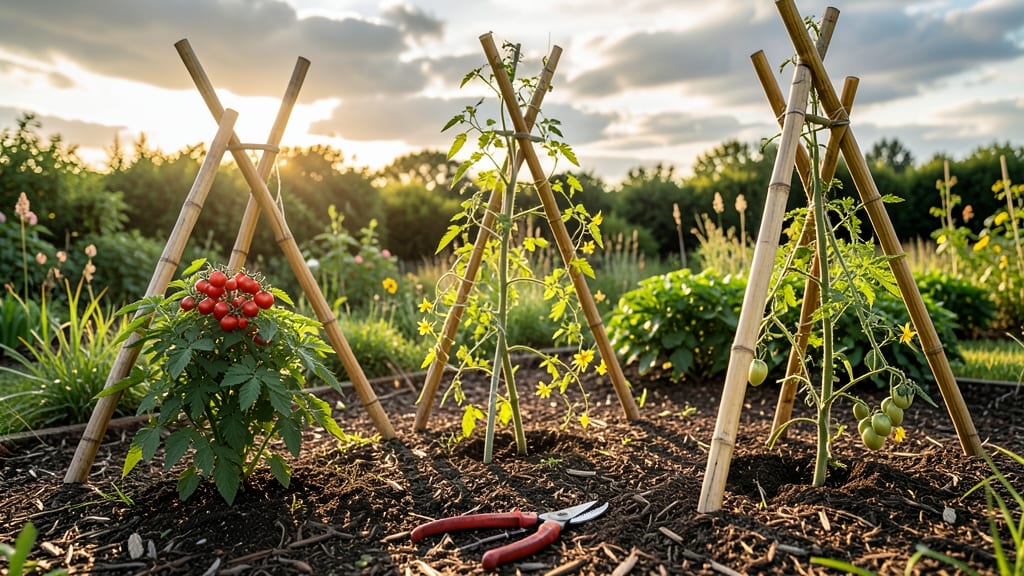
Identifying the types of tomato plants with pictures reveals three core varieties: indeterminate (vining types that produce fruit continuously), determinate (bush varieties with one main harvest), and dwarf (compact plants perfect for containers). Each type has unique care requirements, from trellising to pruning, that directly impact yield and flavor.
Understanding these tomato plant types helps gardeners match varieties to their space and climate.
Indeterminate varieties like 'Sungold' grow 6-10 feet tall and need sturdy cages, while determinate types such as 'Roma' stay compact at 3-4 feet. 🌱 Dwarf tomatoes like 'Tiny Tim' are ideal for balconies but produce smaller fruit.
The key difference lies in their growth patterns—indeterminate plants keep producing until frost, while determinate types set all their fruit at once, requiring careful timing for maximum harvests.
Visual identification becomes easier when you notice leaf shapes and fruit clusters. Indeterminate types have smaller leaves and fruit that ripens gradually, while determinate varieties develop broader leaves and heavy clusters that ripen simultaneously. This distinction affects everything from staking needs to when you should start harvesting.
💡 In This Article
- Indeterminate vs Determinate Tomato Growth Habits Explained
- Visual Guide: 10 Common Tomato Varieties by Type
Indeterminate vs determinate tomato growth habits explained
The core difference between indeterminate and determinate tomatoes lies in their genetic growth patterns. Indeterminate varieties grow continuously throughout the season, producing new leaves, stems, and flowers until frost kills the plant.
This means they can reach heights of 6-12 feet if left unchecked, with fruit ripening gradually over 60-90 days after transplanting. Determinate types, however, set all their fruit at once on terminal clusters, then stop growing entirely, typically maxing out at 3-5 feet tall.
Sunlight exposure plays a critical role in their productivity. Indeterminate plants need full sun (6-8 hours daily) to support their vertical growth and continuous fruiting, while determinate types thrive with 5-6 hours but require more consistent warmth (70-85°F) to set fruit efficiently.
The temperature sweet spot for flowering differs too: indeterminate tomatoes prefer cooler nights (60-65°F) to prevent flower drop, while determinate varieties often need slightly warmer nights (65-70°F) for optimal pollination.
This growth difference translates directly to harvest timing. Indeterminate varieties like 'Sweet 100' give you a steady supply of fruit from midsummer until frost, while determinate types like 'Celebrity' deliver a single massive harvest over 2-3 weeks.
The trade-off? Indeterminate plants need regular pruning to manage their sprawl and heavy fruit loads, whereas determinate types require less maintenance but benefit from staking to support their top-heavy clusters.
Here's what happens under the surface: Indeterminate tomatoes produce auxin hormones that promote continuous vertical growth, while determinate varieties have a genetic "stop signal" that halts growth after setting their main fruit clusters.
This hormonal difference explains why indeterminate plants keep producing flowers at leaf axils (the junction where leaves meet stems), while determinate types only flower at the tips of their branches.
For gardeners in cooler climates, indeterminate types have an advantage—they can produce fruit even when nights dip to 55°F, whereas determinate varieties often struggle below 60°F.
In hot climates, the opposite can be true: determinate tomatoes set fruit more reliably when temperatures stay consistently above 75°F during the day. This climate sensitivity means your choice between the two should factor in your local growing season length and average nighttime temperatures.
Consider these key factors when choosing:
- Space available: Indeterminate types need trellises or cages (6+ feet tall); determinate types work well in 3-foot cages or stakes
- Harvest preference: Indeterminate = steady supply; determinate = one big harvest
- Pruning needs: Indeterminate requires regular pruning; determinate needs minimal pruning
- Disease resistance: Many determinate varieties have better built-in resistance to common blights
The visual differences extend beyond height—indeterminate plants develop smaller, more serrated leaves while determinate types have broader, lobed leaves that resemble oak leaves.
These leaf structures affect how they handle humidity: indeterminate types often suffer more from fungal diseases in wet climates due to their dense foliage, while determinate varieties' open growth allows better air circulation.