
Watering
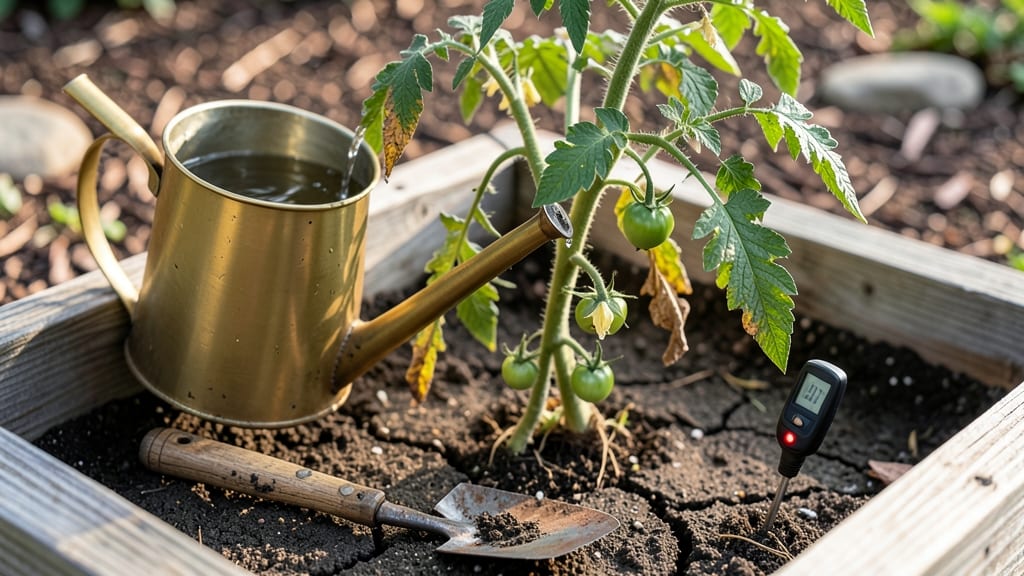
Your tomato plants are screaming for water—but you might not hear them until the leaves are already limp and the fruit is cracking. 🌱 Under-watering tomatoes doesn’t just wilt foliage; it stresses the whole plant, shrinking yields and inviting pests.
The good news? You can often revive them in 24 hours with the right approach.
First, check the soil: if it’s dry 2 inches down, that’s your wake-up call. Tomato roots need consistent moisture, not sporadic drinks. Overhead watering wastes resources—aim for deep, slow watering at the base, early in the morning. A simple soil probe or your finger works better than guessing.
Within hours of proper hydration, you’ll see leaves perk up and new vigor. But don’t stop there—mulch heavily to lock in moisture, and water deeply 2-3 times per week (adjust for heat). This prevents future stress and keeps fruits plump, not cracked or sun-scorched.
Even better, invest in a moisture meter or drip irrigation for foolproof results. Your plants will reward you with heavier harvests and fewer midday wilting episodes. Let’s get those tomatoes thriving again!
Why it happens
Tomatoes are thirsty plants—when they don’t get enough water, their leaves wilt, fruit shrinks, and growth stalls. But why does under-watering happen in the first place? The issue often stems from a mix of environmental factors, human habits, and even soil science.
Let’s break down the key culprits behind your tomato plants’ dehydration struggles.
💧 Inconsistent Watering Schedules
Tomatoes thrive on consistency. Skipping watering days—or switching between heavy soaking and drought cycles—confuses their roots. When soil dries out, roots struggle to absorb moisture efficiently.
Even worse, shallow watering (just wetting the top inch of soil) encourages roots to stay near the surface, where they’re exposed to rapid evaporation. Result? A plant that’s always playing catch-up.
Actionable fix: Aim for 1–1.5 inches of water per week, delivered deeply (6–8 inches into soil) 2–3 times per week. Use a moisture meter or the "knuckle test"—if the top 1–2 inches of soil feel dry, it’s time to water.
🌡️ Extreme Heat Or Wind
Hot, dry air and strong winds accelerate evaporation, draining soil moisture faster than your watering schedule can replace it.
Tomatoes in containers or raised beds are especially vulnerable because their roots have less access to underground water reserves. Heat stress also forces plants to close stomata (pores on leaves), reducing their ability to absorb CO₂—and indirectly, their water uptake.
Actionable fix:
- Water early morning (6–8 AM) to reduce evaporation loss.
- Use mulch (straw, wood chips) to lock in moisture and cool roots.
- For container tomatoes, add hydrogel crystals to soil to retain water.
🏺 Poor Soil Composition
Not all soil is created equal. Sandy or rocky soil drains water like a sieve, while clay-heavy soil holds moisture but suffocates roots. Even well-draining soil can become compacted over time, preventing water from penetrating deeply.
Without proper aeration, roots can’t access the moisture they need, even if you’re watering regularly.
Actionable fix:
Soil Type
Problem
Solution
Sandy
Water drains too fast; roots dry out.
Amend with compost or coconut coir to improve water retention.
Clay
Water pools on surface; roots suffocate.
Add perlite or vermiculite (10–20%) to improve drainage.
Compacted
Water runs off; roots can’t spread.
Loosen soil with a garden fork or add organic matter.
🌱 Immature Root Systems
Young tomato plants (or newly transplanted seedlings) have delicate, shallow roots that can’t absorb water efficiently.
Even if you’re following a watering schedule, their tiny root network may not reach deep enough to sustain growth during dry spells. Transplant shock can also temporarily disrupt water uptake, making plants more susceptible to wilting.
Actionable fix:
- Keep seedlings consistently moist (not soggy) before transplanting.
- After transplanting, water deeply every 2–3 days to encourage root growth.
- Use a root stimulator (like seaweed extract) to jumpstart root development.
🚰 Inefficient Irrigation Methods
Sprinklers, hose-end sprayers, or light drizzles might seem convenient, but they waste water through evaporation and often fail to penetrate deeply. Worse, watering leaves (especially in hot sun) can lead to fungal diseases like early blight, which stresses the plant further. Tomatoes need targeted, deep hydration—not a misty shower.
Actionable fix:
- Switch to drip irrigation or soaker hoses for precise, slow watering.
- Water at the base of the plant, avoiding leaves.
- For large gardens, use ebay pots or clay pots buried near roots to deliver water directly.
Quick Fixes for Stressed Tomato Plants
Reviving under-watered tomato plants starts with immediate action—but the right approach depends on why they’re thirsty. Below, we’ll map common causes to practical solutions, plus prevention tips to keep your vines lush and productive. 🌱💦
Signs: Crispy leaf edges, wilting even after watering, soil pulling away from pot edges (if container-grown).
How to Fix It:
- Deep Watering (Not Just a Spritz)
- Use a soaker hose or drip irrigation to deliver water 1–2 inches deep into the soil. For potted tomatoes, water until it drains from the bottom.
- Pro tip: 💡 Check soil moisture by sticking your finger 2 inches down—if it’s dry, water again.
- Mulch Like a Pro
- Spread 2–3 inches of organic mulch (straw, grass clippings, or shredded leaves) around the base. This locks in moisture and cools roots.
- Avoid: Plastic mulch—it traps heat and dries soil faster.
- Adjust Your Watering Schedule
- Morning is best: Water early (6–9 AM) to reduce evaporation. Avoid evening watering—wet foliage invites disease.
- Frequency > Volume: Tomato roots are shallow. Water every 1–2 days in hot weather (daily for containers).
Signs: Yellowing leaves (especially lower ones), blossom drop, or fruit cracking (even if soil looks moist).
How to Fix It:
- Shade Cloth to the Rescue
- If temps hit 90°F+, drape 30–50% shade cloth over plants for 2–4 hours daily. This slows moisture loss.
- Quick hack: Use a white bedsheet pinned to stakes if you don’t have cloth.
- Hydrate + Fertilize Smartly
- Mix 1 tbsp Epsom salt into a gallon of water and apply at the base. Magnesium helps plants retain moisture under stress.
- Skip: High-nitrogen fertilizers during drought—they burn roots faster.
- Prune for Airflow
- Trim lower leaves (up to 12 inches from the ground) to improve airflow. Less foliage = less water lost to evaporation.
Signs: Soil cracks when dry, water runs straight through (like a sieve), or roots are circling the pot.
How to Fix It:
- Upgrade Your Soil Mix
- Amend garden soil with compost or coconut coir (20–30%) to improve water retention.
- DIY fix: Mix 1 part peat moss + 1 part perlite into heavy clay soil.
- Repot If Needed
- If roots are crowded, move to a 1–2 gallon larger pot (for dwarf varieties) or 10+ gallons for indeterminate types like ‘Sungold’.
- Warning: 🚨 Transplant shock can happen—water thoroughly before and after repotting.
- Use Moisture-Retaining Additives
- Sprinkle hydrogel crystals or water crystals into the soil before planting. They absorb up to 500x their weight in water.
- Test Soil Moisture: Invest in a moisture meter ($10–$15) to avoid guesswork.
- Group Plants: Cluster tomatoes with peppers, basil, or marigolds—they share moisture and shade each other.
- Drip Irrigation > Hose: A DIY drip system (PVC pipes + emitters) delivers water right to the roots, cutting waste by 30%.
- Rain Barrels: Collect rainwater—it’s chlorine-free and pH-neutral, perfect for tomatoes.
With consistent hydration and the fixes above, you’ll see improvement in:
- 24–48 hours: Leaves perk up, wilting slows.
- 3–5 days: New growth emerges (if roots aren’t permanently damaged).
- 1–2 weeks: Fruit sets resume (if blossoms weren’t dropped).
Remember: Tomatoes are forgiving—even severely wilted plants can bounce back if roots are alive. Check for green stems when pulling a leaf gently—if it snaps cleanly, the plant is likely salvageable. 🌿
Frequently asked questions
How do I know if my tomato plants are under-watered vs. over-watered?
Under-watered tomatoes show wilting leaves that don’t perk up even after watering, dry soil 2+ inches deep, and crispy leaf edges. Over-watered plants have yellowing leaves, mushy stems, and soil that stays soggy. Test by sticking your finger in the soil—if it’s bone-dry (under-watered) or muddy (over-watered), adjust immediately.
Can I revive a tomato plant that’s been under-watered for a week?
Yes, but act fast! Start with deep watering (1–2 gallons per plant) until water drains from the bottom. Trim severely wilted leaves to reduce stress, then mulch heavily. If stems are still green when bent (not brittle), roots may still recover. Avoid fertilizing until new growth appears.
Why do my tomato leaves curl when under-watered, but not wilt?
Curling (without wilting) often means early-stage stress—roots aren’t getting enough water to support leaf expansion. Check soil moisture 2 inches deep; if dry, water deeply. This is your plant’s way of conserving moisture by reducing surface area. Act now to prevent full wilting.
Is it better to water tomato plants daily or every other day?
It depends on heat and soil type. In hot weather, water daily in the morning (1–1.5 inches total). For cooler climates, every 2–3 days with deep soaking works. Key rule: Never let soil dry out completely—tomato roots need consistent moisture, not sporadic drinks.
Will under-watering affect my tomato fruit quality or size?
Under-watering causes smaller, cracked, or blossom-end rot-prone fruits. Even if plants survive, stress reduces sugar content and flavor. Worse, inconsistent watering leads to uneven ripening. Prioritize deep, regular watering—especially during flowering/fruiting stages—for plump, sweet tomatoes.