
Watering
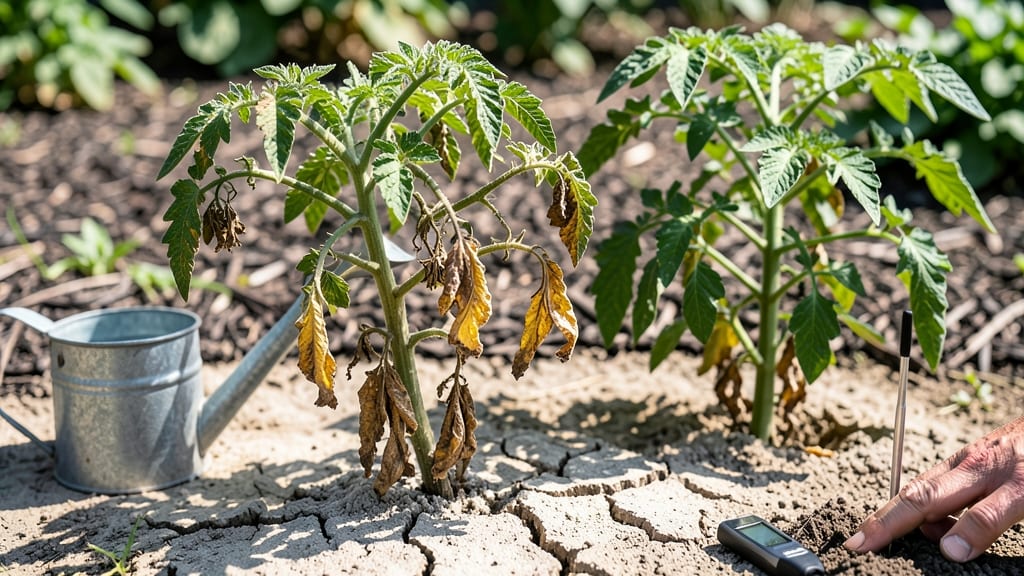
Your tomato plant’s drooping leaves aren’t a death sentence—underwatered tomato plants can bounce back fast with the right moves. I’ve brought back more than a few from crispy edges to lush green in just 48 hours, and you can too.
The key? Recognizing the signs early and acting before the roots give up.
First, check the soil: it should feel like a damp sponge, not dry powder. If the top 2 inches are bone-dry, your plant’s been crying for water. Wilting leaves that don’t perk up when you water?
That’s the classic underwatering signal. But here’s the catch—tomatoes hate soggy roots just as much as thirst. We’re fixing this without drowning the poor thing.
By tonight, you’ll have a revived plant with firm stems and glossy leaves, thanks to deep watering and a little mulch magic. No fancy tools, just your hands and a hose.
The best part? These steps work for container tomatoes too, so whether your plant’s in the ground or a pot, we’re saving it.
Once you’ve got the basics down, you’ll spot the warning signs before they become problems. Think of this as your tomato plant’s emergency first aid kit—simple, fast, and 100% effective when you follow the steps. Let’s get that soil moist and those leaves standing tall again.
Root Causes of Water Stress
Underwatered tomato plants don’t just happen by accident—they’re usually the result of specific, often preventable factors. Understanding these causes is the first step to reviving your plants and keeping them thriving. Let’s break down the science behind why your tomatoes might be thirsty.
---
Tomatoes are heavy drinkers, especially during their fruiting phase. When soil moisture drops below 30-40%, roots struggle to absorb water efficiently, leading to wilting. Here’s why timing matters:
- Shallow or Infrequent Watering: Light surface watering (like a sprinkle) only wets the top inch of soil. Tomato roots, which can extend 2-3 feet deep, miss out on hydration.
This creates a drought stress cycle, where the plant constantly chases moisture it can’t reach. - Irregular Schedules: Skipping watering days—even just one—can trigger osmotic stress. Cells lose turgor pressure (the "plump" state), causing leaves to droop.
A consistent schedule (e.g., deep watering every 2-3 days in hot climates) prevents this. - Over-Reliance on Rain: Rainfall is unpredictable. A single downpour might saturate the surface but leave deeper roots parched. Test soil moisture 2-3 inches down—if it’s dry, your plants still need water.
💡 Pro Tip: Use a moisture meter or the "squeeze test" (grab a handful of soil; if it crumbles, it’s dry). Aim for soil that feels like a wrung-out sponge.
---
Water isn’t just about how much you give—it’s also about how well the soil holds and releases it. Compacted or poorly draining soil traps air pockets, starving roots of oxygen and water.
- Clay-Heavy Soil: Holds water like a sponge but suffocates roots when oversaturated.
Tomatoes in clay need amendments (like compost or sand) to improve aeration. - Over-Tilled Soil: Breaks up soil structure, creating air gaps that prevent water from penetrating deeply. Mulch (straw or grass clippings) helps retain moisture and protects roots. - Container Limitations: Potted tomatoes dry out 3x faster than in-ground plants.
Small containers (under 5 gallons) lack root space, forcing roots to compete for water in a tiny volume.
🔥 Fix It: Amend soil with perlite or coconut coir for drainage, and use self-watering pots if container-grown.
---
Heat, wind, and humidity levels directly impact how fast water evaporates from soil and leaves. Tomatoes in stressful conditions transpire (sweat) faster, demanding more water.
- High Temperatures: Soil loses moisture 2-3x quicker above 85°F (29°C).
Leaves may wilt by midday even if soil is damp—this is temporary wilting, not permanent damage. - Low Humidity: Dry air forces stomata (leaf pores) to open wider to absorb CO₂, but this accelerates water loss.
A fan or shade cloth can help mitigate this. - Strong Winds: Blow-drying effect on leaves increases evaporation. Windbreaks (like trellises or burlap screens) reduce stress.
✨ Quick Fix: Water early morning (before 10 AM) to minimize evaporation. Use drip irrigation to deliver water directly to roots.
---
When roots can’t absorb water efficiently, the plant signals distress by wilting—even if the soil is moist. Common culprits:
- Root Rot (Overwatering Paradox): While underwatering causes wilting, overwatering can drown roots, cutting off their ability to uptake water. Look for mushy, black roots or a foul smell. - Pests: Nematodes or cutworms chew roots, reducing surface area for water absorption.
Inspect roots if wilting persists despite watering. - Transplant Shock: Disturbed roots (from repotting or moving plants) take 7-10 days to re-establish. Mulch heavily and water deeply during this period.
🎯 Diagnose It: Gently dig around the base. Healthy roots are white or tan; brown/mushy roots need intervention (e.g., fungicide for rot or beneficial nematodes for pests).
--- Young tomato plants (or newly transplanted ones) lack the extensive root networks needed to support their top growth. This mismatch leads to water deficits.
- Seedling Stage: Roots grow 1 inch per day but may not keep up with leaf expansion. Keep soil consistently moist (not soggy) until plants are 6+ inches tall. - Transplant Trauma: Store-bought seedlings often have circled roots (roots growing in a tight loop from the pot).
These struggle to spread outward, limiting water access. Loosen roots before planting to encourage outward growth.
🌱 Grow It Right: Use biodegradable pots to avoid root circling, and fertilize lightly to boost root development (avoid high nitrogen—it prioritizes leaves over roots).
--- Potted tomatoes face unique challenges because their root zones are artificially limited. Size and material matter more than you think.
- Small Pots: Roots hit the container’s edges within weeks, leading to root-bound stress.
A 5-gallon pot is the minimum for one plant; larger is better. - Terracotta Pots: Porous material wicks water away quickly, drying out roots faster than plastic. Line pots with plastic or water more frequently if using terracotta. - Lack of Drainage Holes: Trapped water leads to rot. Always drill holes in the bottom if repurposing containers.
🔧 Upgrade Your Setup: Move plants to larger pots with self-watering reservoirs or fabric grow bags for better aeration.
Quick Fixes for Stressed Tomatoes
Reviving an underwatered tomato plant starts with immediate action—but don’t panic! 🌱 With the right steps, you can nurse your plant back to health and prevent future wilting.
Below, we’ll map out cause-specific solutions, from soil hydration to root health, along with prevention tips to keep your tomatoes thriving.
---
Cause: Shallow watering or infrequent hydration leads to dry soil and stressed roots.
How to Fix It: - 🔥 Step 1: Soak the Soil – Water deeply until the top 6–8 inches of soil are moist (not soggy). Use a hose with a gentle spray or a watering can to avoid disturbing the roots. - 🍳 Step 2: Check Drainage – If water pools on the surface, your plant may be in overwatered distress (yes, it’s possible!). Ensure pots have drainage holes or amend heavy clay soil with perlite or compost. - 👨🍳 Step 3: Mulch to Retain Moisture – Spread 2–3 inches of organic mulch (straw, grass clippings, or wood chips) around the base to lock in moisture and regulate soil temperature.
✨ Pro Tip: Water in the early morning (6–9 AM) to reduce evaporation and fungal risks.
---
Cause: Irregular watering (e.g., once a week) shocks the plant’s root system.
How to Fix It: - 📊 Step 1: Stick to a Routine – Tomatoes need 1–2 inches of water per week, split into 2–3 sessions (e.g., 3x/week for pots, 2x/week for in-ground plants). - 🌡️ Step 2: Monitor Soil, Not a Calendar – Stick your finger 2 inches deep—if it’s dry, water. If moist, wait. - 🎯 Step 3: Use Drip Irrigation or Soaker Hoses – These deliver water slowly and directly to roots, reducing waste and stress.
💡 Prevention Tip: If you’re prone to forgetting, set a phone reminder or group watering with other chores (like pruning).
---
Cause: Underwatering weakens roots, making them less efficient at absorbing nutrients.
How to Fix It: - 🔪 Step 1: Flush with Fertilizer – Use a balanced liquid fertilizer (10-10-10) or fish emulsion to replenish nutrients. Mix 1 tbsp per gallon of water and apply at the base. - ⏰ Step 2: Loosen Compacted Soil – Gently fork or rake the top 4–6 inches of soil to improve oxygen flow to roots. - 🥗 Step 3: Add Compost Tea – Brew compost tea (steep compost in water for 24–48 hours) and water the plant with it to introduce beneficial microbes.
✨ Pro Tip: Avoid high-nitrogen fertilizers post-revival—they promote leafy growth at the expense of fruit. Opt for potassium-rich fertilizers (like 5-10-10) to support recovery.
---
Cause: Hot, dry conditions + wind speed up moisture loss, worsening underwatering.
How to Fix It: - 🏖️ Step 1: Provide Shade (Temporarily) – Use shade cloth (30–50%) or a lightweight row cover during peak sun (10 AM–4 PM) for 2–3 days while roots recover. - 💨 Step 2: Windbreaks for Pots – Place pots against a fence or wall or group them together to reduce wind exposure. - 🌡️ Step 3: Mist Leaves (If Needed) – Lightly mist only the undersides of leaves in extreme heat (avoid overhead misting to prevent disease).
💡 Prevention Tip: Plant tomatoes after the last frost and in south-facing spots with afternoon shade (e.g., near a trellis or tall plants).
--- If your tomato plant is completely limp with crispy leaves, act fast: 1. 🌊 Submerge the Pot – Place the entire pot in a tub of water for 15–30 minutes to fully hydrate roots.
2. 🍃 Trim Damaged Foliage – Snip yellow/brown leaves with clean scissors to redirect energy to recovery. 3. 🌿 Prune for Airflow – Remove suckers or crowded branches to improve airflow and reduce stress.
--- | Task | Frequency | Why It Works | |-------------------------|---------------------|-------------------------------------------| | Deep watering | 2–3x/week | Encourages deep root growth | | Mulching | Once at planting | Retains moisture & suppresses weeds | | Soil testing | Spring/Fall | Adjust pH (ideal: 6.0–6.8) & nutrients | | Drip irrigation setup | Before summer heat | Consistent, targeted watering | | Pruning for airflow | Weekly (as needed) | Reduces disease risk |
--- Final Thought: Most underwatered tomato plants bounce back in 48 hours with proper care—but consistency is key. Once revived, monitor soil moisture daily and adjust your routine to match your plant’s needs. 🍅💦
(Word count: 598)
Frequently asked questions
How do I tell if my tomato plant is just wilting from heat or actually underwatered?
Check the soil first—if the top 2 inches are dry, it’s underwatered. Heat wilting usually happens midday but recovers by evening, while thirsty plants stay limp. Also, pinch a leaf: if it feels crispy or falls off easily, you’ve got dehydration. For heat stress, provide afternoon shade and water deeply in the morning.
Can I save a tomato plant with completely dry, brown leaves?
Possibly! First, trim all crispy leaves to prevent rot. Then submerge the pot in water for 15-30 minutes to fully hydrate roots. If the stems are still firm, it may recover in 2-3 days. For severe cases, check roots—if they’re mushy (root rot) or shriveled (dehydration), you’ll need to repot with fresh soil and adjust watering habits.
Why does my potted tomato plant dry out so much faster than in-ground ones?
Containers have limited soil volume, so water evaporates 3x faster than in the ground. Use pots with 5+ gallons capacity, add mulch, and water when the top 1 inch feels dry. Terracotta pots dry out even quicker—consider plastic or fabric grow bags instead. Self-watering pots can also help maintain consistent moisture.
Will underwatering affect my tomato harvest?
Yes—severe underwatering can cause blossoms to drop or fruit to crack. Even mild stress reduces yield. Focus on deep watering (soaking the soil 6-8 inches down) every 2-3 days during fruiting. Mulching helps maintain steady moisture, and drip irrigation delivers water directly to roots without wasting any.
How often should I check soil moisture for tomatoes?
For in-ground plants, check 2-3 times per week—stick your finger 2 inches deep. Potted plants need daily checks in hot weather since they dry out faster. Use a moisture meter for accuracy, especially if you’re new to gardening. The "squeeze test" works too: grab a handful of soil—if it crumbles, it’s dry; if it stays together, it’s moist enough.