
Pruning
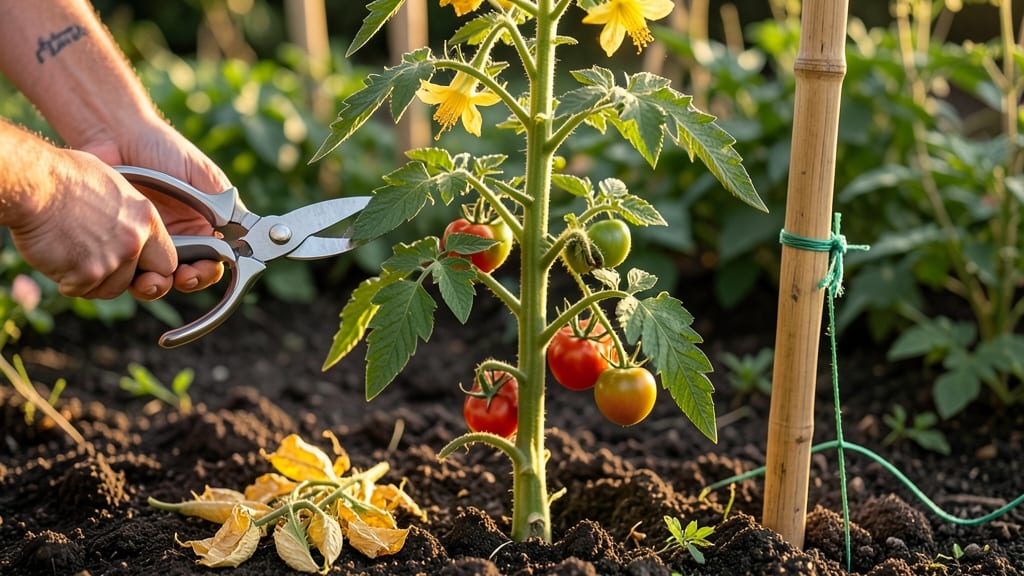
A well-pruned tomato plant produces 30% more fruit than an unpruned one—here's how to do it right. ✂️ I learned the hard way that aggressive pruning isn't always better; strategic cuts redirect energy to what matters most: those juicy, vine-ripened tomatoes you've been dreaming about.
The key is understanding when to trim suckers, how to support the main stem, and which varieties actually need pruning at all.
Start with clean pruners and a sunny morning when plants are dry. Remove suckers (those little shoots between the main stem and branches) when they're smaller than a pencil—this prevents energy drain and keeps the plant focused on fruit production.
For indeterminate varieties like 'Sungold,' prune aggressively to encourage bushier growth, while determinate types like 'Roma' need minimal trimming to avoid stunted growth.
You'll notice a difference within 2-3 weeks: stronger stems, more flowers, and—eventually—heavier clusters of tomatoes. The pruned plants also resist disease better because air circulates freely, and the fruit ripens more evenly. Plus, you'll save time later when harvesting because the plants stay compact and manageable.
This method works for both backyard gardens and container growers, though container plants may need slightly less pruning to conserve space. The biggest mistake? Over-pruning early in the season—wait until plants have at least 2-3 sets of leaves before starting. Now grab those shears and let's get growing!
📚 In This Guide
- What you need
- Instructions
- Tips and common mistakes
- Wrapping up and next steps
What you need
- ● Pruning shears or scissors: Sharp, clean bypass pruners (for small stems) or felco pruners (for thicker branches). Avoid dull tools—they crush stems instead of cleanly cutting!
- ○ Gloves: Heavy-duty gardening gloves (to protect from thorns and dirt). Optional: Nitrile-coated gloves for extra grip.
- ● Disinfectant: 70% isopropyl alcohol or a 10% bleach solution (1 part bleach to 9 parts water) to sterilize tools between cuts and prevent disease.
- ● Rubbing alcohol or hydrogen peroxide: (3%) for quick tool sanitization on the go.
- ● Healthy tomato plant: A determinate (bush) or indeterminate (vining) variety, at least 3–4 weeks old and with visible stems (3+ inches tall). Pro tip: Start pruning when the plant has 3–5 sets of true leaves!
- ○ Support system: Required for indeterminate varieties: Cages, stakes, or trellises (e.g., 5–6 ft tall bamboo stakes or 6 ft tomato cages). Optional: Twine or soft plant ties for securing vines.
- ○ Mulch: Optional but recommended: Straw, wood chips, or grass clippings to retain moisture and suppress weeds.
- ○ Growth regulator (optional): For aggressive vines: A low-dose seaweed extract (like Maxicrop) to promote bushier growth if needed.
How to prune tomato plants for maximum fruit production
Here's the method I've used for years to turn sprawling tomato vines into high-yielding, disease-resistant powerhouses.
✂️ Step 1: Identify and Remove Suckers Early
Suckers are the small shoots that grow in the crotch between the main stem and a branch. These compete with your fruit for energy. I start checking for suckers when plants reach 12-18 inches tall, using my thumb and forefinger to gently pinch them off at the base. Never tear—this prevents damage that invites disease.
The key moment comes when your plant has 3-4 main stems. At this stage, I remove all suckers below the first flower cluster. This redirects the plant's energy upward where it belongs. Watch for new growth in leaf axils—these are your next targets. I like to do this on dry mornings when the plants are firm and less likely to tear.
✂️ Step 2: Maintain the Main Stem Structure
For indeterminate varieties (the vining types), I keep just 1-2 main stems per plant. When the plant reaches my trellis height (6 feet), I cut back the strongest stem to 4-5 feet to encourage bushier growth. This is where many gardeners make mistakes—cutting too high stresses the plant.
Determinate varieties (bush types) need no pruning beyond removing diseased leaves. Their natural shape already directs energy to fruit production. The only exception is when you see yellowing lower leaves—these compete with fruit and should be trimmed off at the base with clean shears.
☀️ Step 3: Open the Plant for Airflow and Sunlight
Thin out crowded foliage to create 6-8 inch gaps between leaves. This prevents humidity pockets where blight thrives. I start at the bottom, removing any leaves touching the soil (they rot quickly) and working upward. You'll know you've done enough when sunlight reaches the lower fruit clusters.
Here's the thing—don't overdo it. You want to maintain 30-40% leaf coverage. Too much bare stem means fewer photosynthesis sites. I always leave the top leaves intact as they're the plant's food factories. Watch for new growth in the pruned areas—this signals the plant is redirecting energy to fruit production.
🌿 Step 4: Manage Flower Clusters for Continuous Production
When you see flower clusters, let them develop but remove any that appear after the 5th or 6th cluster on indeterminate varieties. This prevents the plant from putting energy into late-season flowers that won't ripen before frost. I also remove any flowers that appear on the main stem below the first cluster—these compete with the main fruit load.
For determinate varieties, let all flowers develop but remove any that appear after the plant reaches 4-5 feet tall. The goal is to concentrate the plant's energy on the current fruit load rather than spreading it thin. You'll see the difference in fruit size within 2-3 weeks of proper pruning.
⏰ Step 5: Late-Season Pruning for Ripening Fruit
As your plant approaches 6-8 weeks before first frost, shift focus to protecting existing fruit. Remove all leaves above the top cluster to allow sunlight to reach developing tomatoes. This is critical for late-season ripening. I also trim any diseased leaves immediately—don't wait for the next pruning session.
Watch for new suckers that may appear in late summer. These late-season growths often don't have time to produce fruit before frost, so remove them promptly. The goal now is to preserve the plant's energy for the fruit already on the vine. You'll know you're doing it right when your lower fruit starts coloring up while upper leaves naturally yellow and drop.
Tips & tricks for perfect tomato pruning
These strategic insights will help you transform your sprawling tomato plants into productive, disease-resistant powerhouses.
Timing is Everything: Start pruning when plants reach 12-18 inches tall—this is when suckers first appear. I've found that dry mornings are ideal for pruning because the plants are firm and less likely to tear. The key is to stay ahead of new growth; I check my plants every 3-5 days during peak growing season to catch suckers before they become established. This consistent attention pays off with larger, healthier fruit.
Pruning Technique Matters: Always pinch suckers at the base rather than tearing them—the jagged edges invite disease. For indeterminate varieties, maintain 1-2 main stems and cut back the strongest stem to 4-5 feet when it reaches 6 feet. I use clean, sharp shears for larger cuts to prevent crushing stems. The goal is to create a balanced structure that directs energy to fruit production rather than excessive foliage.
Airflow Prevention: When creating 6-8 inch gaps between leaves, focus on the lower canopy first. This prevents humidity pockets where blight thrives. I've learned the hard way that leaving too much bare stem reduces photosynthesis—aim for 30-40% leaf coverage. The top leaves should always remain intact as they're the plant's food factories. Watch for new growth in pruned areas as a sign the plant is redirecting energy to fruit production.
Late-Season Strategy: As your plant approaches 6-8 weeks before first frost, shift focus to protecting existing fruit. Remove all leaves above the top cluster to allow sunlight to reach developing tomatoes. I also trim any diseased leaves immediately rather than waiting. This final pruning session often yields the largest tomatoes of the season as the plant concentrates its remaining energy on ripening existing fruit.
Pro Tips for Well Pruned Tomato Plant
- These strategic insights will help you transform your sprawling tomato plants into productive, disease-resistant powerhouses.
- Timing is Everything: Start pruning when plants reach 12-18 inches tall—this is when suckers first appear.
- Pruning Technique Matters: Always pinch suckers at the base rather than tearing them—the jagged edges invite disease.
Frequently asked questions
Got questions about keeping your tomato plants well pruned for maximum yield? You're in the right place! Here are some of the most common queries—and their straightforward answers—to help you master the art of pruning like a pro.
Why should I prune my tomato plant at all?
Pruning directs energy toward fruit production instead of excessive foliage. It improves airflow, reducing disease risk, and helps sunlight reach the lower branches for even ripening. Pro tip: Indeterminate varieties (like vine tomatoes) benefit most from pruning, while determinate (bush) types rarely need it!
When is the best time to prune a tomato plant?
Start pruning when your plant is about 12–18 inches tall and has a few sets of true leaves. Continue trimming throughout the growing season, focusing on removing suckers (side shoots) weekly during peak growth. Avoid heavy pruning late in the season—it can stress the plant before harvest.
How do I know if I’m over-pruning my tomato plant?
Over-pruning shows up as yellowing leaves, stunted growth, or fewer flowers/fruit. If your plant looks sparse or weak, you’ve likely cut too much. A good rule: Never remove more than 1/3 of the foliage at once. Focus on strategic cuts—like removing diseased leaves or suckers—rather than aggressive thinning.
Can I prune tomato plants too late in the season?
Yes! Pruning too late (within 4–6 weeks of first frost) can shock the plant and delay ripening. If you must prune late, limit it to removing only diseased or damaged growth. Let the plant focus on ripening existing fruit rather than new foliage. Pro tip: Harvest green tomatoes indoors to ripen—they’ll taste just as sweet!
What’s the difference between pruning indeterminate vs. determinate tomatoes?
| Indeterminate Tomatoes | Determinate Tomatoes |
|---|---|
| Grow continuously (vining). Prune aggressively to shape and boost yield. | Grow to a fixed size (bushy). Prune minimally—just remove suckers or diseased leaves. |
| Examples: Cherry, Roma, Beefsteak. | Examples: Bush Early Girl, Celebrity. |
| Prune regularly all season. | Prune only if needed (e.g., for airflow). |
Need help telling them apart? Indeterminate plants keep growing taller, while determinate ones stop at a set height.
Wrapping up and next steps
A well-pruned tomato plant isn’t just about aesthetics—it’s your secret weapon for a bountiful harvest! By mastering strategic trimming, you’ll boost airflow, redirect energy to fruit production, and keep pests at bay.
Remember, consistency is key, so grab those pruners and make it a habit—your future salads (and bragging rights) will thank you.
Ready to take your tomato game to the next level? Start small: pick one plant this season, experiment with techniques, and track your progress. Before you know it, you’ll be the neighborhood’s go-to gardener for perfectly pruned, high-yielding tomatoes! 🌱🍅