
Planting
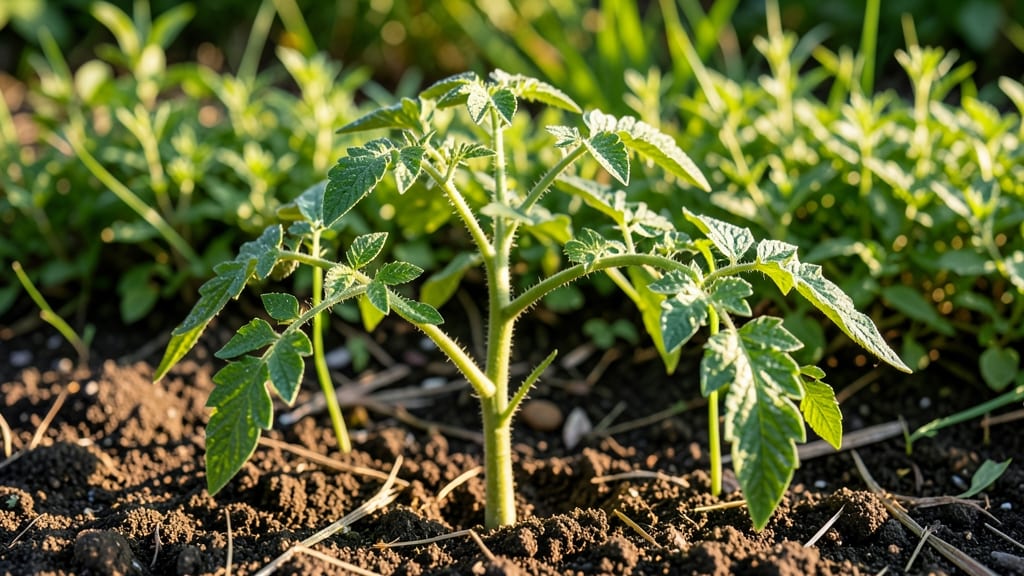
What do tomato plant seedlings look like? They start with two plump, round cotyledons that look like tiny, fat leaves—nothing like mature foliage. 🌱 These first leaves are your only clue at this stage, and they’re usually a rich, dark green with smooth edges. If you’re comparing them to weeds, tomato cotyledons are thicker and more rounded, while common weeds like lambsquarters have jagged edges. By the time the first true leaves appear (about 1–2 weeks later), you’ll see two small, oval leaves with serrated edges—this is when excitement kicks in. Healthy seedlings have sturdy stems (about 2–3 inches tall) and vibrant color, while weak ones look leggy or pale. Think of it like spotting a baby deer: you know it’s right when it’s strong and alert. One of the easiest ways to confirm they’re tomatoes is to look at the leaf shape: the first true leaves are slightly pointed and have a slight hairiness along the edges. Compare them to pepper seedlings, which have broader, smoother leaves, or to weeds like purslane, which have thick, fleshy stems. If your seedlings are crowded, thin them to the strongest one per pot. This is where gardening gets personal—you’ll start recognizing the subtle differences between healthy and struggling seedlings. Trust your instincts: if they’re growing upright, have glossy leaves, and aren’t wilting, you’re on the right track. Now’s the time to give them a little extra care before they’re ready for transplanting!
📚 In This Guide
- What you need
- Instructions
- Tips and common mistakes
- Wrapping up and next steps
What you need
- ● Tomato seeds: Heirloom or hybrid varieties (e.g., Cherry, Roma, or Beefsteak) – 10–20 seeds (depending on desired yield).
- ● Seed-starting trays or pots: Biodegradable or plastic cell trays (2–4" deep) with drainage holes – 1 tray (50+ cells) or 6–12 individual pots.
- ● Seed-starting mix: Lightweight, sterile potting soil (avoid garden soil) – 1–2 bags (1–2 cubic feet).
- ● Grow lights or sunny windowsill: Full-spectrum LED grow lights (12–16 hrs/day) or a south-facing window – 1 light (12–24" above seedlings) or access to direct sunlight.
- ● Spray bottle: For gentle watering – 1 (8–16 oz).
- ○ Humidity dome or plastic wrap: To retain moisture (optional but helpful for germination) – 1 dome or 1 sheet.
- ● Plant labels: Markers + stakes or toothpicks – 1 pack of labels or DIY supplies.
- ● Heating mat: For faster germination (70–85°F ideal) – 1 mat (fits seed tray).
- ● Fertilizer: Balanced liquid fertilizer (5-5-5 or 10-10-10) or compost tea – 1 small bottle.
- ● Fans: For airflow (reduces disease risk) – 1 small oscillating fan.
- ● Transplanting tools: Small shovel or butter knife for moving seedlings – 1 tool.
- ● Garden journal: To track growth stages and notes – 1 notebook or app.
How to identify healthy tomato seedlings at every growth stage
Don't wait until they're waist-high to recognize your tomato babies—here's what to watch for from day one.
🌱 Step 1: Recognize the First True Leaves
The very first leaves you see are called cotyledons, and they're not what you're looking for. These tiny, round leaves appear 5-10 days after planting and look more like a plant's baby teeth than its true personality. They're usually 1/2 to 3/4 inch wide and smooth-edged.
What you're actually waiting for are the first true leaves, which emerge 1-2 weeks later. These are the real deal—serrated edges, more elongated, and they'll look like miniature versions of the mature leaves you know and love. At this stage, you'll also notice the stem thickening slightly, a sign the seedling is building strength.
🌿 Step 2: Spot Healthy Stem and Leaf Development
A healthy tomato seedling has a stout, thick stem that stands upright. You should be able to see a slight ridge where the leaves attach—this is where the plant's vascular system is developing. If the stem looks thin and watery, it's a sign the seedling isn't getting enough light.
The leaves themselves should be a deep green color, not pale or yellowish. Look for 5-7 leaves clustered near the top of the plant—this is your cue that the seedling is ready for its first true growth spurt. At this stage, the leaves will also start developing that classic tomato serration, making them unmistakable.
☀️ Step 3: Watch for Proper Growth Patterns
Tomato seedlings grow in a predictable pattern: after the first true leaves appear, the plant will enter a vegetative growth phase where it focuses on leaf production. You'll see new leaves emerging from the stem at regular intervals, each one slightly larger than the last. This is normal and healthy—think of it as the plant building its leafy foundation.
Pay attention to how the leaves attach to the stem. They should grow in a spiral pattern, not all clustered at the top. This indicates strong, balanced growth. If you notice leaves growing directly opposite each other or in a flat pattern, the plant might be reaching for light—time to adjust your grow light or move the seedling closer to the window.
✂️ Step 4: Identify Common Growth Milestones
Around 4-6 weeks, your tomato seedlings should reach another key milestone: the appearance of the first true flower buds. These will look like tiny yellow or green clusters at the leaf joints. Don't panic if they appear early—tomatoes can handle a light frost at this stage, but you'll want to protect them if temperatures drop below 50°F.
By this point, your seedlings should be 6-12 inches tall with a well-developed root system. The stem should be 1/4 to 1/2 inch thick at the base, and the leaves should be 3-5 inches long. If your seedlings look leggy (long, thin stems with small leaves), they're begging for more light. Move them closer to your grow light or supplement with a south-facing window.
🌱 Step 5: Troubleshoot Common Seedling Issues
Yellowing leaves? That's usually a sign of overwatering or nutrient deficiency. Check the soil—it should be moist but not soggy. If the yellowing starts with the older leaves, it's often a nitrogen issue. If it starts with the newer leaves, you might be overwatering or the roots aren't getting enough oxygen.
Black or mushy stems are a red flag for damping-off disease, caused by too much moisture. Remove affected seedlings immediately and reduce watering. To prevent this, always water from the bottom or use a spray bottle to mist the soil gently. Keep the growing area well-ventilated, and avoid crowding seedlings—they need room to breathe and grow strong.
Tips & tricks for identifying healthy tomato seedlings
Took me a while to figure these out, so here's how I spot strong seedlings from day one.
Leaf Shape Matters: The first true leaves should have serrated edges—those jagged little teeth are your tomato's signature. I've seen beginners get confused by cotyledons (the first baby leaves) because they're round and smooth. Remember, the true leaves appear about 1-2 weeks after planting, so don't judge your seedlings too soon! These early leaves are like the plant's ID badge—they tell you whether you're growing a tomato or some other plant.
Stem Strength is Key: A healthy tomato seedling's stem should be thick and sturdy, not thin and spindly. I learned this the hard way after growing leggy seedlings that toppled over. Run your finger along the stem—you should feel a slight ridge where each leaf attaches. This ridge is where the plant's vascular system develops, and it's a dead giveaway for strong growth. If the stem feels watery or collapses easily, your seedling needs more light.
Growth Patterns Reveal Health: Tomato seedlings grow in a predictable spiral pattern—new leaves should emerge in a circular rotation around the stem, not all clustered at the top. This spiral growth means the plant is balanced and getting enough light from all directions. I always check for this pattern when inspecting seedlings. If leaves grow directly opposite each other or in a flat pattern, it's a sign the plant is stretching toward light—time to move it closer to your grow light or window.
Color Tells the Real Story: Healthy tomato leaves should be a vibrant deep green, not pale or yellowish. I've seen so many seedlings that looked fine but were actually nutrient-deficient. The older leaves should be the darkest green—this shows the plant is properly distributing nutrients. If you notice yellowing starting with the newer leaves, it's often a sign of overwatering or poor drainage. Always check the soil moisture before diagnosing leaf color issues.
Pro Tips for What Do Tomato Plant Seedlings Look Like
- Took me a while to figure these out, so here's how I spot strong seedlings from day one.
- Leaf Shape Matters: The first true leaves should have serrated edges—those jagged little teeth are your tomato's signature.
- Stem Strength is Key: A healthy tomato seedling's stem should be thick and sturdy, not thin and spindly.
Frequently asked questions
Got questions about spotting those tiny tomato seedlings? You’re not alone! Here are some of the most common queries—plus quick answers to help you grow like a pro.
How do I tell tomato seedlings apart from weeds?
Tomato seedlings have two rounded cotyledons (seed leaves) first, followed by true leaves that are oval, serrated, and slightly fuzzy. Weeds often have jagged edges, hairy stems, or irregular shapes. Pinch a seedling—if it’s tender and has a stout stem, it’s likely a tomato!
When will my tomato seedlings sprout after planting?
Tomato seeds typically sprout in 5–14 days, depending on soil warmth (ideal: 70–85°F). Keep soil moist but not soggy, and place trays in a sunny spot or under grow lights. If nothing emerges in 2 weeks, try replanting—seeds may have gone bad or dried out.
Why are my tomato seedlings leggy or weak?
Leggy seedlings (long, thin stems) usually mean too little light or overcrowding. Move them to a brighter spot (or add grow lights) and thin seedlings to 2–3 inches apart. Bury stems deeper when transplanting—roots will grow along the buried part, creating a sturdier plant!
Can I plant tomato seedlings too early?
Yes! Tomato seedlings are cold-sensitive—plant them after the last frost when soil is at least 60°F. If planted too early, they’ll bolting (flowering prematurely) or rot. Start indoors 6–8 weeks before transplanting for a head start, or use frost cloth for outdoor seedlings.
What if my seedlings look diseased or wilted?
Check for damping-off (black, mushy stems) or fungus (white/powdery spots). Remove affected seedlings immediately and sterilize pots with a 1:10 bleach-water mix. Improve airflow, avoid overwatering, and use seedling-safe fungicide if needed. Prevention is key—water at the base, not overhead!
Wrapping up and next steps
Now that you know what to look for—those tiny, oval leaves and stout stems—you’re ready to spot your tomato seedlings like a pro! 🌱 Whether you’re starting from seeds or transplanting young plants, recognizing these early signs ensures you give them the best care. Next up: nurture those sprouts with sunlight, water, and patience, and you’ll soon be harvesting juicy, homegrown tomatoes!
Pro tip: Keep an eye out for pests or leggy growth—early action makes all the difference! 💡