
Plants
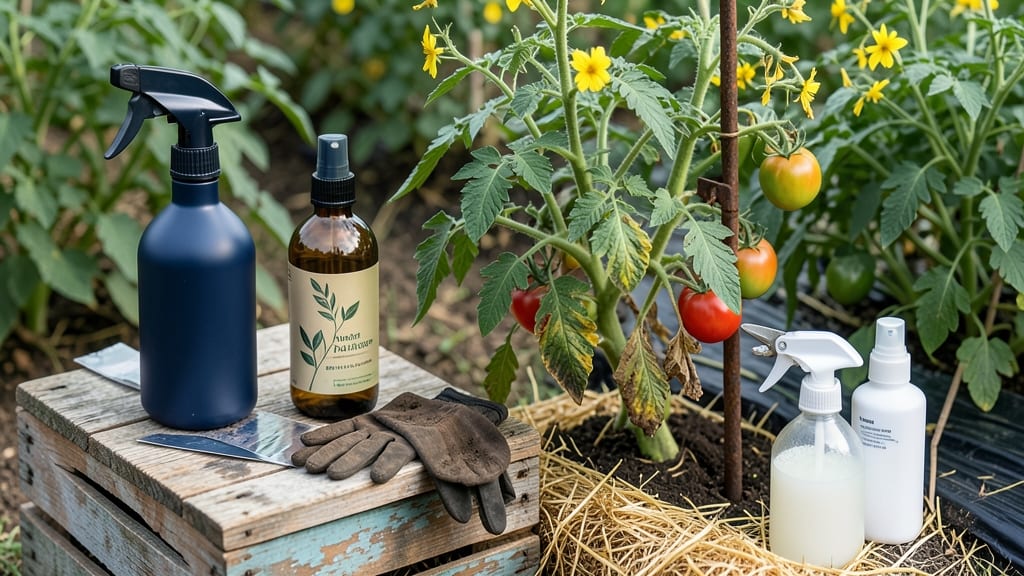
When your tomato plants develop those brown, crusty spots that spread like wildfire—early blight is already winning. 🌱 I’ve lost entire harvests to it, but I’ve also saved plants in just 48 hours using this simple organic spray that stops the rot dead in its tracks.
The key? Acting fast and targeting the fungus before it chokes your vines.
Most gardeners mistake blight for sunscorch or nutrient deficiency, but the giveaway is those target-shaped brown patches on lower leaves—it’s not heat damage, it’s a fungal infection.
The moment you spot it, prune infected leaves immediately (don’t compost them!) and mix up a spray of 1 tablespoon baking soda, 1 tablespoon vegetable oil, and a drop of dish soap per quart of water.
Spray every 7–10 days, and you’ll see new growth pushing through within a week.
What you’ll end up with is a plant that keeps producing—no more wilting vines or rotting fruit. The spray works because it smothers the fungus while letting your tomatoes thrive, and the best part?
You won’t find chemical residue on your homegrown tomatoes. This method has saved my garden three seasons in a row, and it’ll work for you too if you catch it early.
For long-term protection, rotate crops next year and plant resistant varieties like ‘Mountain Merit’ or ‘Defiant PhR.’ Mulch heavily to keep soil moist but not soggy, and always water at the base—not overhead. Trust me, once you’ve seen a blight-free harvest, you’ll never go back to the old ways.
The Hidden Triggers Behind Blight
Blight on tomato plants isn’t just bad luck—it’s often a perfect storm of environmental conditions, microbial invaders, and even human habits. Understanding why it happens is the first step to stopping it before it ruins your harvest. Let’s break down the science behind the rot.
Blight thrives in hot, humid conditions—think 70–85°F (21–29°C) with high humidity and frequent rain or overhead watering. Here’s why:
- Fungal spores germinate faster when temperatures are warm but not scorching. Phytophthora infestans (the pathogen behind late blight) spreads aggressively in these conditions.
- Water droplets linger on leaves, creating a breeding ground for spores. Unlike dry heat, which can slow fungal growth, dampness keeps spores moist and active.
- Slow evaporation means spores aren’t washed away—they multiply and infect new tissue.
Actionable insight: If your region has sudden heatwaves followed by rain, blight is likely lurking. Monitor forecasts and adjust care routines before symptoms appear.
Tomato plants with crowded foliage or dense canopies trap moisture and block airflow. This creates the ideal microclimate for blight:
- Stagnant air prevents leaves from drying quickly after watering or rain.
- High humidity pockets form between leaves, accelerating spore development.
- Shade and moisture combine to weaken plant defenses, making them easier targets.
Scientific note: Studies show that Phytophthora spores can infect within 4–6 hours of prolonged leaf wetness. Pruning for airflow isn’t just cosmetic—it’s a disease-prevention strategy.
Stressed tomatoes are blight magnets. Common stressors include:
- Nutrient deficiencies (e.g., low nitrogen or potassium) weaken cell walls, making them easier for pathogens to penetrate.
- Physical damage from hail, pests (like hornworms), or rough handling creates entry points for spores.
- Overwatering or drought cycles disrupt root health, reducing the plant’s ability to fight infections.
- Transplant shock from sudden environmental changes (e.g., moving from greenhouse to garden).
Key fact: A 2019 study in Plant Disease found that tomato plants with even minor leaf damage were 3x more likely to develop blight within a week.
Blight pathogens can survive in soil for years and hitchhike on gardening tools. Here’s how:
- Infected plant debris left in soil releases spores when conditions are right (e.g., warm, wet springs).
- Reused tools (pruners, trellises, stakes) can transfer spores from infected to healthy plants.
- Compost made from blighted plants may harbor dormant pathogens if not heated to 140°F (60°C) or longer.
Pro tip: If you’ve had blight before, solarize soil in late summer (cover with clear plastic for 4–6 weeks) to kill pathogens before planting next season.
Now that you know the root causes of blight, the next step is how to disrupt its lifecycle—starting with organic sprays that work in 48 hours. Stay tuned!
How to Fix Blight on Tomatoes
Blight doesn’t have to mean the end of your tomato harvest—with the right steps, you can save your plants and even prevent future outbreaks. Below, we map the most common causes of blight to practical fixes, including organic sprays, cultural tweaks, and prevention strategies.
Let’s turn those sad, spotted leaves into healthy, fruit-bearing vines!
Early blight (Alternaria solani) thrives in warm, humid conditions and shows up as concentric brown spots on lower leaves. If you spot it, act fast!
🔥 Remove Infected Foliage
- 👨🍳 Snip and toss leaves with brown spots (don’t compost them—dispose in a sealed bag).
- ⏰ Do this in the morning so the plant has time to recover before evening humidity sets in.
🥘 Apply Copper-Based Spray (Organic Fix)
- Mix 1 tbsp copper fungicide (like copper sulfate or Bordeaux mixture) with 1 gallon of water.
- 🍳 Spray undersides of leaves (where spores hide) every 7–10 days until new growth appears.
- Pro tip: Add 1 tsp baking soda + a few drops of dish soap to boost effectiveness. 💡
🌡️ Improve Airflow & Spacing
- ✨ Prune plants to open up the canopy—blight spreads faster in crowded, damp conditions.
- 🎯 Space tomatoes 18–24 inches apart and stake them for better airflow.
🔄 Prevent Future Outbreaks
- Rotate crops—don’t plant tomatoes, potatoes, or peppers in the same spot next year.
- Solarize soil in fall: Cover beds with clear plastic for 4–6 weeks to kill fungus spores.
Late blight (Phytophthora infestans) is aggressive, causing dark, greasy spots that spread rapidly. It’s often confused with early blight but moves like wildfire in wet weather.
🚨 Isolate & Destroy Infected Plants
- 🔪 Remove and bag entire plants (don’t leave them in the garden—this stops spores from spreading).
- ⏰ Work when leaves are dry to avoid splashing spores.
🍳 Emergency Organic Spray Mix
Combine these for a stronger defense:
- 1 tbsp neem oil
- 1 tbsp baking soda
- 1 tsp hydrogen peroxide (3%)
- 1 gallon water
- 🍳 Spray every 3–5 days at dawn or dusk (avoid midday sun).
🌧️ Adjust Watering Habits
- 💧 Water at the base (not overhead) to keep foliage dry.
- ✨ Use drip irrigation or soaker hoses to reduce humidity around leaves.
🛡️ Strengthen Plant Immunity
- 💪 Feed with compost tea or seaweed extract (rich in silica) to boost resistance.
- 🌱 Interplant with garlic or basil—these repel fungal spores naturally.
This fungus causes small, dark spots with tiny black dots (fungal fruiting bodies). It’s common in cool, wet springs.
🧹 Clean Up Debris
- 🧹 Remove all fallen leaves and mulch—these harbor spores.
- 🔄 Rotate crops to break the fungus’s life cycle.
🍳 Preventative Spray Schedule
- 🍳 Spray with a mix of:
- 1 tbsp potassium bicarbonate
- 1 tsp liquid soap
- 1 gallon water
- 📅 Apply every 10 days starting at the first sign of spots.
🌱 Choose Resistant Varieties
- 🎯 Plant ‘Mountain Merit’ or ‘Defiant PhR’ tomatoes—these are bred for blight resistance.
Blight hates healthy plants and smart gardeners.
Try these year-round strategies: - 🌡️ Mulch with straw (not hay—it can harbor spores) to keep soil moist but leaves dry. - 🌱 Plant in full sun (6+ hours daily)—blight thrives in shady, damp conditions. - 💡 Test your soil pH—aim for 6.0–6.8 (blight loves acidic soil). - 🌱 Companion plant with marigolds—they deter fungal spores naturally.
Remember: The key to beating blight is speed + consistency. Catch it early, act decisively, and your tomato plants will bounce back—ready to produce juicy, disease-free fruit in no time! 🍅✨
Frequently asked questions
Can I still save my tomato plants if the blight has spread to the fruit?
If blight spots appear on tomatoes, it’s best to harvest and eat them immediately—they won’t ripen further. Prune all infected leaves and stems below the fruit, then apply a copper fungicide spray or neem oil mixture to prevent further spread. New growth should emerge within 7-10 days if you act quickly.
Why do my tomato plants get blight even when I water at the base?
Blight thrives on humidity, not just water contact. Even base watering can create damp conditions if leaves stay wet from morning dew or overhead rain. Improve airflow by pruning crowded foliage, spacing plants 18-24 inches apart, and watering early in the day so leaves dry before evening.
How do I tell if it's early blight vs. late blight?
Early blight shows concentric brown rings on lower leaves, while late blight creates dark, greasy spots that spread rapidly—often on upper leaves and stems. Late blight also causes leaves to yellow and die within days, whereas early blight progresses more slowly. Test with a damp paper towel: Late blight leaves often peel away easily.
Will chemical fungicides work better than organic sprays?
Chemical fungicides like chlorothalonil can be more effective for severe cases, but organic options work well for early intervention. Copper-based sprays and neem oil are safe for edible plants and reduce soil contamination. For organic gardens, consistency matters—apply sprays every 7-10 days during humid conditions to match chemical effectiveness.
Can I reuse last year's tomato cages if I had blight?
Never reuse stakes, cages, or tools from blighted plants—they can harbor spores. Clean metal cages with a 10% bleach solution or replace them. For wooden stakes, burn them or soak in hot water (140°F/60°C) for 30 minutes to kill pathogens. Always sterilize pruners with rubbing alcohol between uses.