
Plants
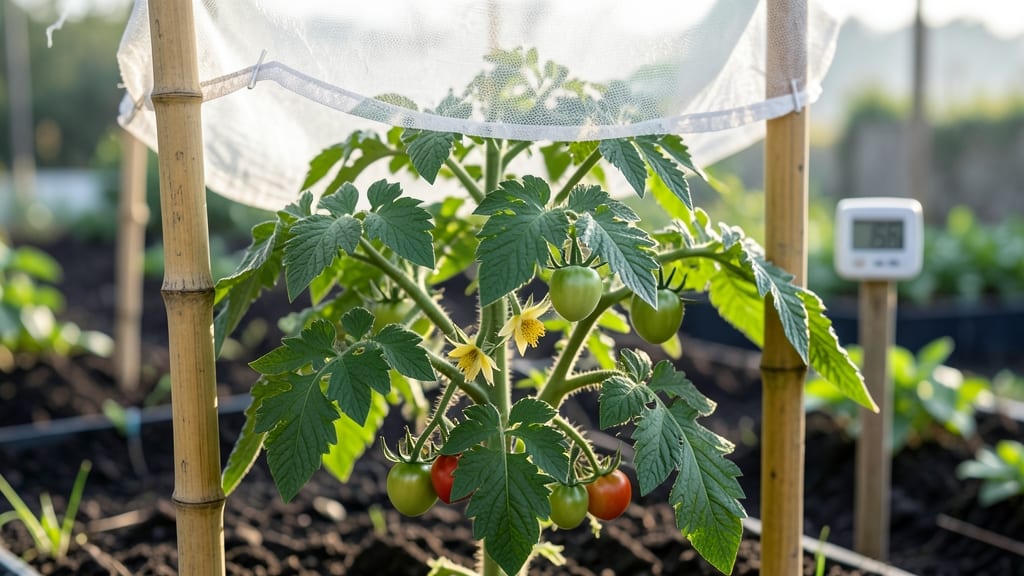
Covering tomato plants at night becomes critical when to cover tomato plants at night when temperatures dip below 50°F (10°C), protecting your 🍅 harvest from frost damage that can wipe out weeks of growth in minutes.
Tomato plants are delicate—just one unexpected frost can turn your summer harvest into a winter loss—but knowing exactly when to cover them at night can save your crop. The right timing depends on your hardiness zone, temperature thresholds, and even plant maturity.
In USDA Zone 6a, where spring frosts linger until mid-April, you’ll need to cover seedlings as soon as nighttime temps hover near 45°F (7°C). But mature plants can handle slightly cooler nights, thanks to their thicker stems and deeper roots.
Below, I’ll break down the exact temperature triggers by zone, the best covering materials to use, and how to avoid common mistakes that stunt growth or trap too much moisture. No more guessing—just science-backed protection for your tomatoes.
Frost risk Zones: when to cover tomato plants by USDA hardiness Zone
Your USDA hardiness zone determines when tomato plants need protection from frost—some regions face early spring chills, while others struggle with late-season cold snaps. Understanding these zone-specific triggers ensures your plants survive until harvest.
For example, gardeners in Zone 3 may need covers as early as May, while those in Zone 10 might only need them in December.
Even within a zone, early-season vs. late-season risks change the game. Young seedlings are far more vulnerable than mature plants with thick stems and foliage. My Zone 6a garden in Colorado, for instance, requires covers in May for seedlings but can often skip them by September when plants are established.
Here’s how to use this guide: Check your USDA zone, then reference the temperature triggers for your region. If you’re unsure of your zone, use the interactive USDA map (link in resources) to pinpoint your location. Pro tip: Bookmark this guide—you’ll need it for both spring and fall protection!
🌱 Key Takeaway: Cover tomato plants when nighttime temps drop to 50°F (10°C) or lower, but adjust for humidity and wind chill. For example, a 30°F (-1°C) wind chill in Zone 4 demands covers even if the air temp is 35°F (2°C).
In Zones 3-4, where frosts linger into June, I’ve learned to err on the side of caution. My heirloom tomatoes often need covers until June 15th, even if the forecast says "warm."
Use a soil thermometer to confirm temps—surface temps can be misleading. For example, a 50°F (10°C) air temp with dry soil may mean roots are still 45°F (7°C).
Gardeners in Zones 7-8 face a different challenge: late-season frosts in October. My Zone 7b garden in Georgia once lost a crop because I assumed October was safe—until a 32°F (0°C) frost hit on October 20th.
Now, I cover plants by October 1st as a precaution, especially for cherry tomato varieties that ripen slowly.
For Zones 9-11, frost protection is rarely needed, but exceptions exist. In high-desert Zone 9, nighttime temps can plummet to 35°F (2°C) due to radiational cooling. Here, I use low tunnels or hot caps to trap
Degree-based triggers: exact temperatures that signal covering time
Tomato plants thrive in warmth but struggle when nighttime temperatures dip below 50°F (10°C). This is your critical threshold—the moment you must act. At this temperature, cellular damage begins, and even young plants can suffer stunted growth or dieback.
The key is understanding how humidity and wind chill lower this threshold further, sometimes by 5-10°F, making protection essential even when the thermometer reads slightly higher.
Your first step is checking the nighttime forecast at least 3 hours before sunset. If temperatures are forecasted to drop to 50°F (10°C) or lower, it’s time to cover your plants.
However, if humidity is high (above 70%), the effective temperature feels 5°F colder, so adjust your timing accordingly. For example, in Zone 5, where frosts are common, I cover my tomatoes at 55°F (13°C) to account for wind chill.
When to Cover Tomato Plants
Not all covering materials are equal. A frost cloth (rated for 28°F/-2°C) is your best bet for light frosts, while row covers (rated for 20°F/-7°C) handle harder freezes. Heavy blankets work in a pinch but can trap too much moisture, promoting fungal diseases.
I use frost cloth for most nights in Zone 6 and reserve row covers for late-season frosts when temperatures drop below 32°F (0°C).
Timing matters just as much as the material. Cover plants before sunset to trap heat radiating from the soil. Remove covers early morning once temperatures rise above 60°F (15°C) to prevent heat stress and condensation buildup.
In my garden, I set a reminder to check covers at 7 AM—this ensures I don’t accidentally smother my plants during a warm-up.
Young tomato seedlings are far more vulnerable than mature plants. If your seedlings are still under 6 inches tall, cover them at 55°F (13°C) to give them extra protection.
Mature plants with thick stems can handle 45°F (7°C) without covers, but their fruit may still suffer if temperatures drop below 50°F (10°C). Always prioritize leaf protection, as frost damage to foliage weakens the entire plant.
Pro tip: Use a soil thermometer to double-check nighttime temperatures. Soil stays 5-10°F warmer than the air, so if your thermometer reads 48°F (9°C), the soil might still be safe.
This small margin can mean the difference between a saved crop and a lost one. I keep a thermometer buried near my tomato plants to avoid guesswork.