
Plants
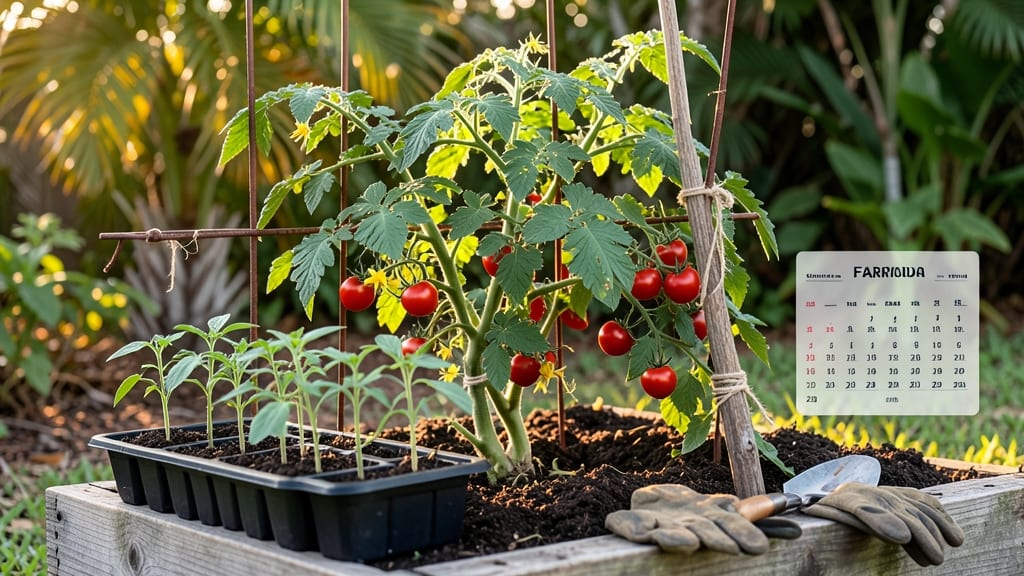
Planting tomatoes in Florida requires knowing the exact timing to beat the heat and frost risks—start seeds indoors 8-10 weeks before your target outdoor date, or transplant hardened seedlings when soil hits 60°F.
Florida’s long growing season and scorching summer heat make tomato planting a high-stakes game—plant too early, and frost kills your crop; too late, and heat stress ruins yields. But timing it right unlocks bumper harvests of juicy, vine-ripened 🍅 tomatoes year-round.
Unlike northern states, Florida’s frost-free zones (9a-11) let you grow tomatoes almost anytime, but the key is matching varieties to the season. Summer heat demands heat-tolerant types like 'Solar Fire' or 'Celebrity,' while cooler months suit classic 'Cherry' or 'Beefsteak' varieties.
Below, I break down the best months for each Florida region, how to adjust for indoor starts vs. direct sowing, and pro tips to keep your plants thriving—no matter if you're in Miami or the Panhandle.
Florida tomato planting calendar: exact dates for spring, summer & fall success
Florida’s tomato growing season spans nearly year-round, but timing matters—especially when balancing heat tolerance and soil temperatures. Unlike northern states, Florida gardeners avoid frost entirely in most regions, but heat stress above 95°F can scorch plants.
The key? Plant when soil reaches 60°F+ and use seasonal varieties to match Florida’s three distinct microclimates—North, Central, and South.
North Florida (Zones 8a-9a) faces occasional light frosts (January), while South Florida (Zones 10b-11) enjoys year-round warmth. Central Florida (Zone 9a-9b) sits in the middle, with summer heat peaks requiring shade cloth.
Below, I’ve mapped out the optimal planting windows for each region, including transplanting tips and harvest timelines to maximize your yield.
For spring planting, North Florida gardeners should wait until mid-February when soil temperatures stabilize above 60°F. Central and South Florida can start as early as mid-January, but prioritize cool-season varieties like 'Celebrity' or 'Better Boy' to avoid heat stress.
Transplant seedlings after the last frost risk (typically February 15 in North Florida) and harden them off for 7-10 days to prevent shock.
Summer planting is trickier due to Florida’s intense heat. In North Florida, aim for early April and provide afternoon shade with 30% shade cloth to protect young plants. Central Florida can extend this window to mid-June, but switch to heat-tolerant varieties like 'Solar Fire' or 'Heatmaster.' South Florida’s summer window is nearly year-round, but August-September is ideal for fall harvests before humidity spikes.
Fall planting offers the best yields in Florida, especially in North and Central regions. Start seeds indoors in July for transplanting by mid-August, or direct-sow heat-resistant varieties like 'Mountain Merit' in early September.
South Florida can plant through November, but focus on disease-resistant types to combat fungal pressure from frequent rains. Always mulch with straw or black plastic to regulate soil temps and retain moisture.
One common mistake? Planting too late in summer without shade. Tomatoes struggle when soil temps exceed 95°F, leading to blossom drop and poor fruit set. To combat this, use drip irrigation and reflective mulch to lower root-zone temperatures.
Another tip: Prune suckers aggressively in summer to redirect energy to fruit production rather than foliage.
For container growing, adjust timelines by 2-3 weeks earlier in spring and later in fall, as pots heat up faster. Choose determinate varieties like 'Patio' or 'Tiny Tim' for smaller spaces, and ensure containers are at least 12 inches deep with drainage holes.
In North Florida, consider a mini greenhouse for overwintering plants if you’re ambitious—just protect from rare frosts with row covers.
Remember: Florida’s tomato success hinges on soil prep. Amend beds with compost and aged manure before planting, and maintain a pH of 6.0-6.8. Add a time-release fertilizer (10-10-10) at planting and side-dress with fish emulsion when flowers appear.
With these region-specific dates and heat-management tips, you’ll enjoy homegrown tomatoes from January to December.
🌱 Ready to plant? Bookmark this calendar and adjust based on your local microclimate—your first vine-ripened tomato of the season is just weeks away!
Heat-tolerant tomato varieties that thrive in Florida’s summer heat
Florida’s summer heat can turn tomato plants into crispy casualties if you’re not strategic. But with the right heat-tolerant varieties, you can enjoy juicy, vine-ripened tomatoes even when temps hit 95°F+.
These Florida-bred varieties resist sunscald, heat stress, and disease pressure while delivering high yields. Let’s dive into my top 8 picks, ranked for climate resilience and productivity.
First, understand the two main tomato types: determinate (bush varieties with compact growth) and indeterminate (vining types that grow continuously). For Florida’s heat, indeterminate varieties often perform better because their prolonged fruiting spreads out harvests.
However, determinate types are ideal for small spaces or container gardening since they produce all at once. Your garden layout will dictate which you choose.
At the top of my list is Solar Fire, an indeterminate variety bred specifically for Florida’s heat. It thrives in 90°F+ temps and produces large, flavorful red tomatoes continuously.
If you prefer bush varieties, Heatmaster and Solar Set are determinate powerhouses that handle heat while delivering high yields in compact spaces. Both are disease-resistant and perfect for container gardening or small plots.
For something unique, try Creole tomatoes—a heirloom variety with pink, meaty fruit that’s heat-tolerant and drought-resistant. They’re a favorite in South Florida and add a bold flavor twist to your harvest.
If you love cherry tomatoes, Mountain Merit is a heat-loving indeterminate that produces sweet, bite-sized fruit all season long. It’s also resistant to cracking, a common issue in Florida’s humid summers.
Don’t overlook Black Prince for a dark, smoky flavor that pairs beautifully with grilled dishes. This indeterminate variety handles heat well and produces large, glossy black tomatoes.
For early season success, Celebrity is a determinate workhorse that matures quickly and resists Fusarium wilt, a common Florida soil-borne disease. It’s my go-to for North Florida gardens where humidity levels are higher.
When choosing between determinate and indeterminate types, consider your garden layout and harvest goals. Determinate varieties are great for quick harvests and small spaces, while indeterminate types offer extended production but require more support.
For Florida’s heat, I recommend mixing both types in your garden to stagger harvests and maximize yields