
Plants
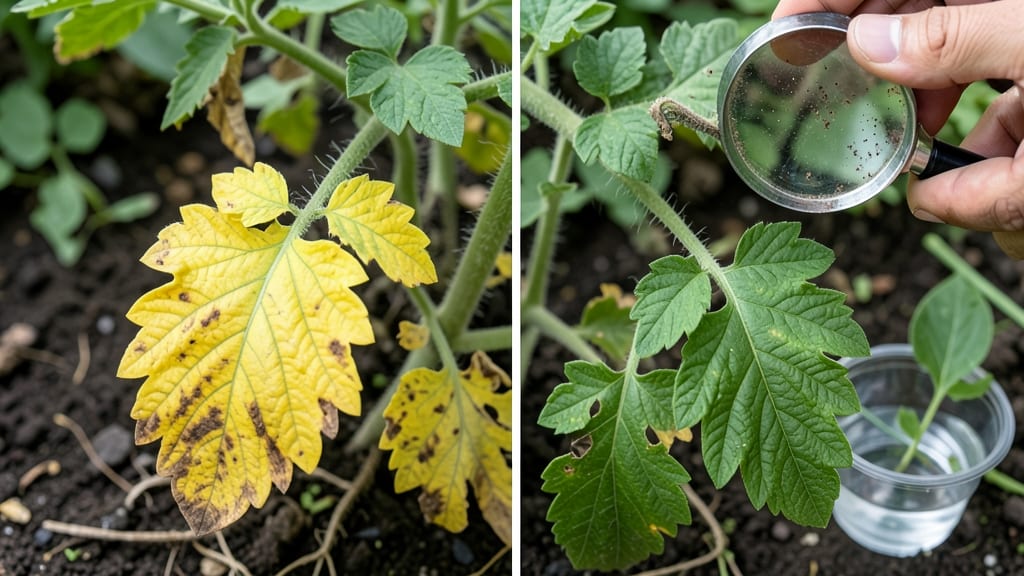
Why do my tomato plants have yellow leaves? Trouble—but it’s fixable. 🌱 The most common culprits are overwatering, nutrient deficiencies, or even hidden pests, and I’ve seen all three wreck a harvest in a week. The good news? Each has a quick solution once you spot the pattern.
Start by checking the soil: if it’s soggy, you’re overwatering (the #1 cause). Yellowing often starts at the bottom leaves first, then creeps upward. Nutrient loss shows up as pale, yellowing leaves between the veins—usually a sign your plants need a balanced fertilizer or compost boost.
Within 3-5 days of adjusting watering or feeding, you’ll see new green growth. Prune any severely yellowed leaves to redirect energy, and watch for pests like aphids hiding on undersides. Prevention is simple: water deeply but less often, and mulch to keep roots happy.
Most issues resolve in a week or two—unless it’s disease, which needs immediate action. The key is acting fast before the problem spreads to the fruit. Let’s diagnose yours step by step.
Underlying Causes Explained
When your tomato plants start showing yellow leaves, it’s often their way of signaling distress—like a tiny, leafy SOS. But what’s really triggering the problem? Let’s break down the most common culprits, backed by science, so you can diagnose the issue like a pro.
Understanding the root cause (literally!) is the first step toward reviving your plants and keeping them thriving.
Tomatoes are thirsty plants, but too much water can suffocate their roots. When soil stays soggy for too long, oxygen can’t reach the roots, leading to anaerobic conditions. This disrupts nutrient uptake, particularly nitrogen, which is essential for chlorophyll production—the green pigment in leaves.
Without enough nitrogen, leaves turn yellow, starting from the lower ones and moving upward.
Another red flag? Fungal infections like Phytophthora thrive in waterlogged soil, clogging root systems and blocking water/nutrient flow. If your pots lack drainage holes or your garden soil is heavy clay, excess moisture becomes a silent killer.
Pro Tip: Stick your finger 1-2 inches into the soil—if it’s damp, hold off on watering. For container plants, ensure pots have drainage holes, and consider adding perlite or vermiculite to improve aeration. 🌱
Yellow leaves can scream “help!” when your tomatoes aren’t getting the right nutrients. Here’s the breakdown:
| Nutrient | Symptoms | Why It Happens |
|---|---|---|
| Nitrogen (N) | Yellowing lower leaves (older leaves first) | Nitrogen is mobile in plants—when deficient, the plant “recycles” it from older leaves to new growth. Overwatering or leaching washes it away. |
| Magnesium (Mg) | Yellowing between leaf veins (interveinal chlorosis) | Magnesium is key to chlorophyll. Poor soil structure, high soil pH, or over-fertilizing with nitrogen (without potassium) can lock it out. |
| Iron (Fe) | Yellowing new leaves (young leaves first) | Iron deficiency often occurs in alkaline soil (pH > 7.0). Even if iron is present, the soil chemistry prevents roots from absorbing it. |
| Potassium (K) | Yellowing edges or tips of leaves (scorching) | Potassium helps regulate water balance. Deficiencies stress plants, making them more susceptible to disease and nutrient imbalances. |
Quick Fix: Test your soil’s pH (ideal for tomatoes: 6.0–6.8). If it’s off, amend with sulfur (to lower pH) or lime (to raise it). For deficiencies, use a balanced fertilizer (like 10-10-10) or targeted amendments: Epsom salt for magnesium, chelated iron for iron, and potassium sulfate for potassium. 💡
While overwatering gets most of the blame, underwatering can also cause yellowing—especially in hot, dry conditions. When soil dries out, roots struggle to pull up water and nutrients, leading to:
- Wilting (leaves droop before turning yellow)
- Crispy edges (from transpiration stress)
- Stunted growth (plant prioritizes survival over fruit production)
Heat stress compounds the problem. Tomatoes need consistent moisture to regulate their internal temperature. When the soil dries out, roots can’t keep up, and leaves sacrifice themselves to protect the plant’s core. This is why you might see yellowing during heatwaves or droughts.
Action Steps:
- ⏰ Water deeply in the morning (1–1.5 inches per week, including rain).
- 🌞 Use mulch (straw or wood chips) to retain soil moisture and cool roots.
- 💦 Consider drip irrigation to deliver water directly to the roots without wetting leaves (which can cause fungal issues).
Not all yellow leaves are due to water or nutrients—sometimes, tiny invaders are to blame. Here’s what to watch for:
- Spider Mites: These sap-sucking pests cause speckled yellowing and webbing on leaves. They thrive in dry, hot conditions.
- Aphids: Clusters of these bugs on new growth can distort leaves and turn them yellow. They excrete honeydew, which attracts sooty mold.
- Fungal Infections (e.g., Early Blight or Septoria Leaf Spot): Yellow spots with dark borders or concentric rings signal fungal activity. These often start on lower leaves and spread upward.
- Root-Knot Nematodes: Microscopic worms that damage roots, reducing water/nutrient uptake. Look for stunted growth and yellowing despite proper care.
How to Respond:
- 🔍 Inspect leaves undersides and stems for pests. Blast them off with water or use neem oil (a natural pesticide).
- 🌿 Prune infected leaves below the yellow spot to prevent spread. Sterilize pruners with rubbing alcohol.
- 🛡️ For nematodes, rotate crops or amend soil with beneficial fungi like Trichoderma.
Yellow leaves aren’t always a death sentence—often, they’re your plant’s way of asking for help. By pinpointing the cause (water, nutrients, pests, or stress), you can tailor your rescue mission and get those tomatoes back on track for a bountiful harvest. 🍅✨
How to Fix Yellowing Tomato Leaves
Yellow leaves on your tomato plants don’t have to mean the end of your harvest—with the right fixes, you can nurse them back to health and even prevent future issues.
Below, we’ve mapped out practical, step-by-step solutions tailored to the most common causes, plus prevention tips to keep your plants thriving. Let’s get those leaves green again!
Fix: Adjust your watering habits and improve soil aeration.
- 🔥 Stop Watering So Much
- Let the top 1–2 inches of soil dry out between waterings. Stick your finger in the soil—if it’s soggy, wait a day or two.
- Water deeply but less frequently (early morning is best) to encourage strong root growth.
- 🍳 Improve Drainage
- Mix compost or perlite into heavy clay soil to loosen it up.
- If potted, ensure containers have drainage holes and use a well-draining potting mix (avoid garden soil).
- ⏰ Prune Affected Leaves
- Snip off severely yellowed or mushy leaves with clean scissors to redirect energy to healthier growth.
💡 Prevention Tip:
- Use a moisture meter to track soil dampness accurately.
- Mulch around plants to retain moisture without over-saturating the roots.
Fix: Feed your plants the right nutrients and adjust soil pH if needed.
📊 Nitrogen Deficiency (Older Leaves Yellowing)
- 👨🍳 Apply a Balanced Fertilizer
- Use a 10-10-10 or 5-5-5 fertilizer (or compost tea) every 2–3 weeks during growing season.
- For organic options, try fish emulsion or alfalfa meal.
🌡️ Magnesium Deficiency (Yellowing Between Veins)
- ✨ Boost Magnesium with Epsom Salt
- Mix 1 tablespoon of Epsom salt per gallon of water and spray on leaves (do this once a month).
- Alternatively, work granular Epsom salt into the soil around the base.
🍎 Iron Deficiency (Young Leaves Yellowing)
- 🎯 Acidify the Soil Slightly
- Tomatoes thrive in slightly acidic soil (pH 6.0–6.8).
Test your soil with a pH kit and amend with: - Sulfur (to lower pH) or lime (to raise it). - For quick fixes, spray leaves with a chelated iron solution.
💡 Prevention Tip:
- Rotate crops to avoid depleting nutrients in the same soil.
- Side-dress with compost mid-season for a slow-release nutrient boost.
Fix: Shield plants from excessive heat and provide afternoon shade.
- 🌿 Provide Afternoon Shade
- Use shade cloth (30–50%) or move potted tomatoes to a slightly shadier spot (east or north side of the garden).
- Avoid placing them under direct midday sun during heatwaves.
- 💦 Increase Watering (But Not Overwatering!)
- Water deeply in the morning to help roots absorb moisture before the heat peaks.
- Use mulch (straw or grass clippings) to retain soil moisture.
- 🔪 Trim Damaged Leaves
- Remove crispy or bleached leaves to prevent further stress.
💡 Prevention Tip:
- Choose heat-tolerant varieties like ‘Heatmaster’ or ‘Solar Fire’ for hot climates.
- Water at the base (not overhead) to reduce evaporation.
Fix: Isolate, treat, and strengthen plant defenses.
🐜 Pest Infestations (Aphids, Spider Mites)
- 🍳 Spray with Soap Solution
- Mix 1 tablespoon of mild dish soap + 1 quart of water and spray directly on pests.
- Repeat every 3–4 days until gone.
- 🌿 Introduce Beneficial Insects
- Ladybugs and lacewings eat aphids naturally—buy them online or attract them with dill or fennel plants.
🍄 Fungal Issues (Early Blight, Septoria Leaf Spot)
- ⏰ Remove Infected Leaves Immediately
- Prune and dispose of yellow/spotted leaves in the trash (not compost).
- 🔥 Use Fungicide Sprays
- Apply copper fungicide or a baking soda spray (1 tsp baking soda + 1 quart water + a drop of soap) weekly as prevention.
💡 Prevention Tip:
- Space plants properly (18–24 inches apart) for better airflow.
- Water at the base (avoid wetting leaves) to prevent fungal spores from spreading.
- 🌿 Monitor Progress – Keep a garden journal to track which fixes work best.
- 💪 Support Weak Plants – Use stakes or cages to prevent wind damage.
- 🍅 Don’t Panic Over Fruit – If only leaves are yellow, tomatoes can still ripen if the plant is otherwise healthy.
With these targeted fixes, your tomato plants should bounce back in 1–2 weeks. Stay consistent, and soon you’ll be enjoying juicy, vine-ripened tomatoes instead of sad yellow leaves! 🍅🌿
Frequently asked questions
Why do the bottom leaves turn yellow first?
Older leaves yellow first because plants prioritize nutrients for new growth. When nitrogen is low (common with overwatering), the plant "recycles" it from lower leaves upward. This is normal aging—but if it spreads upward fast, check your watering schedule or soil nutrients.
Can I save my tomato plant if half the leaves are yellow?
Yes! Prune severely yellowed leaves to redirect energy, and address the root cause (usually water or nutrients). Most plants recover in 1-2 weeks if you fix drainage, adjust watering, or add fertilizer. Just don't remove too many leaves at once—keep at least ⅔ of the foliage for photosynthesis.
Why are my tomato leaves yellow but still firm?
Firm yellow leaves usually signal nutrient deficiencies (like magnesium or iron) rather than water issues. Check for yellowing between veins (magnesium) or on new leaves (iron). A quick fix is Epsom salt spray (for magnesium) or chelated iron (for iron). Test your soil pH too—tomatoes need 6.0-6.8.
Will yellow leaves affect my tomato harvest?
Only if the problem spreads to the plant's core. Healthy leaves above the fruit can still produce tomatoes, but severe yellowing (especially from disease) may reduce yield. Focus on fixing the issue—most plants rebound quickly, and existing flowers/fruit will develop normally.
How often should I fertilize tomato plants with yellow leaves?
Start with a balanced fertilizer (10-10-10) every 2-3 weeks during growing season. For deficiencies, use targeted fixes (Epsom salt for magnesium, chelated iron for iron). Over-fertilizing can burn roots—always water thoroughly after applying. Monitor progress and adjust frequency as needed.