
Companion Plants
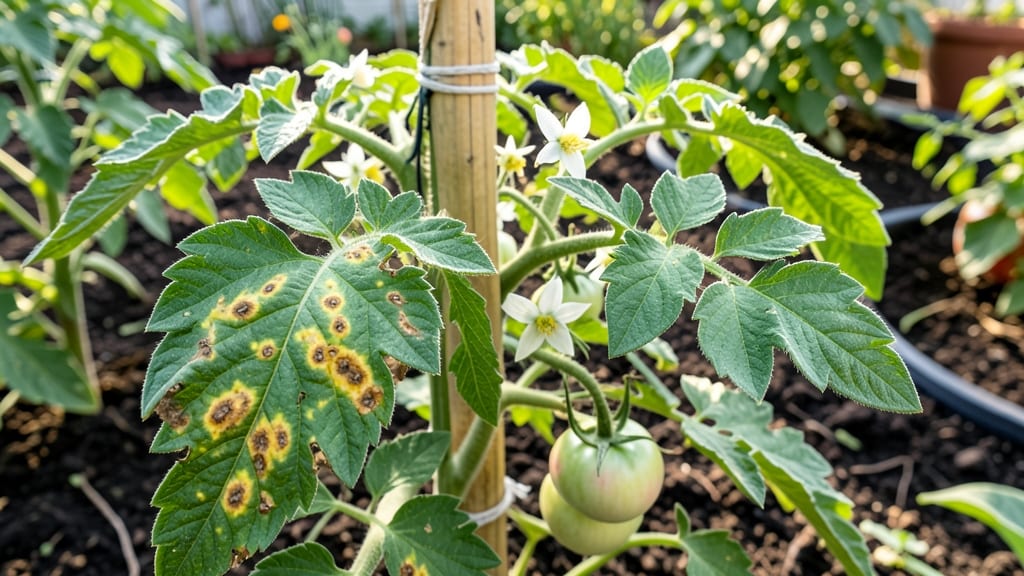
Those yellow spotted leaves on tomato plants aren’t just ugly—they’re early blight’s calling card. 🌱 I’ve battled this stubborn disease for years, and I’ll show you how to stop it before it ruins your harvest.
The key is acting fast, because once those spots spread, your plants fight back harder every year.
Early blight starts with small, tan or brown spots that have concentric rings—like a bullseye on your leaves. Spider mites can cause yellowing too, but their damage looks like tiny webs and speckling, not those classic rings.
The good news? Both problems have simple, organic fixes that work without harsh chemicals.
You’ll be pruning infected leaves, adjusting watering, and adding protective mulch in just 20 minutes. The goal isn’t perfection—it’s keeping your plants productive enough to still give you 50+ pounds of tomatoes by season’s end. I’ve saved gardens this way, and you can too.
Works for backyard gardens, containers, and even greenhouse tomatoes. Let’s get those plants back to their best before the spots take over.
Root Causes Behind Spotted Leaves
When your tomato plants start showing yellow or brown spots on their leaves, it’s often a sign of stress—but not always. Understanding the why behind these symptoms is key to saving your harvest.
Below, we break down the most common culprits, from fungal infections to environmental factors, with clear explanations and actionable insights.
Fungal diseases are the #1 cause of yellow-spotted leaves on tomato plants, and early blight (caused by Alternaria solani) is the most notorious. Here’s how it works:
- How it spreads: Spores thrive in warm, humid conditions (70–85°F) and splash onto leaves via water (rain, overhead irrigation). They love older leaves first, creating concentric rings of yellow-brown spots with dark borders.
- Why leaves yellow: The fungus clogs stomata (leaf pores), blocking nutrient uptake. As cells die, chlorophyll breaks down, leaving telltale tan or yellow patches.
- Red flags: Spots start at the leaf edges or near the stem, often with a target-like pattern. Severe cases cause leaf drop and fruit lesions.
Pro tip: 💡 Early blight loves crowded plants and wet foliage. Space plants 18–24 inches apart and water at the base (never overhead) to starve the fungus.
Tomatoes are tropical plants, but intense heat + direct sun can fry their leaves faster than you think. Here’s the science:
- How it happens: When daytime temps exceed 90°F, chlorophyll denatures (breaks down) in leaf cells. Sunlight acts like a magnifying glass, burning edges and creating bleached or yellow patches.
- Key differences from disease:
- Spots are irregular, dry, and crispy (not mushy or oozy).
- Affects younger leaves first (unlike early blight, which targets mature leaves).
- Often paired with wilting in the afternoon.
- Why it’s worse: Heat stress weakens plants, making them more susceptible to pests and disease.
Quick fix: ✨ Use shade cloth (30–50%) during peak sun (11 AM–3 PM) or plant in afternoon shade. Mulch with straw to keep roots cool.
Too much water isn’t just a nuisance—it’s a nutrient suffocation problem. Here’s how it backfires:
- The science: Overwatering drowns roots, starving them of oxygen. This triggers anaerobic conditions, where roots release ethylene gas (a stress hormone) that signals leaves to yellow and spot.
- Visual clues:
- Spots are water-soaked, pale yellow (not brown).
- Leaves may feel soggy or curl upward.
- Soil smells rotten or stays permanently muddy.
- Drainage matters: If water pools around roots for >24 hours, root rot (from Phytophthora or Pythium) sets in, causing systemic leaf collapse.
Action step: 🔥 Test your soil—stick a finger 2 inches deep. If it’s wet, hold off watering. Amend heavy clay soil with perlite or compost to improve aeration.
Not all spots are from fungi or weather—pests can chew or inject toxins that trigger yellowing. Top offenders:
| Pest | How It Causes Spots | What You’ll See |
|---|---|---|
| Aphids | Pierce cells to feed; inject saliva toxins | Sticky residue ("honeydew"), curled leaves |
| Spider Mites | Suck sap, causing stippling (tiny yellow dots) | Fine webbing on undersides, dry leaves |
| Tomato Hornworms | Defoliate leaves, leaving ragged edges | Large green caterpillars, sudden leaf loss |
Spot the pattern: 🎯 If spots are tiny, scattered, and paired with webbing or bugs, pests are likely. Inspect leaf undersides at dawn when pests are sluggish.
Tomatoes are heavy feeders, and deficiencies often show as interveinal yellowing (between veins). Key culprits:
- Magnesium deficiency (Yellow between veins):
- Why it happens: Magnesium is mobile in plants, so symptoms start in older leaves first. Poor soil structure or over-fertilizing with nitrogen (without potassium/magnesium) throws off balance.
- Fix: Apply Epsom salt (1 tbsp/gallon of water) as a foliar spray or work dolomitic lime into soil.
- Nitrogen deficiency (Pale yellow, stunted growth):
- Why it happens: Nitrogen fuels chlorophyll. If soil is too sandy or leached, plants can’t access it.
- Fix: Use compost tea or blood meal for a quick boost.
Test your soil: 📊 A DIY soil test kit (or lab test) reveals exact deficiencies. pH matters—tomatoes thrive at 6.0–6.8.
Sometimes, the damage is physical, not biological:
- Wind/hail: Tears leaves, exposing tissue to bacterial infections (like Xanthomonas). Look for jagged edges or bruised spots.
- Chemical burn: Herbicides (even organic ones) or over-salty water cause bleached, crispy patches. Symptoms appear within days of exposure.
- Cold damage: Temps below 50°F at night can cause yellowing and browning, especially on young leaves.
Prevent shock: 🌡️ Use row covers for wind/hail-prone areas. Always dilute fertilizers to half-strength and water plants before applying to avoid burn.
Quick Fixes for Yellow Spotted Leaves
Yellow or brown spots on your tomato leaves? Don’t panic—these organic solutions will help you revive your plants and prevent future outbreaks. Below, we’ve mapped the most common causes to practical fixes, so you can act fast and keep your garden thriving. 🌱💚
Early blight and Septoria leaf spot are the top culprits behind those ugly yellow or brown spots. Here’s how to stop the spread and restore your plants:
🔥 Remove Infected Leaves Immediately
- How: Snip off yellow or spotted leaves (especially lower ones) with sterilized scissors (wipe with rubbing alcohol between cuts).
- Why: Fungi spread via spores, and removing infected foliage cuts off the cycle.
- Pro Tip: 💡 Don’t compost infected leaves—toss them in the trash to prevent reinfection.
🍳 Apply Organic Fungicides (Preventative & Curative)
Use copper-based sprays or baking soda solution (1 tbsp baking soda + 1 quart water + a few drops of dish soap) to kill fungal spores.
- Best Time to Spray: Early morning or evening (avoid direct sunlight, which can burn leaves).
- Frequency: Every 7–10 days until new growth appears.
👨🍳 Improve Air Circulation
- How: Prune overcrowded branches and space plants 18–24 inches apart.
- Why: Fungi thrive in humid, stagnant air—good airflow dries leaves faster, reducing spores.
🥘 Mulch Properly to Prevent Soil Splash
- How: Use straw or grass clippings (not wood chips, which can trap moisture).
- Why: Wet soil splashes spores onto leaves—keep mulch 2–3 inches away from stems.
If spots appear suddenly on sunny days (especially on upper leaves), your tomatoes may be sun-scorched.
⏰ Provide Afternoon Shade
- How: Use shade cloth (30–50%) or move pots to a slightly shaded spot during peak sun (12 PM–4 PM).
- Why: Tomatoes wilt in extreme heat—protecting them prevents leaf bleaching and spotting.
💦 Water Deeply (But Not Overhead)
- How: Water at the base in the early morning (1–2 inches per week).
- Avoid: Wetting leaves, which can magnify heat damage and invite fungal growth.
Tiny pests suck sap, causing yellow stippling or spots on leaves.
🔪 Blast Off Pests with Water
- How: Spray leaves with a strong stream of water (especially undersides) to knock off mites and aphids.
- Frequency: Every 2–3 days until pests disappear.
🌿 Introduce Beneficial Insects
- How: Release ladybugs, lacewings, or predatory mites (available at garden centers).
- Why: These natural predators will devour pests without chemicals.
🎯 Use Neem Oil Spray (Organic Pest Repellent)
- Recipe: Mix 1 tsp neem oil + 1 tsp mild soap + 1 quart water. Spray evenly on both leaf sides.
- Best Time: Early evening (avoids burning leaves in sunlight).
Yellowing between leaf veins? Your plants may be starving for key nutrients.
💪 Fertilize with Organic Matter
- For Nitrogen (General Yellowing):
- Fix: Mix compost or fish emulsion into soil (follow package rates).
- For Magnesium (Yellow Between Veins):
- Fix: Sprinkle Epsom salt (1 tbsp per gallon of water) and water at the base.
🥗 Avoid Over-Fertilizing
- Why: Too much salt or synthetic fertilizers burn roots, worsening stress.
- Fix: Flush soil with water if you suspect over-fertilization.
Stop yellow spots before they start with these long-term strategies:
✅ Rotate Crops – Don’t plant tomatoes in the same spot yearly (fungi linger in soil). ✅ Choose Resistant Varieties – Try ‘Mountain Merit’ or ‘Defiant PhR’ (disease-resistant hybrids). ✅ Plant Companion Plants – Basil, marigolds, or onions repel pests and improve airflow. ✅ Test Soil pH – Aim for 6.0–6.8 (too acidic = nutrient lockout). ✅ Start Strong – Hardened seedlings (not weak store-bought plants) resist stress better.
Your tomatoes will bounce back with the right care! 🍅🌿 Act fast on fungal issues, protect from heat, and feed wisely—your harvest is worth it.
Frequently asked questions
Why do my tomato leaves have yellow spots with dark rings?
Those are classic signs of early blight, a fungal disease that thrives in warm, humid conditions. The dark rings appear as the fungus spreads, creating concentric patterns. This disease starts on older leaves and can move to fruit if untreated. Prune infected leaves immediately and water at the base (never overhead) to prevent spread.
Can I still harvest tomatoes if the leaves have yellow spots?
Yes, but focus on removing all infected leaves first—this prevents spores from spreading to your fruit. Mature tomatoes already on the vine are safe to pick, but avoid eating leaves with severe spots (they can taste bitter). The key is acting fast to protect future harvests.
What’s the difference between early blight and sunburn on tomato leaves?
Sunburn spots are irregular, dry, and crispy (often on upper leaves), while early blight creates concentric rings starting on lower leaves. Sunburn happens in extreme heat (>90°F) and affects younger leaves, whereas fungal spots appear after rain or overhead watering. Shade cloth helps with sunburn, while copper spray stops fungal spread.
How often should I spray my tomatoes with baking soda for fungal spots?
Spray every 7–10 days at dawn or dusk using a mix of 1 tbsp baking soda + 1 quart water + a few drops of dish soap. This prevents fungal spores from settling. Stop spraying once new growth appears and the problem subsides—overuse can disrupt beneficial microbes in your soil.
Will my tomato plants recover if I treat the yellow spots early?
With prompt action (pruning, organic fungicides, and proper spacing), most plants bounce back within 2–3 weeks. The key is stopping the spread before it reaches the fruit. Keep an eye on lower leaves—they’re the first line of defense against early blight.