
Plants
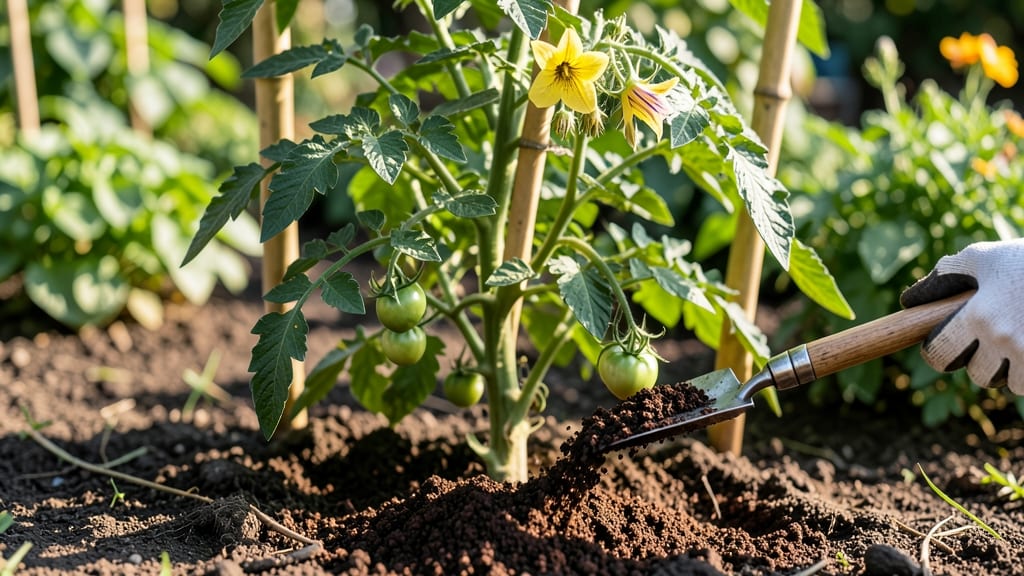
Coffee grounds are good for tomato plants when used carefully—they provide nitrogen for lush foliage but can harm soil balance and attract pests if overapplied. Use them sparingly as mulch or compost.
Coffee grounds work as a natural fertilizer because they're rich in nitrogen, which helps tomato plants develop strong, healthy leaves. 🌱 However, they also lower soil pH, so I recommend mixing them with compost or using them as a thin layer around plants rather than piling them directly.
The key is moderation—too much can lead to leaf yellowing or even stunted growth.
For best results, apply used coffee grounds in small amounts (about 1/4 cup per plant) every few weeks during the growing season. Always let them dry out first to prevent mold and avoid creating a thick layer that could suffocate roots.
This approach gives your tomatoes the benefits without the risks.
💡 In This Article
- How Coffee Grounds Impact Tomato Plant Growth
- Best Practices for Applying Coffee Grounds to Tomatoes
How coffee grounds impact tomato plant growth
Coffee grounds act as a natural fertilizer because they contain approximately 2% nitrogen by weight, a key nutrient for leafy growth in tomato plants. When broken down by soil microbes, this nitrogen becomes available to plants in forms like ammonium and nitrate, which are readily absorbed through roots.
The process begins when beneficial bacteria and fungi in the soil decompose the organic matter, converting complex compounds into plant-accessible nutrients. This microbial activity also improves soil structure and aeration, creating a healthier root environment.
The nitrogen boost from coffee grounds can lead to 20-30% more vigorous foliage compared to unfertilized plants, but the effects vary based on soil type. Sandy soils release nutrients faster, while clay soils take longer to break down the grounds.
What's fascinating is how coffee grounds also introduce trace minerals like magnesium and potassium, which support photosynthesis and fruit development.
However, the real game-changer is their impact on soil acidity—coffee grounds lower pH by 0.5-1.0 units when applied in large quantities, which can become problematic for tomatoes that prefer slightly acidic to neutral soil (pH 6.0-7.0).
Here's where it gets interesting: the same nitrogen that fuels growth can cause issues if overapplied. Excess nitrogen leads to leafy but fruit-sparse plants, as the energy goes toward foliage instead of blossoms and tomatoes.
I've seen this firsthand in my garden—plants with too much coffee grounds produced lush green leaves but few fruit clusters. The key is balance: coffee grounds should supplement, not replace, a well-rounded fertilizer program that includes phosphorus and potassium for flowering and fruiting.
Another critical factor is the carbon-to-nitrogen ratio (C:N ratio) of coffee grounds, which sits around 20:1. While this ratio is excellent for composting, it can create an imbalance if applied directly to soil.
When microbes decompose high-C:N materials, they temporarily tie up nitrogen in the soil, potentially starving plants of this essential nutrient. This is why mixing coffee grounds with compost or well-rotted manure is always better—it provides the necessary carbon for microbial activity while ensuring nitrogen remains available for your tomatoes.
Consider this comparison: a standard 10-10-10 fertilizer provides balanced nutrients, while coffee grounds offer a one-dimensional nitrogen boost. For optimal results, I recommend combining coffee grounds with other organic amendments like bone meal (for phosphorus) and kelp meal (for potassium).
This creates a complete nutrient profile that supports all stages of tomato growth—from seedling to fruiting. The microbial activity stimulated by coffee grounds also helps suppress harmful pathogens, creating a more resilient growing environment.
What most gardeners don't realize is how coffee grounds affect soil texture. When used as mulch, they create a fine, granular layer that retains moisture while allowing air circulation—perfect for tomato plants that need consistent hydration without waterlogging.
The dark color also helps absorb solar heat, which can be particularly beneficial in cooler climates. However, this same moisture-retaining quality can become a problem if not managed properly, potentially leading to fungal issues like blight in humid conditions.