
Pests
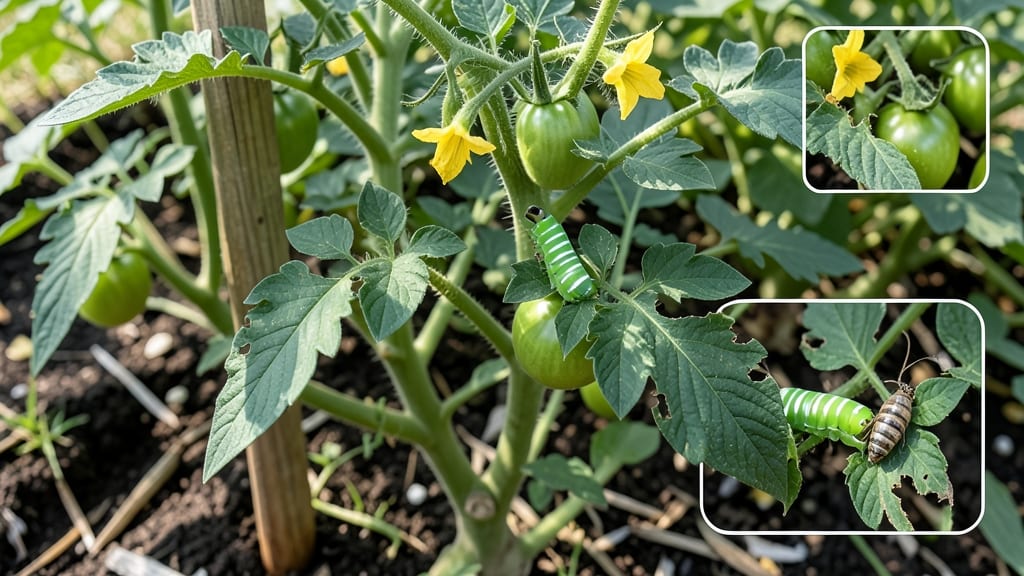
Tomato hornworms are not poisonous to humans, but they can devastate tomato plants by consuming leaves, stems, and fruit rapidly. While their skin contains mild toxins to deter predators, these don't pose serious health risks to people—just potential skin irritation for sensitive individuals.
These caterpillars might look intimidating with their green-and-white striped bodies and horn-like projections, but their real danger lies in their insatiable appetite. 🌱 A single hornworm can strip an entire tomato plant in days, leaving gardeners scrambling to protect their harvest.
The mild toxins on their skin actually serve as a defense mechanism against birds and other predators—not humans. If you handle one, simply wash your hands afterward, and you'll be fine.
What's fascinating is how they target tomato plants specifically. These caterpillars are drawn to the plant's volatile organic compounds, which signal vulnerability. Their saliva contains enzymes that break down plant cell walls, making it easier for them to devour entire leaves overnight.
This is why early detection—like spotting chewed leaves or black droppings—is key to saving your garden.
💡 In This Article
- Tomato Hornworm Toxicity: What Makes Them Harmful to Plants?
- Natural Ways to Control Tomato Hornworms in Your Garden
Tomato hornworm toxicity: what makes them harmful to plants?
The real danger of tomato hornworms lies in their biological weaponry—specifically, the enzymes in their saliva. These caterpillars produce a cocktail of pectinases and cellulases that dissolve plant cell walls like liquid paper.
When they bite through leaves, their saliva breaks down the structural integrity of the plant tissue, allowing them to consume entire leaves in minutes. A single hornworm can devour up to 10 square inches of foliage per day, which is why gardeners often find plants skeletonized overnight. 🌿
Their targeting of tomato plants isn't random—it's chemical. Tomato plants emit specific volatile organic compounds (VOCs) when stressed, which act like a dinner bell to hornworms. These caterpillars have evolved to detect these signals, making them particularly drawn to young, healthy tomato plants.
Their rapid growth rate (they can reach 3-4 inches in just 5-7 days) means they outpace most natural defenses, leaving plants vulnerable. The damage isn't just cosmetic; severe infestations can stunt growth and reduce fruit yield by up to 50%.
While their skin contains mild toxins called cardenolides, these compounds are designed to deter predators like birds and wasps—not humans. The toxins work by disrupting the nervous systems of insects, but they're not potent enough to harm mammals.
That said, some people with sensitive skin might experience mild irritation after handling them, similar to a slight rash from poison ivy. The real risk is the plant damage, not the caterpillars themselves.
What makes them even more effective at destruction is their camouflage. Their green bodies with white stripes blend perfectly into tomato foliage, making them nearly invisible until they've already done significant damage.
Their horn-like projections (called osmeterium) aren't for attacking—they release a foul odor when threatened, which is another defense mechanism against predators. For gardeners, this means you might not notice an infestation until it's too late.
Here's the science behind their rapid growth: Tomato hornworms are the larval stage of the five-spotted hawk moth, and they're built for efficiency. They can consume 10-20 times their body weight in food daily during peak growth, which is why they grow so quickly.
Their digestive systems are incredibly efficient, allowing them to process large amounts of plant material almost instantly. This biological superpower is what turns them from tiny eggs into voracious leaf-eaters in just a few weeks. 🐛
If you're growing tomatoes, the key is early intervention. Look for chewed leaves with black droppings (frass) as the first signs of trouble. The sooner you act, the better your chances of protecting your plants before the hornworms reach their destructive peak.
Their life cycle is short—only about 4-6 weeks from egg to adult moth—so timing is everything in controlling them.