
Companion Plants
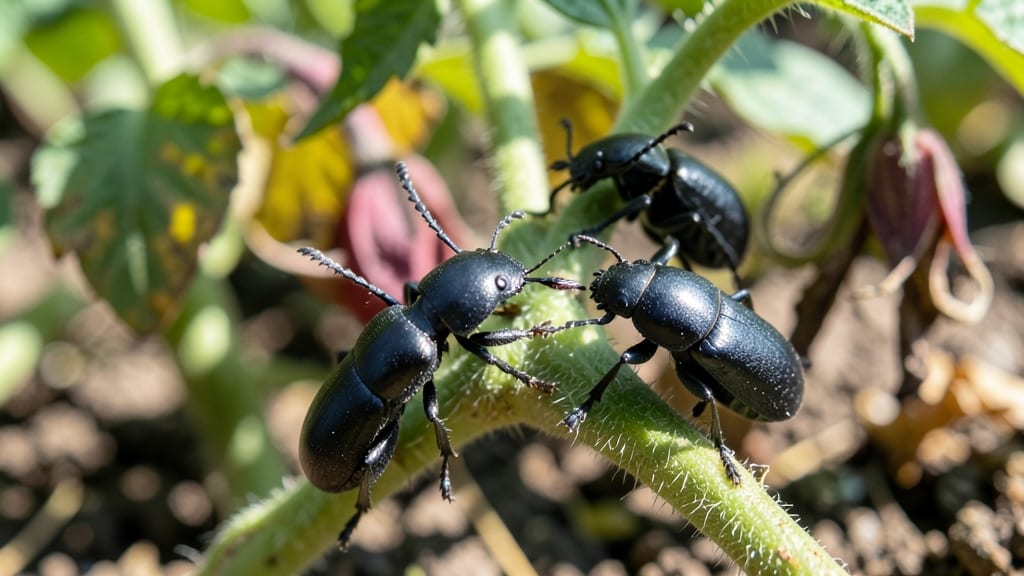
Black insects on tomato plants mean your harvest could be in serious trouble if you don’t act fast. 🌱 I’ve seen these tiny invaders turn lush foliage into Swiss cheese overnight—tiny holes, chewed leaves, and stunted growth are their calling cards.
The good news? Most of these pests respond quickly to simple, organic fixes once you know what you’re dealing with.
Flea beetles, stink bugs, and aphids are the usual suspects, each leaving distinct damage clues. Flea beetles create pepper-like holes in leaves, stink bugs flatten fruit with their feeding scars, and aphids cluster on undersides, leaving sticky residue.
The key to fast elimination starts with proper identification—because treating the wrong pest wastes time and money.
You’ll learn how to spot these insects early, use targeted organic sprays, and implement prevention tricks that keep them away for good. Within a week, your tomato plants can bounce back with stronger growth and fewer pests. The secret? Acting before they multiply.
This method works for both backyard gardens and container-grown tomatoes, and I’ll share when to call in professional help if things spiral. Let’s get those plants protected before the damage gets worse.
Root Causes Of Tiny Black Invaders
Black insects on your tomato plants aren’t just a random nuisance—they’re usually a sign of specific environmental or biological triggers. Understanding these causes helps you tackle the problem at its source.
Below, we break down the most common reasons why these pests show up in your garden, along with the science behind their behavior.
Tomato plants under stress—whether from poor spacing, nutrient deficiencies, or overwatering—become prime targets for black insects like aphids, thrips, or fungus gnats. Here’s why:
- Weakened defenses: Stressed plants produce fewer natural repellents (like volatile organic compounds) that deter pests. Think of it like a person with a low immune system—easier for bugs to latch on.
- Moisture buildup: Overwatered soil or dense foliage creates humid microclimates, perfect for fungus gnats (whose larvae thrive in damp conditions) or aphids (which love tender, water-stressed leaves).
- Nutrient imbalances: A lack of nitrogen or potassium weakens plant cell walls, making them easier for insects to pierce and feed on. Pro tip: Test your soil—low phosphorus (P) can also attract root-feeding black insects like cutworms.
Actionable fix: Space tomato plants 18–24 inches apart, prune for airflow, and ensure well-draining soil. A balanced 10-10-10 fertilizer can boost resilience.
Black insects—especially thrips, aphids, and earwigs—love hiding in garden debris, fallen leaves, or mulch. Here’s the science:
- Shelter from predators: Insects avoid open spaces where birds or spiders can spot them. Mulch piles or thick weeds act like bug hotels, protecting eggs and larvae from natural enemies.
- Food sources: Decaying organic matter (like old tomato stems) releases sugars and proteins that attract sap-sucking insects. Fungus gnats, for example, are drawn to rotting plant material.
- Hitchhiking: Many black insects (e.g., aphids) spread via wind or tools. A single infested leaf left in the garden can reintroduce pests season after season.
Actionable fix: Clear debris regularly, especially after harvest. Use straw mulch (not wood chips) to deter earwigs, and sanitize pruners with rubbing alcohol between uses.
Black insects like aphids, whiteflies (which can appear black in shadows), and spider mites thrive in heat and humidity. The science explains their behavior:
- Faster reproduction: Temperatures above 75°F (24°C) speed up the life cycles of many insects. Aphids, for example, can multiply 10x faster in warm conditions, leading to explosive infestations.
- Reduced natural controls: Beneficial insects like ladybugs or lacewings become sluggish in extreme heat, giving pests an advantage. Humidity also slows down fungal pathogens that might otherwise kill insect eggs.
- Transpiration boost: Hot weather increases plant sap flow, making tomatoes more attractive to sap-sucking insects like thrips.
Actionable fix: Use shade cloth (30–50%) to protect plants during peak heat. Pro tip: Early morning watering (not evening) reduces humidity around foliage, making it less inviting for fungus gnats.
While some plants repel pests, others can attract black insects—especially if they’re in the same family as tomatoes (nightshades) or produce nectar that lures pests. Common culprits:
- Attracting aphids: Plants like dill, fennel, or marigolds (while beneficial for some pests) can also draw aphids, which then spread to tomatoes. Aphids excrete honeydew, a sticky substance that encourages sooty mold—a black fungal growth on leaves.
- Fungal gnat magnets: Over-fertilized basil or pepper plants release excess nitrogen, stimulating fungal gnat larvae in the soil.
- Earwig havens: Dense ground covers (like hostas) provide hiding spots for earwigs, which then migrate to tomato plants at night to feed on flowers and fruit.
Actionable fix: Avoid planting nightshades (peppers, eggplants) too close to tomatoes. Instead, use garlic, chives, or nasturtiums as barriers—they repel aphids and thrips naturally.
Need a quick ID? Next, we’ll cover how to tell apart the most common black tomato pests—so you can target treatments like a pro. 🕵️♂️
Quick Fixes for Tomato Plant Pests
If you’ve spotted black insects on your tomato plants—whether they’re tiny aphids, burrowing hornworms, or other creepy-crawlies—don’t panic! 🚀 With the right approach, you can restore your plants to peak health in no time.
Below, we’ll break down the most effective solutions based on the likely culprit, along with prevention tips to keep your tomato garden thriving.
Before reaching for sprays or traps, take a moment to confirm what’s invading your plants. Here’s a quick guide to common black pests and how to tackle them:
🐛 Hornworms: The Silent Devourers
Signs: Large green caterpillars (with black "horns") or chewed tomato leaves. How to Fix It: - 👨🍳 Handpick them (yes, really!). Check leaves and stems daily, especially in the evening when they’re most active.
Drop them into soapy water—it’s the most eco-friendly method. - 🌿 Introduce natural predators: Ladybugs, lacewings, and parasitic wasps love hornworms.
Buy them online or attract them with companion plants like dill, fennel, or marigolds. - 🔪 Neem oil spray: Mix 1 tbsp neem oil with 1 tsp mild soap in a gallon of water. Spray the leaves (avoid blooms) every 5–7 days to disrupt their life cycle.
Prevention Tip: 💡 Plant basil near your tomatoes—its strong scent repels hornworms and improves flavor!
🐜 Aphids: The Tiny Black Menace
Signs: Clusters of small black (or green/white) insects on new growth, sticky residue ("honeydew"), or curled leaves. How to Fix It: - 💦 Blast them off: Use a strong stream of water from your hose to knock them off leaves.
Repeat every few days. - 🍳 Soap spray: Mix 1 tbsp castile soap or dish soap with 1 quart of water. Spray directly on aphids (test on a small leaf first).
Reapply after rain. - 🐝 Encourage wasps: Parasitic wasps lay eggs in aphids—plant alyssum or cosmos to lure them in.
Prevention Tip: 🌡️ Yellow sticky traps catch aphids before they multiply. Hang them near your plants!
🕷️ Spider Mites: The Invisible Threat
Signs: Tiny black dots (mites) on undersides of leaves, webbing, or yellow speckling. How to Fix It:
- 🌿 Neem oil or horticultural oil: Spray leaves thoroughly (mites hate oil!). Reapply every 5–7 days.
- 💦 Increase humidity: Mites thrive in dry conditions.
Use a mist bottle or drip irrigation to keep leaves damp. - 🐍 Release predatory mites: Purchase phytoseiulus persimilis (a beneficial mite) from garden centers.
Prevention Tip: ✨ Companion plants like chives or garlic deter spider mites naturally!
🪲 Slugs & Snails: The Nighttime Nibblers
Signs: Irregular holes in leaves, slimy trails, or black slugs/snails hiding under mulch. How to Fix It: - 🍳 Beer traps: Bury a shallow dish filled with beer near plants.
Slugs crawl in and drown—gross but effective! - 🪲 Copper tape: Wrap it around pots or create a barrier in garden beds. Slugs get a mild shock and avoid it. - 🌿 Diatomaceous earth: Sprinkle food-grade DE around plants (reapply after rain). It’s non-toxic but deadly to slugs.
Prevention Tip: 🎯 Crushed eggshells or gravel around plants create a physical barrier slugs hate!
🕊️ Fungal Gnats: The Black Flying Pests
Signs: Tiny black flies hovering near soil, wilting seedlings, or mushroom-like growth in pots. How to Fix It: - 💧 Let soil dry out: Overwatering attracts gnats.
Water only when the top inch is dry. - 🍳 Yellow sticky cards: Place them near pots to trap adults. - 🌿 Beneficial nematodes: Pour heterorhabditis bacteriophora into soil—they kill gnat larvae naturally.
Prevention Tip: 🔥 Cinnamon or sand on topsoil deters gnats from laying eggs!
Once you’ve eliminated the invaders, take these steps to prevent future outbreaks:
- 🌱 Rotate crops: Avoid planting tomatoes in the same spot yearly to disrupt pest life cycles.
- 🌿 Plant companion flowers: Marigolds, nasturtiums, and basil confuse pests and attract beneficial insects.
- 🧹 Clean up debris: Remove fallen leaves and weeds where pests hide.
- 🕵️ Monitor regularly: Check plants twice weekly (especially undersides of leaves) for early signs.
Pro Tip: 🌡️ Healthy plants resist pests better! Ensure your tomatoes get 6–8 hours of sun, well-draining soil, and balanced fertilizer (too much nitrogen = soft, tasty snacks for bugs).
With these strategies, your tomato plants will bounce back—and you’ll enjoy juicy, pest-free harvests all season! 🍅🌟
Frequently asked questions
What are the most common black insects found on tomato plants?
The usual suspects include flea beetles (tiny jumping black bugs), aphids (clustered on stems), stink bugs (shield-shaped black/white bodies), and earwigs (flat, black, with pincers). Flea beetles create pepper-like holes in leaves, while stink bugs flatten fruit with feeding scars.
How can I tell if black spots on my tomato leaves are insects or disease?
Check for movement—live insects scurry when disturbed. Black spots from disease (like early blight) are usually stationary with fuzzy edges. Insects also leave distinct damage: flea beetles create tiny holes, while aphids cause curled leaves and sticky honeydew residue.
Are black insects harmful to tomato fruit quality?
Sap-sucking pests like stink bugs and aphids inject toxins that cause cat-facing (scars on fruit) and reduce sweetness. Flea beetles weaken plants, leading to smaller yields. Even if fruit looks fine, internal damage from early feeding can make tomatoes mealy or bitter.
Can I use homemade sprays for black tomato pests?
Yes! Try a soapy water spray (1 tbsp mild soap per quart of water) for aphids or a garlic-chili spray (blend 4 garlic cloves + 1 tbsp cayenne + 1 quart water) for flea beetles. Reapply every 3–5 days, and always test on a small leaf first to avoid burning tender foliage.
When should I call a professional for black insect infestations?
If you’ve tried organic methods for 2–3 weeks with no improvement, or if you see large hornworms (green caterpillars with black horns) devouring leaves overnight, it’s time to consult a local extension service. Severe cases may require targeted pesticides or biological controls.