
Planting
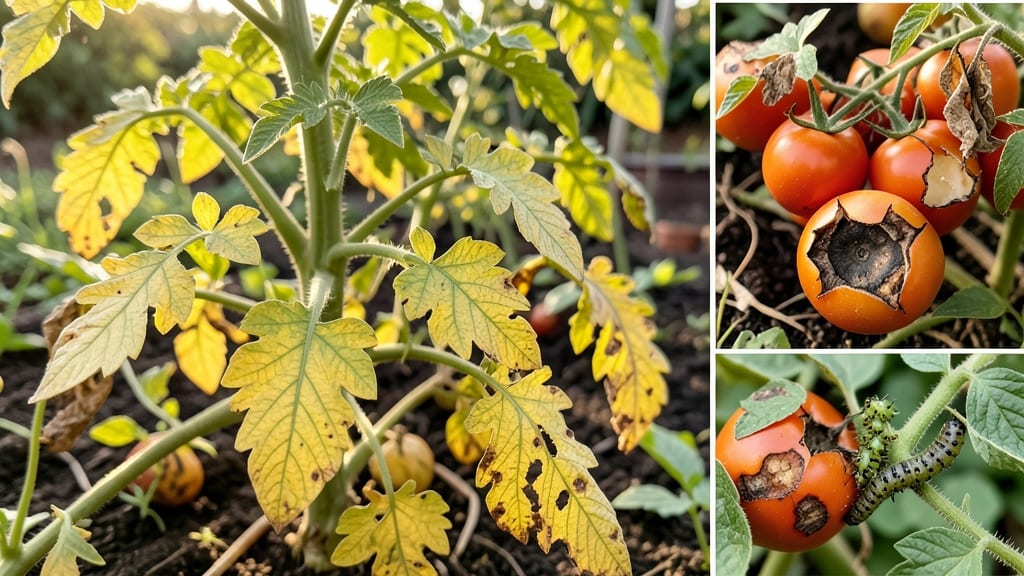
Tomato plant problems can turn your garden dreams into a frustrating mess—unless you know the fast fixes. 🌱 I’ve lost entire harvests to blight and pests, but these solutions work in hours, not weeks, saving your plants and your sanity.
Yellow leaves? Check your watering first—too much or too little causes stress. Brown spots on fruit? That’s sunscald, fixed by shading or pruning. The key is acting fast before small issues become garden disasters. You’ll spot problems early, stop them in their tracks, and keep your tomatoes thriving.
No more guessing—just clear, quick solutions that actually work. Works for backyard gardens, containers, or even balcony setups. Let’s get those plants back on track!
Root Causes Behind Tomato Troubles
Understanding why tomato plants struggle is half the battle—once you know the real culprits, you can tackle them head-on. Below, we break down the science behind the most common tomato plant problems, so you can diagnose issues like a pro and stop them before they derail your harvest.
Tomatoes are tropical plants at heart, but they’re not fans of extreme swings. When temperatures stray too far from their comfort zone (ideal range: 60–85°F / 15–29°C), their growth grinds to a halt—or worse, they shut down entirely.
- Too Hot (Above 90°F / 32°C): - Why it happens: High heat disrupts photosynthesis by closing stomata (tiny pores on leaves) to conserve water, which also blocks CO₂ intake.
This leads to sun scald (white, leathery patches on fruit) and blossom drop (flowers abort before fruiting). - Science deep dive: Heat stress triggers the production of ethylene gas, a plant hormone that signals flowers and fruit to detach prematurely.
It also causes protein denaturation in cell structures, weakening the plant’s ability to transport nutrients.
- Too Cold (Below 50°F / 10°C): - Why it happens: Cold slows enzyme activity (like those in the calvin cycle, critical for sugar production), stunting growth.
Frost or near-freezing temps can cause cell membrane damage, leading to blackened leaves or browning at the stem base (a sign of cold shock). - Nighttime chill? Tomatoes need 12+ hours of daylight to set fruit.
Short days + cold nights = poor pollination and small, misshapen tomatoes.
Water is the lifeblood of tomatoes, but too much or too little throws their systems into chaos. Unlike drought-tolerant plants, tomatoes have shallow, fibrous roots that demand consistent moisture—but they hate soggy feet.
- Underwatering: - Why it happens: Tomato roots rely on osmotic pressure to absorb water. When soil dries out, roots shrink and pull away from soil particles, reducing surface area for absorption.
This triggers: - Wilting (even in moist soil, if roots can’t reach water). - Blossom end rot (calcium uptake halts when roots struggle, leading to black, sunken spots on fruit). - Science note: Underwatering also spikes ethylene production, accelerating fruit drop.
- Overwatering: - Why it happens: Waterlogged soil displaces oxygen, suffocating roots.
Without oxygen, roots can’t perform aerobic respiration, leading to: - Root rot (fungi like Phytophthora thrive in anaerobic conditions). - Nutrient lockout (excess water dilutes nutrients in the soil, causing yellowing leaves despite "wet" soil). - Pro tip: Overwatering also leaches critical micronutrients like boron and manganese, which tomatoes need for cell wall strength and fruit development.
Tomatoes are a buffet for pests and microbes, but most issues stem from three key triggers: weak plants, poor airflow, and human error (like over-fertilizing with nitrogen, which makes plants soft and tasty to bugs).
- Fungal Diseases (e.g., Early Blight, Late Blight): - Why it happens: Fungi like Alternaria solani (early blight) or Phytophthora infestans (late blight) spore in moist, warm conditions.
They infect through: - Wounded leaves (from hail, wind, or pruning cuts). - Poor spacing (crowded plants trap humidity, creating a fungal paradise). - Science alert: Fungi release cell-wall-degrading enzymes (like pectinases) that dissolve tomato tissue, causing concentric rings (early blight) or oily, greasy spots (late blight).
- Insect Infestations (Aphids, Hornworms, Whiteflies): - Why it happens: Insects target tomatoes because they’re high in sugars and water.
For example: - Aphids inject toxic saliva while feeding, causing curled leaves and stunted growth. - Hornworms (the caterpillar of sphinx moths) devour leaves overnight, leaving behind skeletons of silk. - Stress = Snack Time: Plants under nutrient deficiency or drought stress produce more sugars in leaves, making them irresistible to pests.
Tomatoes are heavy feeders, but their needs shift dramatically from seedling to fruiting stage. A single imbalance—too much nitrogen, not enough calcium—can derail your plants.
- Nutrient Deficiencies: - Calcium (Blossom End Rot): - Why it happens: Calcium is immobile in plants, meaning it can’t relocate if blocked.
Poor root absorption (from uneven watering or compacted soil) or high potassium/nitrogen (which outcompetes calcium) leads to cell wall collapse in fruit. - Magnesium (Yellow Lower Leaves): - Why it happens: Magnesium is central to chlorophyll, the molecule that captures sunlight.
When soil pH is too high (alkaline), magnesium becomes unavailable, causing interveinal chlorosis (yellowing between veins).
- Over-Fertilizing:
- Why it happens: Too much synthetic nitrogen (like ammonium) burns roots, while excess phosphorus can lock out micronutrients like zinc and iron. Symptoms include:
- Leaf curl (from salt buildup in soil).
- Stunted roots (fertilizer salts osmotically stress root cells).
- Why it happens: Too much synthetic nitrogen (like ammonium) burns roots, while excess phosphorus can lock out micronutrients like zinc and iron. Symptoms include:
Tomatoes are delicate when young and top-heavy when fruiting. Physical trauma doesn’t just hurt—it opens doors for infections and disrupts growth hormones.
- Wind and Hail:
- Why it happens: High winds desiccate leaves (speeding up water loss) and bruise stems, while hail punches holes in leaves, creating entry points for bacterial spot (Xanthomonas perforans).
- Science tidbit: Damaged cells release stress hormones like abscisic acid (ABA), which triggers premature fruit drop.
- Pruning Gone Wrong: - Why it happens: Over-pruning removes leaf canopy, reducing the plant’s ability to photosynthesize.
Worse, rough cuts leave jagged edges that invite fungal infections (like Fusarium). - Golden rule: Prune only diseased or crossing branches—never more than 1/3 of the plant at once.
Quick Fixes for Common Tomato Troubles
Got a tomato plant acting up? Don’t panic—most issues have simple, effective fixes. Below, we’ve mapped out the most common problems and the step-by-step solutions to get your plants back on track.
Whether it’s wilting leaves, blight, or pest attacks, these fixes are practical, fast, and easy to implement. Plus, we’ll share prevention tips to keep your tomatoes thriving all season long.
Cause: Too much water, lack of nitrogen, or poor drainage. Fix It Fast:
- 🔥 Check the Soil Stick your finger 1–2 inches into the soil. If it’s soggy, your plant is drowning. Tomato roots need well-draining soil—amend heavy clay with compost or perlite.
- 💧 Adjust Watering Water deeply once or twice a week (depending on heat) rather than daily shallow watering. Use drip irrigation or soaker hoses to deliver moisture at the roots.
- 🍳 Feed with Fertilizer Yellowing lower leaves? Add a balanced fertilizer (10-10-10) or a nitrogen-rich option like fish emulsion. For upper leaves, switch to a potassium-heavy feed (like 5-10-10) to boost fruit production.
💡 Prevention Tip:
- Mulch with straw or grass clippings to retain moisture and regulate soil temperature.
Cause: Irregular watering or calcium deficiency. Fix It Fast:
- 🌡️ Stabilize Moisture Blossom end rot appears as dark, sunken spots on tomatoes. Keep soil consistently moist—never let it dry out completely between waterings.
- 📊 Boost Calcium Sprinkle crushed eggshells or calcium nitrate around the base of the plant. For a quick fix, mix 1 tbsp of calcium chloride into a gallon of water and water the plant thoroughly.
- ✨ Prevent Future Issues Test your soil’s pH (aim for 6.0–6.8). If it’s too alkaline, amend with sulfur or peat moss to improve calcium uptake.
💡 Prevention Tip:
- Mulch heavily to prevent soil moisture fluctuations.
Cause: Sap-sucking insects or chewing pests. Fix It Fast:
- 👨🍳 Manual Removal (Best First Step!)
- Aphids: Spray with a strong stream of water to knock them off.
- Hornworms: Hunt them down (they’re huge and easy to spot!) and drop them in soapy water.
- Whiteflies: Shake plants over a bucket of soapy water or use yellow sticky traps.
- 🔪 Natural Pesticides
- Neem oil spray (mix 1 tbsp neem oil + 1 tsp mild soap + 1 quart water). Spray early morning or evening to avoid harming bees.
- Insecticidal soap for soft-bodied pests like aphids.
- Bacillus thuringiensis (Bt) for hornworms—safe for humans and pets.
- 🎯 Long-Term Defense
- Plant companion crops like basil, marigolds, or nasturtiums to repel pests.
- Encourage beneficial insects (ladybugs, lacewings) by planting dill or fennel.
💡 Prevention Tip:
- Rotate crops yearly to disrupt pest life cycles.
Cause: Humid conditions, poor airflow, or contaminated soil. Fix It Fast:
- 🌿 Prune for Airflow Remove crowded leaves and suckers to improve circulation. Space plants 18–24 inches apart in containers or 2–3 feet apart in gardens.
- 💦 Water Wisely
- Water at the base (avoid wetting leaves).
- Water in the morning so foliage dries quickly.
- 🍳 Fungicide Treatments
- Copper fungicide (organic option) or baking soda spray (1 tbsp baking soda + 1 quart water + a few drops of soap).
- For severe cases, use chlorothalonil (synthetic fungicide).
- 🔥 Remove Infected Plants If blight spreads, pull and destroy affected plants (don’t compost them!) to prevent contamination.
💡 Prevention Tip:
- Solarize soil in late summer (cover with clear plastic for 4–6 weeks) to kill fungal spores before planting next season.
Cause: Extreme temperatures (above 90°F/32°C). Fix It Fast:
- 🌿 Provide Shade Use shade cloth (30–50%) or row covers during peak heat. Train vines to grow vertically (on trellises) to keep fruit off scorching soil.
- 💧 Increase Watering (But Smartly) Water deeply twice daily (early morning + late evening) to cool roots. Use mulch to retain moisture.
- 🍳 Foliar Spray for Relief Mist leaves with water + a few drops of dish soap to help them retain moisture (but avoid soapy residue).
💡 Prevention Tip:
- Plant heat-tolerant varieties like ‘Heatmaster’ or ‘Solar Fire’ if you live in a hot climate.
Cause: Compacted soil, root-bound plants, or lack of nutrients. Fix It Fast:
- 🔪 Repot or Transplant If growing in containers, upgrade to a larger pot (at least 5 gallons per plant). For in-ground plants, loosen soil around roots with a fork.
- 🍳 Fertilize for Growth Use a phosphorus-rich fertilizer (5-10-10) to encourage root development. Add compost or worm castings for slow-release nutrients.
- 🌡️ Check for Root Rot If soil smells sour or roots are mushy, trim affected roots and repot in fresh, sterile soil.
💡 Prevention Tip:
- Test soil every 2–3 years and amend as needed (add compost or aged manure).
Final Pro Tip: 🌟 Keep a garden journal! Note what works (and what doesn’t) each season to adjust care for next year’s tomatoes. Happy growing—your juicy, problem-free harvest is waiting! 🍅🔥
Frequently asked questions
Why are my tomato leaves turning yellow, but the veins stay green?
This classic symptom signals magnesium deficiency (called interveinal chlorosis). Your soil might be too alkaline (pH above 6.8) or lacking organic matter. Fix it by adding Epsom salt (1 tbsp per gallon of water) every 2 weeks or mixing compost into the soil. Test your soil pH to confirm.
Can I save a tomato plant with fungal blight?
Early-stage blight can be managed, but severe cases require drastic action. Prune infected leaves immediately (don’t compost them!), then apply copper fungicide or a baking soda spray (1 tbsp baking soda + 1 quart water + soap) weekly. For late blight, remove the plant entirely to prevent spread—it’s highly contagious.
How do I tell if my tomato plant is overwatered vs. underwatered?
Check the soil and leaves: Overwatered plants have yellowing lower leaves, mushy stems, and soil that smells sour. Underwatered plants wilt even when soil is moist (roots can’t reach water) and develop blossom end rot (black spots on fruit). Stick your finger 2 inches deep—if it’s soggy, cut back; if dry, water deeply.
Are coffee grounds good for tomato plants?
Yes, but use them wisely! Coffee grounds add nitrogen (great for leafy growth) and improve soil structure. Sprinkle 1/2 cup per plant every 2–3 weeks, but avoid piling them directly against stems (they can mat and block airflow). For fruiting plants, balance with phosphorus (like bone meal) to avoid excessive leaf growth at the expense of tomatoes.
What’s the fastest way to get rid of hornworms?
Hornworms are easy to spot (they’re green with white stripes and can grow 4 inches long!). Pick them off by hand and drop them in soapy water—it’s the most effective method. For prevention, introduce parasitic wasps (Cotesia congregata) (they naturally control hornworms) or spray Bacillus thuringiensis (Bt) every 5–7 days during outbreaks.