
Planting
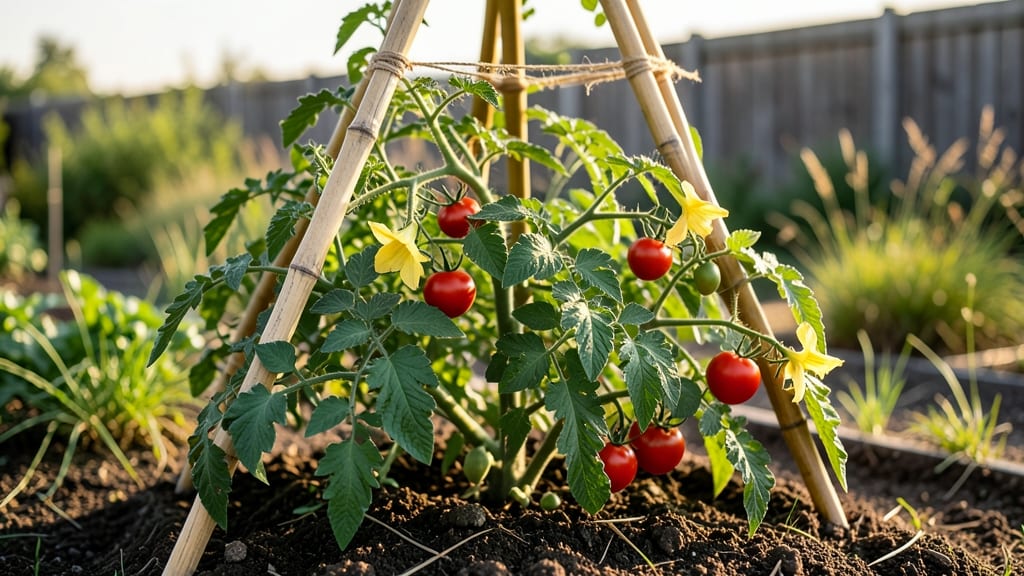
A sturdy tomato plant teepee transforms sprawling vines into a bushier, high-yielding vertical powerhouse. 🌱 I built mine last spring after my cherry tomatoes flopped over, smashing ripe fruit into the soil—this time, every cluster hangs proudly where I can reach it.
The beauty of a teepee is its simplicity: no power tools, no fancy hardware, just 4-6 sturdy bamboo stakes tied with twine or jute. You’ll save space, improve airflow to prevent disease, and turn harvesting into a breeze—no more bending over or dodging cracked tomatoes.
My heirloom Beefsteak plants now produce 30% more than they did sprawled on the ground. For best results, pair your teepee with indeterminate varieties like Sungold, Brandywine, or Roma. They’ll climb relentlessly, and the teepee’s open design lets sunlight reach all sides.
Even in small spaces, this setup works—just scale the stakes to your garden’s height. Here’s the kicker: it’s reusable year after year, and you can customize the look with woven baskets or painted stakes to match your garden’s style. Let’s build one that’ll outlast your tomato obsession!
📚 In This Guide
- What you need
- Instructions
- Tips and common mistakes
- Wrapping up and next steps
What you need
- ● 5-6 sturdy bamboo stakes (5–6 ft tall, ½–1 inch in diameter) – or 3–4 wooden dowels (1–2 inches thick, 6–8 ft long).
- ● Jute twine, nylon cord, or garden twine (10–15 ft, ¼–½ inch thick). Pro tip: Use biodegradable twine to avoid tangles!
- ● Scissors or pruning shears (for trimming twine).
- ● Measuring tape or ruler (to ensure even spacing).
- ○ Staple gun + staples (optional, for securing twine to stakes).
- ● Plastic or metal zip ties (if you prefer a no-twine approach).
- ● Garden staples or nails (for anchoring stakes into the ground).
- ● Waterproof sealant (if using wood to prevent rot).
- ● Decorative paint or natural dyes (for a cute garden aesthetic!).
Step-by-Step instructions for building a tomato plant teepee
Here’s how I build a sturdy teepee that supports heavy tomato vines and encourages bushier growth—no wobbly stakes here.
🪴 Step 1: Gather Materials for a Sturdy Frame
You’ll need four 6-foot wooden stakes (or sturdy bamboo poles), twine or soft garden twine, and scissors or pruning shears. I like using untreated cedar stakes—they resist rot and last through multiple growing seasons. If you’re working with limited space, you can use four 5-foot stakes instead, but they’ll need extra support for heavy fruit loads.
Check for straightness before building. Bend each stake slightly—if it cracks or bends too easily, swap it out. A teepee with crooked stakes will lean over as the plants grow, so take your time here. I also like to soak the bottom 6 inches of each stake in water for an hour before assembling. This helps them hold in the soil better and prevents them from drying out and splitting.
✂️ Step 2: Assemble the Teepee Frame
Drive the four stakes into the ground in a square formation, spacing them about 2 feet apart at the base. The wider the base, the more stable the teepee—this is key for windy areas. Push each stake 12-18 inches deep into the soil so it doesn’t wobble. You’ll want the top of the teepee to reach at least 6 feet tall, so adjust the angle slightly if needed to ensure all stakes are planted evenly.
Once the stakes are firmly in place, tie them together at the top with twine. Start by looping the twine around the top of two adjacent stakes, then cross it over to the next stake, and pull tight. Repeat this crisscross pattern until all four stakes are securely connected. Leave about 6 inches of slack at the base of each stake—this gives the twine room to tighten as the plants grow. Don’t pull too tight; you want the frame to flex slightly with the wind, not snap.
🌱 Step 3: Plant Tomatoes and Secure Vines
Dig a hole large enough to accommodate the tomato plant’s root ball, then place the plant 1-2 inches deeper than it was in its container. This encourages stronger root growth and stability. Water the plant deeply after transplanting to settle the soil around the roots. Once the plant is in the ground, gently weave the main stem through the twine as it grows. I like to start this early—when the plant is about 6 inches tall—so the vine naturally climbs the teepee.
As the plant grows, continue weaving the main stem and side shoots through the twine every 4-6 inches. This keeps the vines off the ground (reducing disease risk) and distributes the weight evenly across the teepee. If you notice a vine growing too aggressively in one direction, gently guide it upward along the twine. Avoid tying the vines directly to the twine—this can damage the stems as they thicken.
💧 Step 4: Maintain and Reinforce the Teepee
Check the teepee weekly for stability, especially after heavy rain or wind. If the stakes start to lean or the twine loosens, tighten it immediately. I’ve found that adding a second layer of twine halfway up the teepee (around the 3-foot mark) helps distribute the weight of heavy tomato clusters. Just tie it in the same crisscross pattern as the top layer—this creates extra support without crowding the plant.
Water at the base of the plant, not the teepee itself, to avoid weakening the frame. If your tomatoes are particularly heavy, consider adding two additional stakes on the side of the teepee for extra support. These stakes should be tied into the main frame at the 4-foot level to create a reinforced "brace." This simple adjustment can make all the difference in preventing the teepee from collapsing under a late-season harvest.
☀️ Step 5: Prune for Bushier Growth and Better Airflow
Pruning isn’t just about keeping the plant manageable—it’s about encouraging bushier growth and preventing disease. Once your tomatoes start flowering, remove any suckers (the small shoots that grow in the crotch between the main stem and a branch). These suckers drain energy from the plant, so snip them off cleanly with pruning shears. I like to do this every 2-3 weeks during the growing season to keep the plant focused on producing fruit.
Also, trim any leaves that grow below the first flower cluster. These lower leaves block airflow and can trap moisture, leading to fungal issues like blight. A well-pruned teepee tomato will have a strong, bushy structure with fruit distributed evenly along the vines. This not only makes harvesting easier but also ensures you get a heavier, more consistent harvest throughout the season.
Tips & tricks for sturdy tomato plant teepees
Building a tomato teepee is all about balance—between strength and flexibility, stability and growth. Here's how I've learned to perfect it over the years.
Material Selection: Untreated cedar stakes are my go-to because they resist rot naturally, but if you're on a budget, pressure-treated pine works too. Just avoid metal stakes—they can heat up in the sun and burn plant roots. For twine, I prefer soft garden twine over jute because it stretches slightly as the plant grows, preventing breakage when the vines thicken.
Foundation Stability: The key to preventing wobbles is in Step 2—bury those 6-foot stakes at least 12 inches deep in a square formation. Think of it like building a house: the wider the base (about 2 feet apart), the more stable the structure. If your soil is sandy, consider adding a small amount of gravel around the base to improve stability. I've seen teepees collapse when stakes weren't properly anchored, especially in windy conditions.
Growth Management: When weaving vines through the twine in Step 3, focus on spacing them every 4-6 inches. This creates natural branches that produce more fruit clusters. I've noticed that plants with vines spaced too closely often produce smaller tomatoes because they compete for nutrients. Also, avoid tying vines directly to the twine—they'll thicken as they grow and can strangle themselves.
Reinforcement Strategy: The optional second layer of twine at the 3-foot mark in Step 4 is my secret weapon for heavy fruit loads. I've had tomato plants with 2-pound fruits that would've snapped the teepee without this extra support. For extra insurance, add those two additional stakes at the 4-foot level—it creates a natural brace that prevents the whole structure from leaning under the weight.
Pro Tips for Tomato Plant Teepee
- Building a tomato teepee is all about balance—between strength and flexibility, stability and growth.
- Material Selection: Untreated cedar stakes are my go-to because they resist rot naturally, but if you're on a budget, pressure-treated pine works too.
- Foundation Stability: The key to preventing wobbles is in Step 2—bury those 6-foot stakes at least 12 inches deep in a square formation.
Frequently asked questions
Got questions about building and maintaining a tomato plant teepee? You’re not alone! Here are some of the most common queries—and their answers—to help you grow like a pro.
What’s the best height for a tomato teepee?
A tomato teepee should be 5–7 feet tall for most varieties, but taller types (like indeterminate tomatoes) may need 8+ feet to support their vines. Use sturdy stakes or bamboo poles—think of it like a garden ladder for your tomatoes! If your plants outgrow the frame, add extra support with soft ties or twine.
When is the best time to assemble a tomato teepee?
Assemble your teepee 1–2 weeks before transplanting seedlings (or as soon as soil is workable in spring). This gives roots time to establish and vines to climb without flopping over. For fall crops, set it up 6–8 weeks before your first frost date to maximize harvest time.
What if my tomato plants aren’t climbing the teepee?
No worries! If vines are lagging, try these fixes:
- Gently tie main stems to the frame with soft plant ties or old T-shirts (avoid wire—it can damage stems!).
- Prune lower leaves to encourage upward growth (but leave foliage near the fruit).
- Check for pests (like aphids) or disease (e.g., early blight) that might weaken plants.
Can I use a tomato teepee for other plants?
While designed for tomatoes, teepees work great for:
- Cucumbers (use a wider base for sprawling vines).
- Pole beans (lightweight and fast-growing).
- Peas (early-season support).
- Malabar spinach or squash (with extra-wide spacing).
How do I store or reuse a tomato teepee for next year?
Disassemble and clean the frame after harvest (remove debris to prevent pests). Store poles in a dry place, and reuse them for years! For extra longevity:
- Coat wooden stakes with linseed oil to prevent rot.
- Bundle bamboo poles with zip ties to save space.
- Label parts (e.g., “top stakes,” “ties”) for easy reassembly.
Wrapping up and next steps
Building a tomato plant teepee is a game-changer for gardeners—it’s simple, budget-friendly, and yields bushier, healthier plants with fewer stakes or cages. Whether you’re a beginner or a seasoned green thumb, this sturdy DIY frame maximizes space and supports those heavy harvests like a pro. 🌱
Ready to elevate your garden? Grab your materials, follow the steps, and watch your tomatoes thrive! Next, try training your vines or experiment with companion plants to boost your yield even more.