
How To
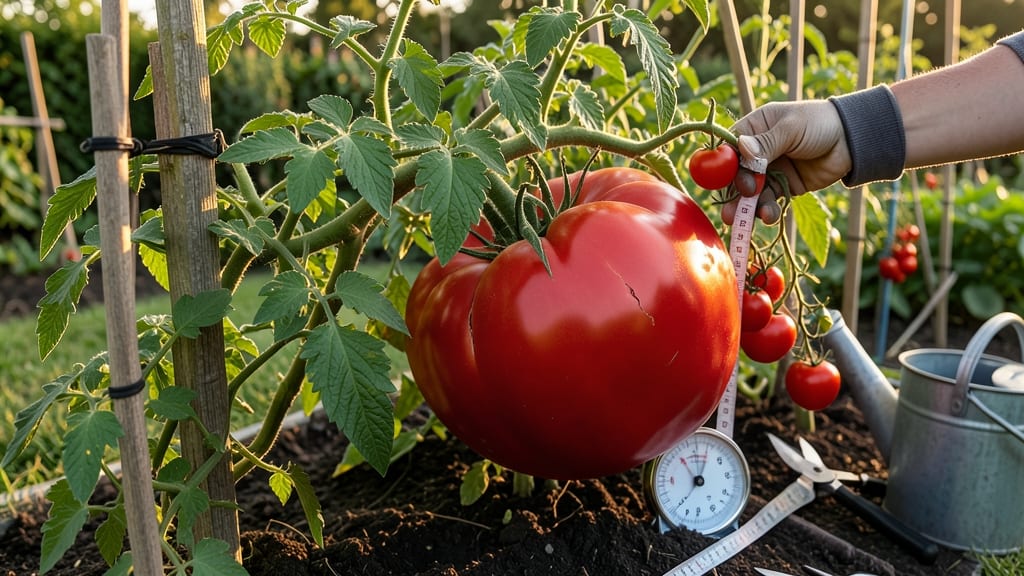
Growing the biggest tomato ever recorded requires specialized techniques: the current world record-holder weighed 3.51 kg (7.74 lbs), a massive Beefsteak variety cultivated in 2021 using hydroponics, precise pruning, and controlled greenhouse conditions. These colossal tomatoes demand specialized hybrids, nutrient-rich growing mediums, and meticulous care throughout their development.
The Beefsteak variety holds the record not just for size but also for its ability to develop under controlled conditions. 🌱 Unlike smaller tomatoes, these giants rely on hydroponic systems that deliver precise water and nutrient ratios, eliminating the variability of soil-based growing.
The greenhouse environment allows growers to maintain ideal temperature and humidity levels, which are critical for cell expansion—the process that makes these tomatoes grow so large. Steve Judd, the record-setter, spent years perfecting his technique, proving that patience and science play just as big a role as the right variety.
What makes this achievement even more impressive is that these tomatoes aren't just big—they're consistently massive across multiple fruits. Most gardeners focus on growing one or two large tomatoes, but record-breaking growers aim for multiple fruits exceeding 1 kg (2.2 lbs) each.
This requires careful pruning to redirect energy toward fewer, larger fruits rather than many small ones. The result? Tomatoes so big they often need special handling—some even require two people to lift!
💡 In This Article
- How Giant Tomatoes Break Weight Records
- Growing a Giant Tomato: Step-by-Step Gardening Guide
How giant tomatoes break weight records
Giant tomatoes like the record-breaking Beefsteak variety achieve their massive size through a combination of genetic predisposition and precise environmental control.
These tomatoes belong to the Solanum lycopersicum species but are bred for extreme fruit development, with some varieties capable of producing fruits that weigh 10-20 times more than standard supermarket tomatoes.
The key genetic trait is cell expansion—a process triggered by plant hormones like auxin and gibberellins, which encourage cells to grow larger rather than multiply more rapidly. 🌱 In the record-holder, cells in the fruit's flesh can expand to 5-10 times their original size during the growing season, a feat that requires near-perfect conditions.
The science behind their growth involves more than just genetics. Hydroponic systems, used by Steve Judd for the record tomato, deliver customized nutrient solutions with precise ratios of nitrogen, phosphorus, and potassium—critical for cell expansion. Traditional soil-based growing can't match this consistency, as soil composition varies and nutrients leach unevenly.
In a greenhouse, growers also control light exposure (14-16 hours/day) and humidity (60-70%), both of which directly influence fruit development. Temperature plays a crucial role too: ideal ranges of 20-28°C (68-82°F) prevent stress that could stunt growth, while consistent warmth accelerates metabolic processes that drive size.
What most people don't realize is how pruning techniques shape these giants. Unlike conventional tomato plants, which are allowed to produce many small fruits, record-breaking varieties undergo aggressive pruning to remove suckers (side shoots) and limit the number of flowers.
This redirects the plant's energy toward fewer, larger fruits—a strategy that can increase individual tomato weight by 300-500%. The result? A single vine might produce just 3-5 massive tomatoes instead of dozens of small ones, each requiring 60-90 days to reach maturity under optimal conditions.
Comparing hydroponic vs. soil-based methods reveals why the record tomato was grown in a controlled environment. Hydroponics eliminates soil-borne diseases and pests, reduces water waste, and allows for real-time nutrient adjustments—critical when a tomato is nearing its maximum size.
In contrast, soil-based growing introduces variables like pH fluctuations and nutrient competition from weeds, which can limit growth. The record tomato's 3.51 kg (7.74 lbs) weight is a testament to how removing these variables enables the plant's genetic potential to fully manifest. 💫
Another fascinating factor is the role of fruit set timing. Giant tomatoes are often allowed to develop from single blossom clusters rather than multiple flowers, which would create smaller fruits.
This requires careful monitoring of the plant's energy reserves, as each massive fruit can demand up to 50% of the plant's resources.
The greenhouse environment ensures that the plant never faces stress from temperature swings or drought, both of which could trigger early fruit drop—a common issue in outdoor growing.
To put the scale into perspective, a 3.51 kg tomato is roughly the size of a large soccer ball and requires special handling. Its flesh is dense and meaty, with fewer seeds and more pulp than smaller varieties, making it ideal for slicing or sauces where texture matters.
The skin, while thicker, remains tender enough to slice without resistance, though it often needs a sharp knife to cut through cleanly. 🍅 This level of perfection is only possible when every growing factor—from genetics to environment—is meticulously controlled.