
Companion Plants
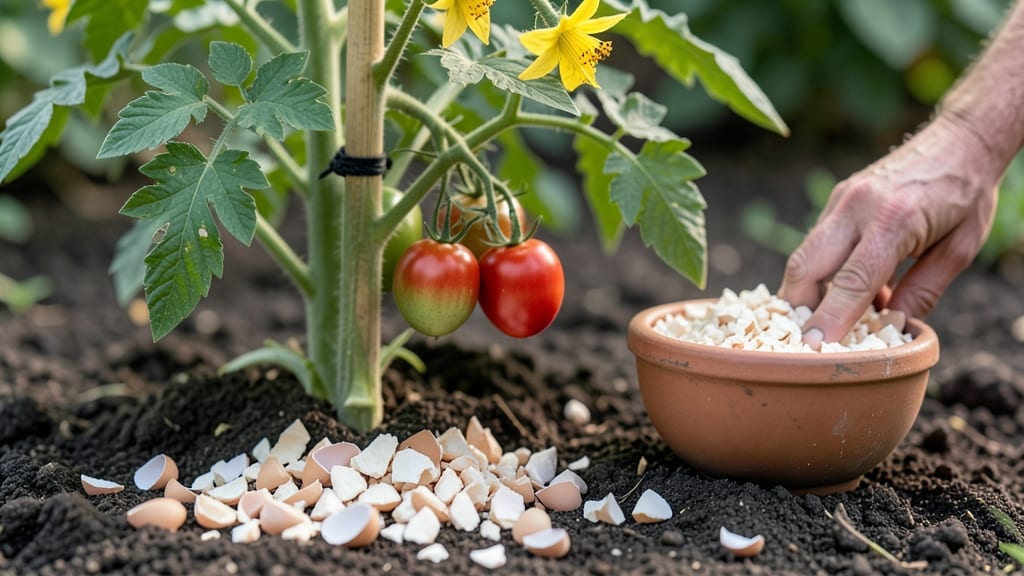
Egg shells for tomato plants supply essential calcium that prevents blossom end rot, strengthens plant cell walls, and acts as a slow-release fertilizer as they decompose naturally in the soil.
Tomatoes are calcium-hungry plants, and without enough of this mineral, they develop blossom end rot—those telltale black spots on the fruit. 🌱 Eggshells solve this by breaking down into a form your plants can absorb, while also improving soil structure.
I crush mine into a fine powder and mix it directly into the planting hole or sprinkle it around the base before watering. The key is patience: it takes about 6-8 weeks for the shells to fully decompose, so start early in the season for the best results.
For maximum effectiveness, combine eggshells with other organic matter like coffee grounds or compost. This creates a balanced nutrient environment that supports both calcium uptake and overall plant vigor. Just avoid overdoing it—too much calcium can interfere with other nutrient absorption, so a little goes a long way.
💡 In This Article
- How Eggshells Supply Calcium to Tomato Plants
- Best Ways to Use Eggshells in Your Tomato Garden
How eggshells supply calcium to tomato plants
Tomatoes are particularly vulnerable to calcium deficiency because they require this mineral to form strong cell walls, especially in developing fruits. When calcium levels drop—often due to inconsistent watering or poor soil—you'll notice blossom end rot, those unsightly black patches that start at the fruit's blossom end.
Eggshells contain about 38% calcium carbonate, which breaks down into calcium ions that plants can absorb through their roots. This process mimics natural limestone weathering, where calcium slowly releases into the soil over time.
The decomposition process begins when eggshells are crushed into small pieces, exposing more surface area to soil microbes and moisture. These microbes secrete enzymes that dissolve the calcium carbonate, converting it into calcium oxide and carbon dioxide.
The calcium oxide then reacts with water to form calcium hydroxide, which is easily absorbed by plant roots. This transformation typically takes 6-8 weeks, so timing is crucial—start preparing your eggshells early in the growing season for best results.
What makes eggshells particularly effective is their slow-release nature. Unlike synthetic fertilizers that provide an immediate calcium boost (which can overwhelm plant systems), eggshells release calcium gradually. This steady supply aligns perfectly with a tomato plant's growth cycle, particularly during flowering and fruiting stages when calcium demand peaks.
The process also improves soil structure by adding trace minerals like magnesium and potassium, creating a more balanced growing environment.
For visual learners, think of eggshells as nature's time-release capsules. When you bury crushed shells near tomato roots, they act like tiny limestone deposits, slowly enriching the soil with calcium while also providing physical benefits.
The porous texture of decomposed shells even helps aerate compacted soil, allowing roots to access nutrients more efficiently. This dual-action approach—nutrient supply and soil improvement—makes eggshells one of the most versatile organic amendments for tomato gardens.
There's a scientific reason why this works so well: calcium plays a structural role in plant cell walls, particularly in the pectin compounds that give fruits their firmness. When tomatoes get enough calcium, their cell walls develop properly, reducing the risk of rot and improving overall fruit quality.
The visual difference is striking—plants with adequate calcium produce fruits that are uniformly shaped, vibrant in color, and free from the characteristic black lesions of deficiency.
One fascinating detail is how eggshells create a micro-environment that encourages beneficial soil bacteria. These microbes not only break down the calcium but also produce enzymes that help convert other organic matter in the soil into plant-available nutrients.
This creates a positive feedback loop where healthy microbial activity leads to better nutrient cycling, which in turn supports stronger plant growth. It's a perfect example of how organic gardening practices work in harmony with natural processes.
For gardeners concerned about pH balance, eggshells are a gentle solution. While they do raise soil pH slightly (by about 0.5-1.0 units over time), this is generally beneficial for tomatoes, which prefer slightly acidic to neutral soil (pH 6.0-7.0).
The gradual pH adjustment prevents the sudden shifts that can stress plants, making eggshells a safer alternative to quick-lime or other high-pH amendments.