
Plants
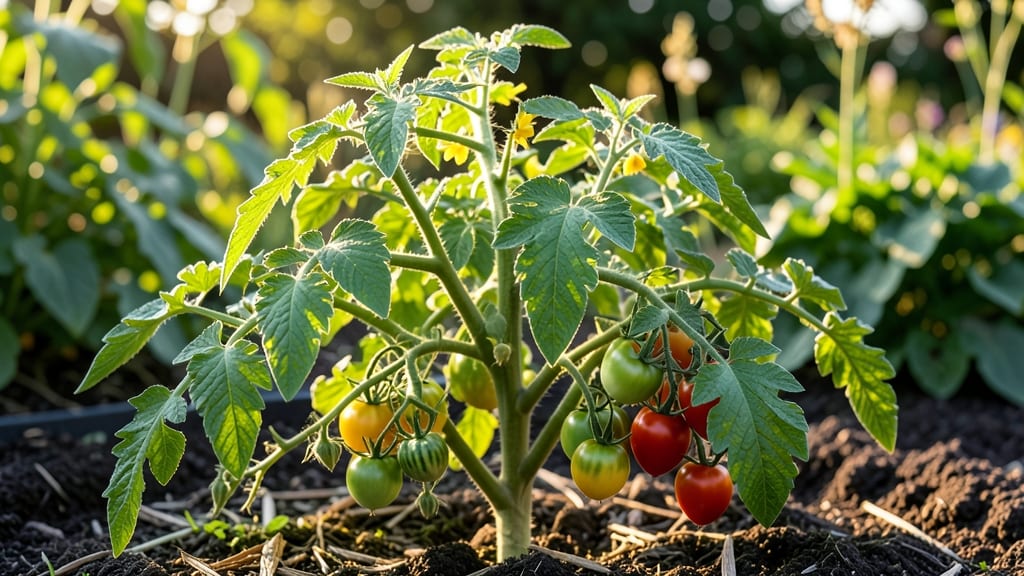
Identifying different tomato plant leaves requires examining their shape, size, texture, and color—key features like jagged edges, serrated margins, or fuzzy stems help distinguish between heirloom, cherry, beefsteak, and disease-resistant varieties.
Tomato leaves aren't just green—they're nature's ID tags for the plant's personality. 🌱 For example, heirloom varieties often boast deeply lobed, almost maple-like leaves, while cherry tomatoes typically sport smaller, smoother foliage. Disease-resistant types might surprise you with fuzzy or hairy stems that act like built-in armor against pests.
I've found that even the vein patterns can reveal secrets: bold, prominent veins often signal a vigorous grower, while delicate, fine veins might indicate a more compact plant.
Don't overlook color either—some varieties develop striking bronze or purple hues when stressed, while others stay uniformly green. The key is to compare multiple traits together rather than relying on any single feature.
For instance, a beefsteak tomato might have large, deeply serrated leaves, but its thick stems and broad shape set it apart from other varieties with similar foliage patterns.
💡 In This Article
- Tomato Leaf Morphology: Key Traits by Variety
- Visual Comparison: Common Tomato Leaf Types
Tomato leaf morphology: key traits by variety
Leaf morphology in tomatoes isn't random—it's a genetic blueprint that reveals the plant's growth habits and even its disease resistance.
For instance, indeterminate varieties like 'Brandywine' often produce leaves resembling potato leaves, with 5-7 deep lobes and jagged edges, while determinate types such as 'Roma' typically have 3-5 rounded lobes and smoother margins.
The lobing pattern correlates directly with vine structure: deeply lobed leaves often indicate vigorous, sprawling growth, while simpler shapes suggest more compact plants.
Texture plays a critical role too. Disease-resistant hybrids frequently develop fuzzy or hairy stems and leaf undersides, a trait bred to deter pests like aphids.
These tiny hairs create a physical barrier that disrupts insect movement—almost like built-in armor. 🌿 Meanwhile, heirloom varieties often boast glossy, waxy surfaces that reflect sunlight, a trait linked to their slower growth rates and thicker skins.
The vein patterns also tell a story: bold, white veins often appear in varieties bred for high yield, while delicate, green veins may indicate a focus on flavor over quantity.
Color variations provide additional clues. Some tomato leaves develop bronze or purple hues when exposed to stress (like drought or extreme heat), a trait common in varieties like 'Black Krim'. This anthocyanin pigmentation isn't just decorative—it acts as a natural sunscreen, protecting the plant from UV damage.
What's fascinating is how these traits often cluster: deeply lobed leaves with fuzzy stems frequently appear together in disease-resistant lines, while smooth, glossy leaves with minimal lobing often characterize cherry tomato varieties.
Even leaf size matters. Cherry tomato varieties typically produce smaller leaves (2-3 inches wide) compared to beefsteak types (which can reach 6-8 inches). This size difference reflects the plant's energy allocation: cherry tomatoes prioritize fruit production over foliage growth.
The arrangement matters too—some varieties like 'San Marzano' grow leaves in a spiral pattern along the stem, while others like 'Early Girl' develop leaves in opposite pairs, a trait that affects air circulation and disease susceptibility.
What most gardeners overlook is how leaf texture correlates with taste. Varieties with thicker, leathery leaves often produce tomatoes with denser flesh, while those with softer, thinner leaves typically yield juicier fruits.
This connection makes sense when you consider that leaf structure influences how efficiently the plant transports water and nutrients to the fruit. For example, the fuzzy leaves of 'Mountain Merit' (a disease-resistant variety) create a microclimate that reduces water loss, resulting in tomatoes with higher sugar content.
To identify varieties accurately, combine these traits: examine the leaf shape, count the lobes, check the texture, and note the color.
For instance, a leaf with 5 deep lobes, fuzzy stems, and bronze coloring is likely from a disease-resistant heirloom, while 3 rounded lobes, smooth texture, and bright green color suggest a determinate cherry tomato variety.
The key is to look at the whole picture rather than focusing on any single characteristic.