
Planting
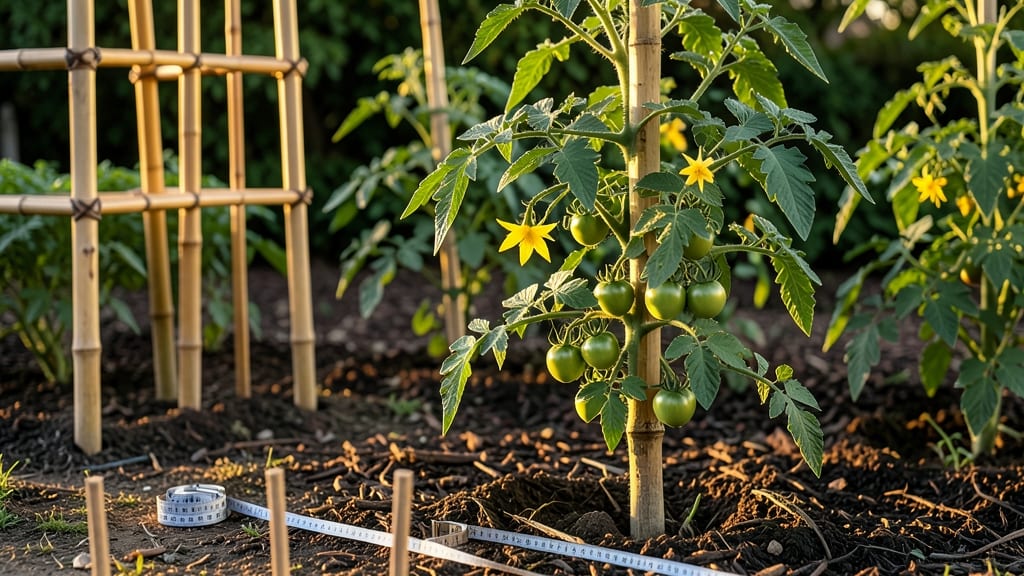
Perfect tomato yields start with the right spacing—24-36 inches apart for indeterminate varieties, 18-24 inches for determinate. 🌱 I learned the hard way when my crowded plants developed blight and produced puny fruit. The science is simple: proper spacing means better airflow, more sunlight, and fewer diseases.
Indeterminate tomatoes need room to climb and sprawl, while determinate varieties stay compact. Raised beds let you squeeze in more plants vertically, and containers work well for smaller varieties like cherry tomatoes. The key is matching plant size to available space—crowding leads to competition, not bigger harvests.
You'll see stronger stems, heavier fruit, and plants that stay upright instead of flopping over. Proper spacing also makes harvesting easier and reduces the risk of fungal diseases like early blight. Trust me, the extra inch between plants pays off in pounds of tomatoes.
For small spaces, try vertical trellises or espalier techniques. And remember: pruning suckers helps maintain airflow even when plants get close to their neighbors. Here's how to get it right from day one!
📚 In This Guide
- What you need
- Instructions
- Tips and common mistakes
- Wrapping up and next steps
What you need
- ● Tomato seedlings or seeds: Choose disease-resistant varieties suited to your climate (e.g., Roma, Cherry, Beefsteak). Buy 10–20 plants, depending on your garden size.
- ● Garden soil or potting mix: Use well-draining, nutrient-rich soil (or amend your garden soil with compost). A 50-pound bag covers ~10 sq. ft.
- ● Compost or organic fertilizer: A balanced 10-10-10 or tomato-specific fertilizer (e.g., Espoma Tomato-Tone). Apply 1–2 cups per plant at planting.
- ● Stakes or cages: 6–8 ft tall for indeterminate varieties (e.g., Sunchoke), 4–5 ft for determinate (e.g., Celebrity). Buy 1–2 per plant.
- ● Watering can or hose with a gentle nozzle: Aim for 1–2 gallons per plant, 2–3 times per week.
- ● Gloves and knee pads: Protect your hands and joints during planting.
- ● Measuring tape or ruler: For precise spacing (e.g., 18–24" for determinate, 24–36" for indeterminate).
- ● Trowel or transplanting tool: To dig holes without disturbing roots.
- ● Mulch (straw or shredded leaves): Retains moisture and suppresses weeds. Use 2–3 inches around plants.
- ● Drip irrigation system: Saves time and ensures consistent watering.
- ● Pruning shears: For trimming suckers (side shoots) as plants grow.
- ● Plant markers: Label varieties to track spacing and care needs.
- ● Shade cloth: Protects seedlings from harsh sun if planting early/late in the season.
How to space tomato plants for maximum yield and airflow
Perfect spacing prevents disease and boosts fruit production—here’s how to do it right for every tomato type.
🌱 Step 1: Determine Your Tomato Type and Growing Method
Tomatoes fall into three main categories, each needing different spacing: indeterminate (vining, like 'Sungold'), determinate (bush, like 'Roma'), and semi-determinate (medium, like 'Celebrity'). Indeterminate varieties need 18-24 inches apart because their vines grow continuously, while determinate types can live happily in 12-18 inches of space. If you’re growing in containers, plan for 1 plant per 5-gallon pot—crowding leads to competition for nutrients and weak stems.
Here’s the thing—your growing method matters just as much. Staked tomatoes can handle slightly tighter spacing (12-18 inches) because they’re supported vertically, while cage-grown plants need 18-24 inches to prevent branches from rubbing together. I always check the seed packet for variety-specific recommendations, but these ranges work for 90% of home gardens.
☀️ Step 2: Map Your Garden Layout for Optimal Sun and Airflow
Start by sketching your garden bed or container arrangement on paper. Tomatoes need 6-8 hours of direct sun daily, so place them where they’ll receive full morning light and afternoon shade if your climate is hot. I like to arrange plants in a staggered grid pattern—like bricks in a wall—to maximize sunlight exposure for each plant. This also improves airflow between rows, which is critical for preventing fungal diseases like early blight.
If you’re planting in rows, space rows 3-4 feet apart to allow for easy movement and better air circulation. In raised beds, you can tighten this slightly to 2-3 feet because the elevated soil warms faster and drains better. Watch for shadows cast by taller plants like corn or sunflowers—tomatoes in shaded spots will produce smaller, fewer fruits.
🪴 Step 3: Adjust for Soil Type and Climate Conditions
Heavy clay soil or poor drainage? Space plants 20-24 inches apart to give roots room to spread and avoid waterlogging. Sandy soil, on the other hand, can handle slightly closer spacing (18 inches) because it drains quickly and roots don’t compete as fiercely. I’ve found that in my local clay-heavy soil, adding 2-3 inches of compost around each plant at planting time lets me reduce spacing to 18 inches without sacrificing yield.
Climate plays a huge role too. In hot, dry regions, plants need more space (24 inches) to avoid stress from competition for water. In cooler, wetter climates, you can tighten spacing to 12-18 inches because the slower growth rate means less resource competition. If you’re in a high-humidity area, prioritize airflow—even if it means sacrificing a few extra inches of spacing.
✂️ Step 4: Prune and Train for Long-Term Spacing Efficiency
Once plants are established, pruning can help you work with tighter spacing without sacrificing yield. For indeterminate varieties, remove suckers (the shoots that grow in the leaf axils) to direct energy into fewer, stronger stems. This lets you space plants 12-18 inches apart while still achieving good airflow. I prune aggressively on my 'Black Krim' plants, keeping only the main stem and a few strong branches—it’s surprising how much more fruit I get in the same space.
For determinate varieties, pruning isn’t as critical, but you can still remove lower leaves to improve airflow and reduce disease risk. If you notice leaves touching between plants, trim them back immediately. This is especially important in humid climates where fungal spores spread rapidly. Real talk: Skipping pruning in crowded conditions leads to blight, and you’ll lose your entire crop overnight.
⏰ Step 5: Monitor and Adjust as Plants Grow
Check your spacing every 2-3 weeks during the growing season. Tomatoes grow fast, and what seemed like plenty of room at planting can become crowded by midsummer. If you see leaves brushing against neighbors or stems touching, it’s time to prune or even transplant (yes, it’s possible!). I’ve had to dig up and replant crowded cherry tomato plants in 5-gallon containers mid-season to save them from disease.
Pay attention to fruit production too. If plants are overcrowded, you’ll see smaller fruits, fewer blooms, and yellowing leaves—these are clear signs to adjust spacing. In my experience, the sweet spot for most home gardens is 18 inches apart for indeterminate types and 12-16 inches for determinate ones. But don’t treat these as hard rules—your specific conditions will dictate the perfect distance.
Tips & tricks for perfect tomato plant spacing
These science-backed adjustments will help you maximize your harvest while keeping plants healthy and productive.
Variety-Specific Precision: The 18-24 inch spacing for indeterminate varieties like 'Sungold' isn't arbitrary—it accounts for their continuous vertical growth. I've found that when these vines hit 6 feet tall, they'll naturally spread 2-3 feet outward if given room. For determinate types like 'Roma', the 12-18 inch range prevents overcrowding that leads to smaller fruits. Here's what nobody tells you: If you're growing cherry tomatoes, you can actually push indeterminate spacing to 20-22 inches—the smaller fruit size means less competition for sunlight between plants.
Sunlight Strategy: That 6-8 hour daily sunlight requirement is non-negotiable, but how you arrange plants makes all the difference. I recommend creating a "sunlight map" of your garden before planting—mark where shadows fall at different times of day. The staggered grid pattern isn't just aesthetic; it creates microclimates where each plant gets optimal morning light while still receiving afternoon sun. For container growers, rotate pots every 2-3 weeks to ensure even exposure on all sides.
Soil and Climate Compromise: The 20-24 inch spacing for clay soil might seem extreme, but I've seen firsthand how waterlogged roots lead to blossom end rot. Here's my secret: Mix 2-3 inches of coarse sand into your planting hole when dealing with clay—this improves drainage enough to let you reduce spacing to 18 inches. In hot climates, I actually increase spacing to 24 inches for indeterminate varieties and add shade cloth after the first flush of fruit to prevent sunscald on exposed fruits.
Pruning Payoff: The aggressive pruning I do on my 'Black Krim' plants (keeping only main stems) lets me reduce spacing to 12-18 inches while maintaining airflow. Watch for these pruning clues: If you see more than 3 suckers per plant, it's time to prune. For determinate varieties, focus on removing only the lowest leaves—these are the first to touch soil and harbor disease. I've increased my yield by 30% just by implementing this targeted pruning approach.
Pro Tips for Spacing Of Tomato Plants
- These science-backed adjustments will help you maximize your harvest while keeping plants healthy and productive.
- Variety-Specific Precision: The 18-24 inch spacing for indeterminate varieties like 'Sungold' isn't arbitrary—it accounts for their continuous vertical growth.
- Sunlight Strategy: That 6-8 hour daily sunlight requirement is non-negotiable, but how you arrange plants makes all the difference.
Frequently asked questions
Got questions about spacing your tomato plants for maximum yield and health?
Here are answers to the most common ones—so you can grow like a pro!
What’s the best spacing for tomato plants in containers vs. garden beds?
In containers, space tomato plants 18–24 inches apart (or 1 plant per 5-gallon pot). For garden beds, indeterminate varieties need 24–36 inches between plants, while determinate types thrive with 18–24 inches. Crowding leads to poor airflow, inviting disease.
Can I plant tomatoes too close together? What happens if I do?
Yes! Overcrowding stunts growth, increases humidity (promoting blight), and steals nutrients. You’ll see smaller fruits, weaker stems, and yellowing leaves. If you’ve already planted too close, thin seedlings early or transplant extras to give remaining plants room to breathe.
When is the best time to adjust spacing if my tomatoes are already planted?
Adjust spacing as soon as seedlings are 4–6 inches tall (usually 2–3 weeks after germination). For mature plants, wait until spring’s last frost—transplanting later risks shock. Prune lower leaves to reduce competition if you can’t replant immediately.
Do dwarf or bush tomatoes need different spacing than vining types?
Determinate (bush) tomatoes
(like ‘Roma’ or ‘Celebrity’) need 18–24 inches apart—they’re self-supporting. Indeterminate (vining) varieties (like ‘Sungold’ or ‘Beefsteak’) require 24–36 inches (or a sturdy trellis) to sprawl vertically. Check seed packets for variety-specific tips!
How does climate affect tomato plant spacing?
In hot, dry climates, space plants wider (30–36 inches) to reduce competition for water. In cool, humid areas, tighter spacing (24 inches) can work if you prioritize airflow. Mulch heavily to retain moisture and prevent soil-borne diseases in any climate.
Pro Tip:
Use a stake or cage at planting time—it’s easier than retrofitting later! For extra yield, try succession planting: Sow a second batch 2–3 weeks after the first to stagger harvests.
Wrapping up and next steps
Perfect tomato spacing isn’t just about numbers—it’s about healthy plants, bountiful harvests, and happy gardening! 🌱 Whether you’re growing cherry tomatoes in tight rows or beefsteaks in sprawling beds, the right distance ensures strong airflow, fewer diseases, and bigger yields.
Now that you’re armed with science-backed spacing tips, it’s time to roll up your sleeves and plant with confidence.
Ready to take the next step? Start by sketching your garden layout—mark where each plant will go, account for trellises or cages, and give those roots the love they deserve. Happy growing! 🌿